Baby Proofing Bundle: Pre-Packaged Kits vs Building Your Own

Every first-time parent eventually ends up on the same website at 11pm, staring at a $79 bundle that promises to "baby-proof your entire home" in one click. It’s tempting. It’s also probably not the right answer, and it might not be the wrong one either. The truth is somewhere more useful.
What You’re Buying With a Pre-Packaged Kit
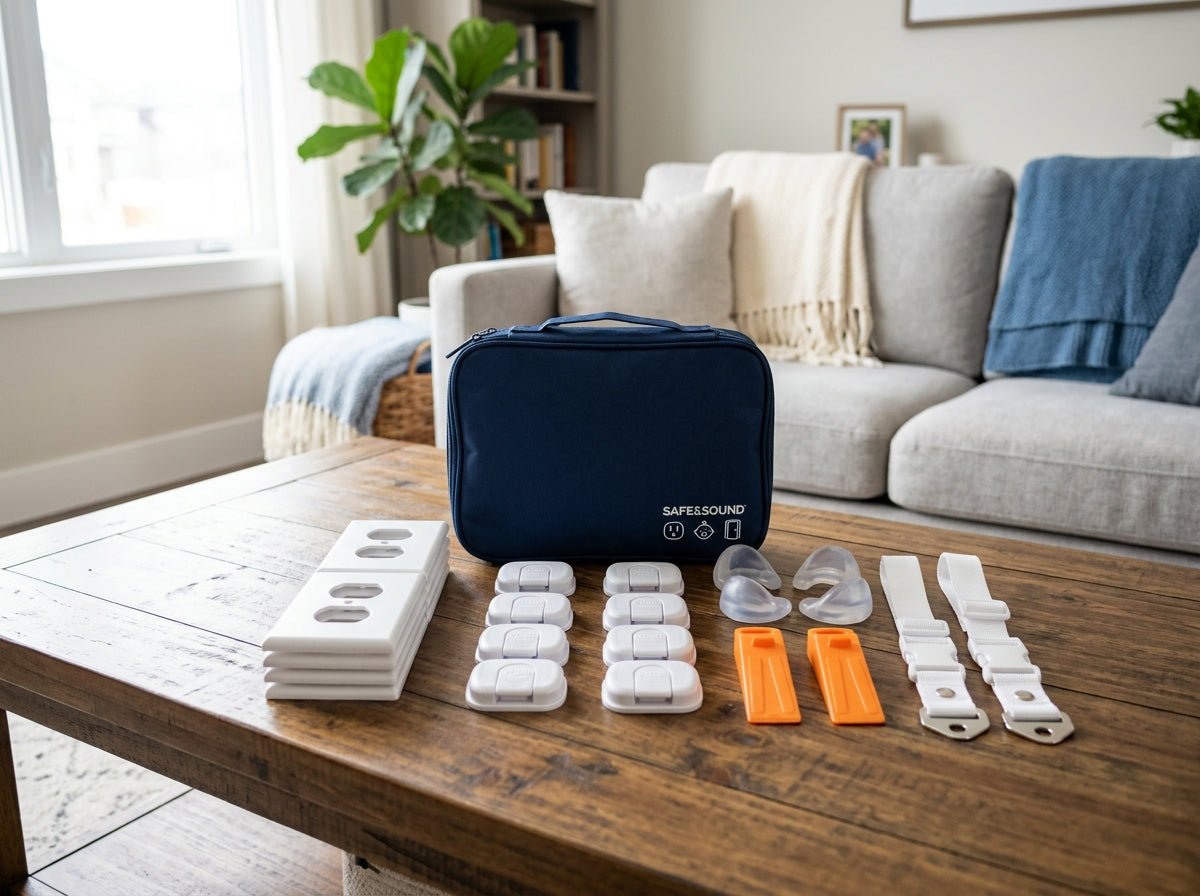
Pre-packaged kits typically bundle the most common hazard categories: outlet covers, cabinet latches, corner guards, door pinch stops, and maybe a drawer lock or two. The appeal is real. You make one decision instead of fifteen, the items arrive together, and you’re not spending three hours cross-referencing reviews while your baby learns to pull up on the bookshelf.
Cost-wise, most kits fall in the $40–$150 range. That bulk pricing can deliver real per-item savings if you’ll use everything in the box. The problem is that "everything in the box" was designed for a generic American home, not yours specifically. A kit built around a ranch-style house with a single cabinet run and no stairs will leave a townhouse family with a bag of unused outlet covers and a missing stair gate.
I’ve bought two of these kits over the years, at different stages with each of my daughters. The first time, I opened the box and immediately set aside about a third of the contents because our kitchen had already been renovated with soft-close drawers. The corner guards were also sized for standard drywall corners, and we have a marble fireplace hearth. Adhesive doesn’t stick to marble. I learned that the hard way.
What You’re Getting With a Custom Kit
Building your own kit starts with a room-by-room walkthrough before you buy anything. You’re looking for stairs, heavy furniture that could tip, low-hanging cords, pet doors, under-sink chemicals, and anything a child could climb. That assessment takes maybe 45 minutes and changes everything about what you purchase.
Custom kits can run $30 on the low end if your home is simple, or $200 and up once you start adding specialized products: furniture anchors for a heavy dresser, a tension gate for a rental where you can’t drill, outlet box covers for the power strip behind the entertainment center. The economics depend entirely on how many of those items you need.
The flexibility matters beyond cost. You can choose products that fit your surfaces and your aesthetics. Tension gates that require no hardware. Adhesive corner guards rated for stone surfaces. Cabinet locks designed for frameless European-style cabinetry rather than standard face-frame doors. A bundle won’t give you any of that.


The Furniture Anchor Problem
Here’s where pre-packaged kits have a consistent and serious gap. Most of them don’t include furniture straps or anti-tip anchors. This is worth pausing on. Furniture tip-overs are one of the leading causes of serious injuries in young children. According to the CPSC, thousands of children are treated in emergency rooms each year after dressers, televisions, and bookshelves fall on them.
If you’re evaluating a pre-packaged kit, check the contents list before you buy. If furniture anchors aren’t included, you need to add them separately regardless of which approach you take. The CPSC emphasizes that no single product prevents all injuries, and that parents need to combine multiple layers of protection: gates, locks, supervision, and furniture anchoring. A kit that skips anchors is leaving out one of the most important layers.
My younger daughter once emptied the entire under-sink cabinet in the time it took me to answer the doorbell. That was a cabinet lock failure. But the heavier risk in that same bathroom was the freestanding shelving unit I hadn’t yet anchored to the wall. I fixed the lock. I also fixed the shelf.
| Feature | Pre-Packaged Kit | Custom Kit |
|---|---|---|
| Typical cost | $40–$150 | $30–$200+ |
| Setup time | One purchase | Research required |
| Fits your home | Generic design | Tailored to layout |
| Furniture anchors | Rarely included | Add as needed |
| Surface compatibility | Standard surfaces | Any surface |
| Certification assurance | Consolidated, clear | Buyer must verify |
| Developmental timing | Single stage | Stage by stage |
Certification and Quality: Kit vs. Custom
Established manufacturers who sell pre-packaged kits generally ensure their products meet ASTM safety standards, and many carry JPMA certification. The installation instructions tend to be clear and consolidated. That consistency matters, especially for first-time parents who haven’t installed a gate or a cabinet lock before.
When you source individual products, the certification burden shifts to you. For baby gates specifically, ASTM F1004 is the federal safety standard for expansion gates and expandable enclosures. Every gate you consider should meet this standard. For other products, look for ASTM certification on the packaging and cross-reference with JPMA’s certified products list before purchasing.
The quality gap between kits and custom is real, but it cuts both ways. Some pre-packaged kits include low-quality adhesive strips and flimsy door stops that fail within months. In my experience, kit-included cabinet latches can fail because the adhesive backing gives out on a painted surface. But I’ve also bought individual products from small brands that turned out to be poorly made. Price doesn’t always predict durability. Reading reviews on safety-focused sites and checking for third-party certification does.
Age-Appropriate Hazards and the Timing Question
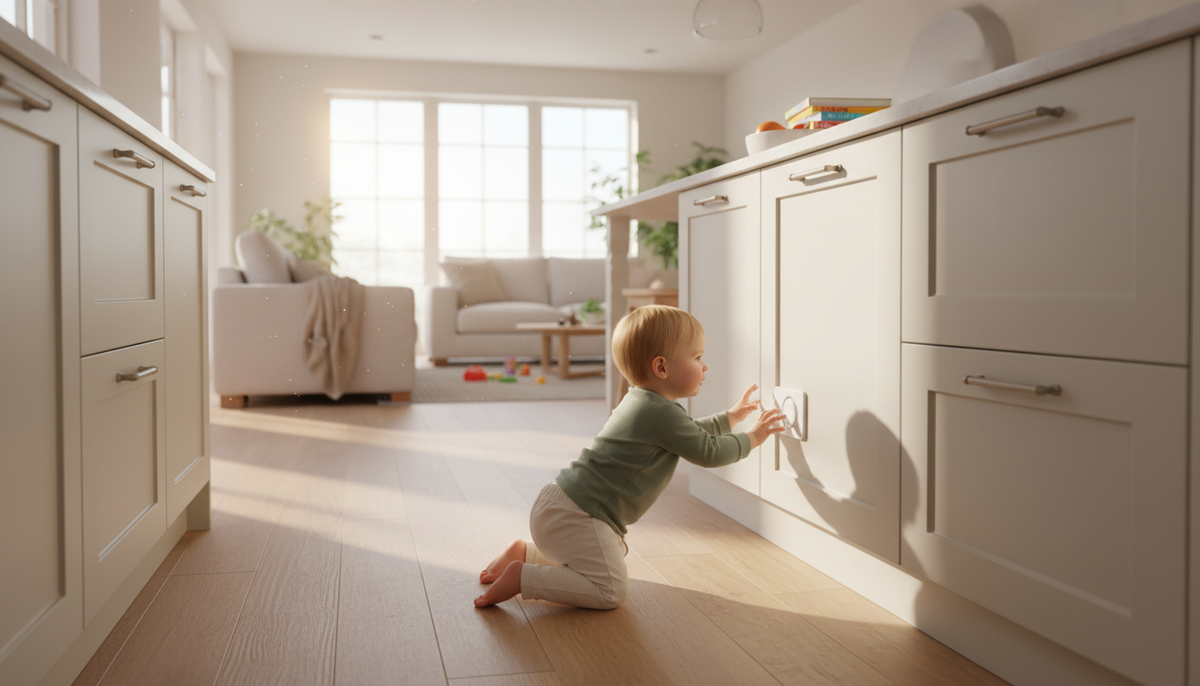
One underrated advantage of building your own kit is the ability to match products to your child’s current developmental stage. A crawler needs outlet covers and cabinet locks. A child who has just started pulling to stand needs furniture anchors and corner guards. A confident walker needs stair gates. A climber needs everything, secured better than you thought possible.
Pre-packaged kits are typically designed for a single moment in time, usually the "about to start crawling" stage. That means you may be buying stair gates before your baby can reach the first step, or door knob covers before she can reach the knob. Those items will sit in a closet for months.
Stair gates are not optional once a child is mobile. But "once a child is mobile" is the right time to install them, not necessarily the moment you open a bundle.
Before You Call It Done
The Hybrid Approach Most Families Use
The cleanest solution for most families is a hybrid. Buy a starter bundle for immediate essentials: outlet covers, basic cabinet latches, corner guards, door pinch stops. These are the items where a kit’s bulk pricing makes sense and where the generic design usually works fine. Then do your room walkthrough and add the specialized products your home requires: furniture anchors, a quality stair gate that meets ASTM F1004, cord management for any low-hanging blinds or charger cables, and any surface-specific hardware your kit couldn’t accommodate.
This approach gives you the speed and convenience of a bundle for the basics while ensuring you don’t miss the hazards specific to your home’s layout and your child’s stage.
Installation Is Where It All Falls Apart
The best product in the world fails if it’s installed wrong. A gate that isn’t secured to a stud will pull free from the wall. A cabinet lock that isn’t fully engaged every single time is the same as no lock. A furniture strap anchored into drywall without hitting a stud will not hold the weight of a falling dresser.
Whether you buy a kit or build your own, follow the manufacturer’s installation instructions precisely. Test every gate by applying real pressure before you trust it. Open and close every cabinet lock ten times to make sure the mechanism engages reliably. Check furniture anchors by pulling on the furniture yourself. These are not optional steps.
In my experience, an adhesive strap lock failed at 26 months not because the product was defective, but because it was installed on a painted surface that wasn’t fully cured, and the adhesive never bonded properly. The installation was the failure, not the lock.
The CPSC and AAP emphasize that product selection matters, but installation quality and layered protection matter just as much. A perfectly chosen custom kit, installed carelessly, is less safe than a generic bundle installed correctly and tested thoroughly.
Start with a walkthrough. Buy what your home needs. Install it right. Then test it like your child is going to try to defeat it, because she will.