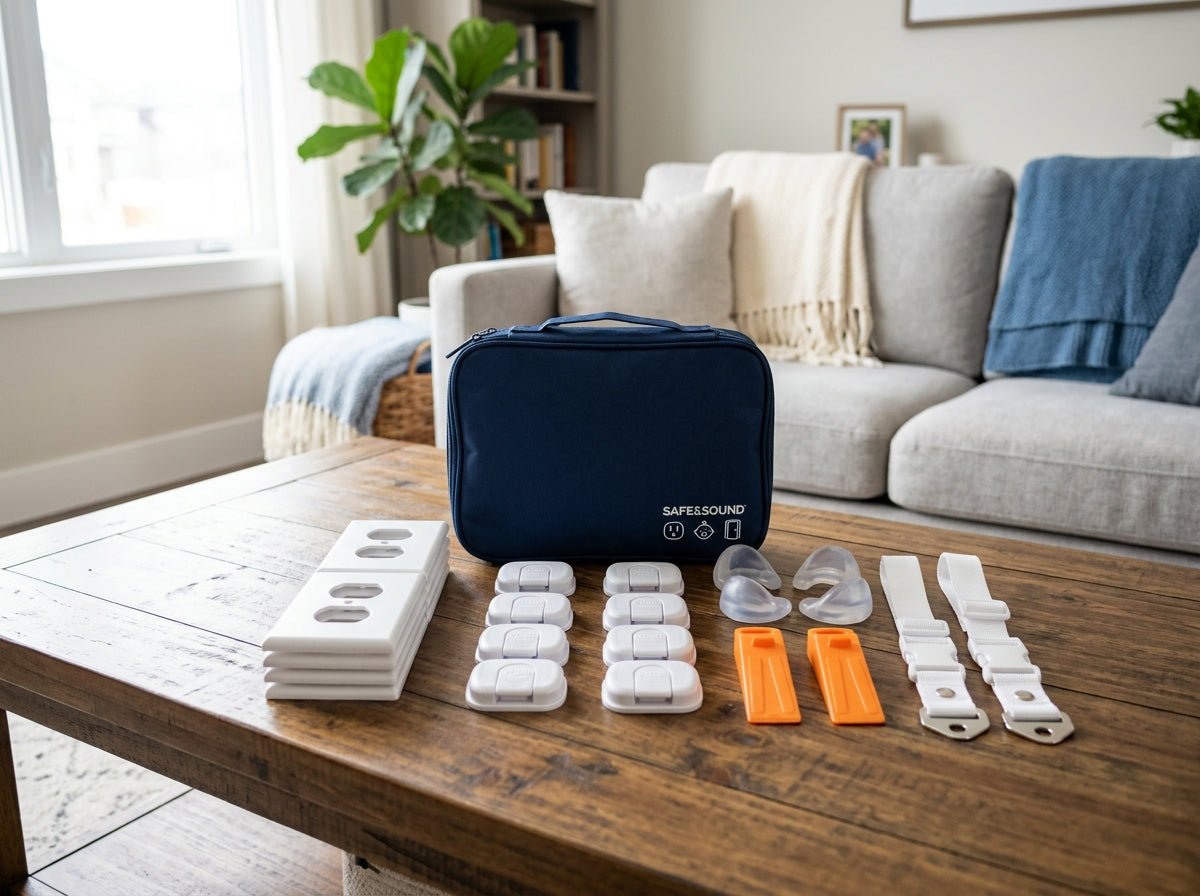
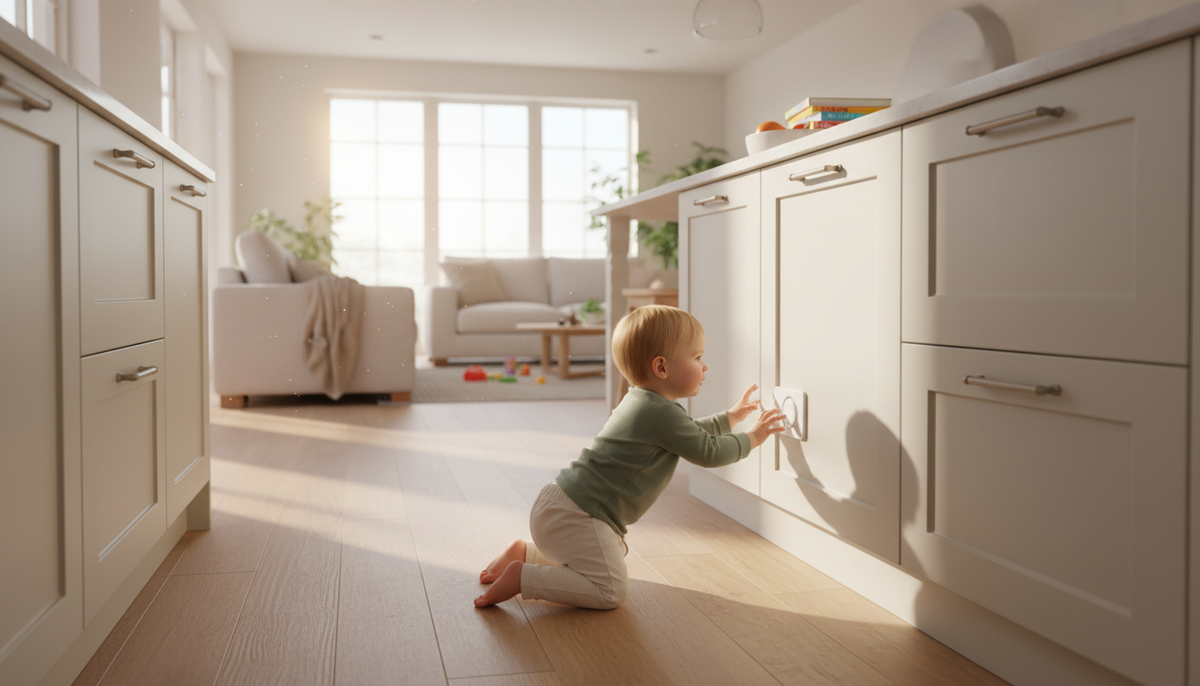
Most parents think about babyproofing the way they think about filing taxes: something to handle once, check off the list, and never revisit. But babies don’t stay still, and neither do hazards. The corner protectors you installed in March look different by October when your crawler has become a climber. A seasonal checklist isn’t busywork. It’s how you stay ahead of a child who is constantly, relentlessly leveling up.
The free printable PDF linked below covers every major room in your home. But before you print it, read through this guide. The room-by-room logic matters as much as the checklist itself.
Why Room-by-Room Matters More Than a Single Master List
A generic "babyproof your home" list treats a kitchen cabinet and a bedroom window as equivalent problems. They aren’t. The hazards in each room follow different patterns, affect different age ranges, and require different hardware.
In my experience, adhesive strap locks fail quickly with determined toddlers. Room-by-room thinking lets you triage, update one zone at a time, and avoid the paralysis of treating your whole house as one giant project.
The checklist PDF is organized into six zones: kitchen, living room, bedroom, bathroom, nursery, and stairways and hallways. Each zone has a seasonal column so you can mark what you’ve checked and when.
Kitchen: The Room That Never Stops Changing
The kitchen is the highest-density hazard zone in most homes. Knives, cleaning products, hot surfaces, heavy appliances, and small objects occupy the same few square feet where your child most wants to be because you’re there.
Cabinets and drawers are the first line. Magnetic cabinet locks outlast adhesive ones on most cabinet types, especially near sinks where moisture degrades adhesive bonds. Check them every season by pulling firmly on each door. If there’s any give, replace the hardware before you replace the contents of the cabinet.
Under-sink storage deserves its own moment. Under-sink cabinets are particularly vulnerable because they contain multiple hazards in one accessible space. Cleaning products and anything corrosive belong behind hardware a toddler cannot defeat by accident.
Appliance cords should be tucked or coiled, not draped over counter edges. A dangling cord from a toaster or kettle is a pull hazard. Check cord management every season because cords migrate.
Stove knob covers and oven door locks matter more once a child is pulling to stand. Add them before you think you need them, not after.

- Under-sink cabinet needs keyed lock
- Stove knobs require childproof covers
- Appliance cords draped over counter edge
- Lower drawers need magnetic locks
Living Room: Tip-Overs, Cords, and Climbing
The living room is where furniture tip-overs happen most often. According to the CPSC, one child dies every two weeks from tip-overs involving furniture, TVs, or appliances. Your furniture arrangement might change with the season, especially around the holidays when you rearrange for a tree, extra seating, or a new TV.
Every seasonal check should include: anti-tip straps on all dressers, bookshelves, and TV stands, verified as still anchored to studs. Pull each one. A strap screwed into drywall alone will not hold. The anchor point matters as much as the strap itself.
Window blind cords are a strangulation risk for infants and toddlers. Corded blinds should be replaced with cordless versions in any room a child uses. If you haven’t done this yet, add it to this season’s list.
Coffee table corners and hearth edges are worth checking as your child’s mobility changes. A foam bumper that worked for a crawler may not stay in place once a toddler is using the table to pull up and cruise.


Stairways and Hallways: The Hardware Gate Question
According to a Nationwide Children’s Hospital analysis of CPSC NEISS data, about 93,000 children under five are treated in U.S. emergency rooms each year for stair-related injuries. Gates are the primary intervention.
Hardware-mounted gates belong at the top of stairs. Pressure-mounted gates are for doorways and room dividers, not stair tops. Check gate hardware every season: tighten mounting screws, test the latch mechanism, and look for any wobble in the frame. Gates take daily abuse and fasteners loosen.
Hallway hazards are often overlooked: console tables with sharp corners, decorative objects on low shelves, electrical outlets. Walk the hallway at your child’s eye level once a season. You’ll see things you stopped noticing.


Bathroom: Water and Medications
According to the CDC, drowning is the leading cause of unintentional injury death in children ages 1–4. The AAP notes that a child can drown in as little as one to two inches of water. A toilet, a bucket, a dog bowl, or a bathtub left with standing water are all real risks.
The bathroom checklist has two parts: water hazards and storage hazards.
For water: a toilet lock, empty the tub immediately after use, and never leave a bucket or basin with standing water on the floor. These are year-round habits, but the seasonal check is when you verify the toilet lock is still functional and hasn’t been defeated.
For storage: medications are a critical bathroom hazard. According to CDC PROTECT data, unsupervised medication exposures send roughly 100 children under five to U.S. emergency departments every day. Every medication in your home, including vitamins, supplements, and over-the-counter products, belongs in a locked cabinet or out of reach entirely. Check this every season because medicine cabinets accumulate.
Nursery: Sleep Safety and the Seasonal Shift
According to CDC SUID data, about 3,500 infants die each year from sleep-related causes in the United States. The nursery checklist focuses heavily on the sleep environment: firm, flat sleep surface; no soft bedding, pillows, or positioners in the crib; crib slats no wider than 2–3/8 inches; no drop-side hardware.
The seasonal check here is about what changes. In winter, parents are tempted to add blankets. Don’t: loose blankets stay out of the crib all year. Use a non-weighted sleep sack and dress your baby in no more than one layer more than you’d wear. Space heaters near cribs are a fire and burn risk. If you use one, it should be at least three feet from the crib and any soft furnishings, and it should have an automatic shutoff. Check the cord condition every season.
Crib mattress fit should be verified periodically. A mattress that fit snugly at purchase may shift over time. The two-finger test still applies: you should not be able to fit more than two fingers between the mattress edge and the crib rail.
Seasonal Whole-Home Safety Walk-Through
Whole-Home Checks: Smoke, CO, and Seasonal Hardware Review
According to the NFPA, three out of five home fire deaths occur in homes with no smoke alarms or non-functioning ones. The CDC reports that CO poisoning kills more than 400 people each year and sends more than 100,000 to U.S. emergency rooms. These two checks belong on every seasonal list, every season, without exception.
Test every smoke alarm and CO detector monthly, as the CPSC recommends, and double-check them when you do your seasonal babyproofing pass. Replace batteries annually even if they test fine. CO detectors have a lifespan of 5–7 years; check the manufacture date on the back.
The seasonal hardware review is also when you walk every room and check: outlet covers still seated, cabinet locks still engaging, furniture straps still taut, gate hardware still tight. Products fail. Adhesives dry out. Screws back out of their holes. A 15-minute walk-through every three months catches these things before a child does.
How to Use the Printable PDF
The PDF is formatted as a two-page checklist. Page one covers kitchen, living room, and stairways. Page two covers bathroom, nursery, and whole-home systems. Each item has a checkbox and a four-column seasonal grid labeled Winter, Spring, Summer, and Fall.
Print it, put it in a kitchen drawer or on the inside of a cabinet door, and do the walk-through at the start of each season. Mark what you’ve checked and note anything that needs a hardware fix. The goal isn’t a perfect score on day one. It’s a consistent habit of looking.
Your child’s capabilities will change faster than you expect. The checklist is how you make sure your home changes with them.