Baby Proofing Consultant: Is Hiring a Pro Worth the Cost?
Is Hiring a Pro Worth the Cost?

Hiring someone to walk through your home and tell you what’s dangerous sounds like a luxury. It isn’t, necessarily. But it’s also not always the right call. Here’s how to figure out which side of that line you’re on.
What a Baby Proofing Consultant Does
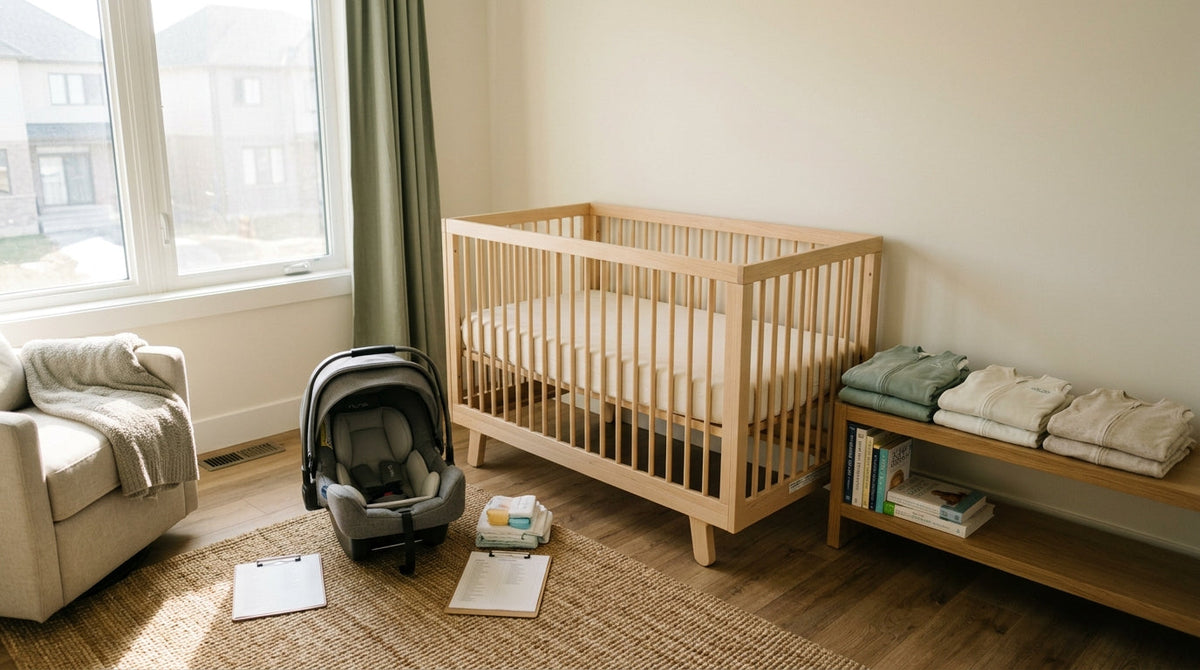
A certified child safety consultant does more than hand you a checklist. They walk every room, get down to floor level, test furniture stability, assess your specific layout, and install hardware on the spot. Most offer a two-hour home visit that ends with a written report and, if you’ve paid for the full package, locks on your cabinets and gates at your stairs before they leave.
The scope varies. Some consultants are certified through the International Association for Child Safety (IAFCS). Others come from pediatric nursing or occupational therapy backgrounds. A few are just entrepreneurs with a product line. Ask before you book: what certifications do you hold, what does the visit include, and do you supply the hardware or do I?
Pricing typically runs $150–$400 for an assessment-only visit. Full installation packages, hardware included, can reach $800–$1,200 depending on home size and product choices. In high cost-of-living cities, expect the upper end.
The Case For Hiring One
The honest answer is that most parents miss things. Not because they don’t care, but because they’re looking at their home the way they always have. A consultant looks at it the way a 14-month-old does.
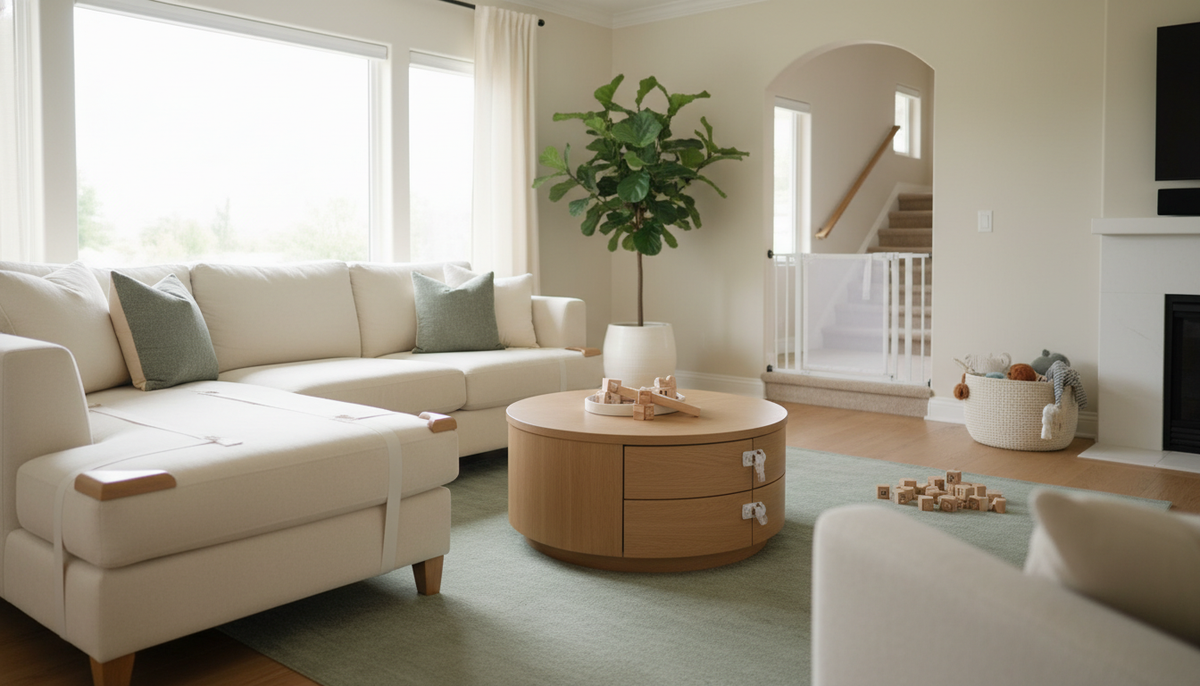
In my experience, I’ve seen blind spots in my own home. When my older daughter was about two, I thought I had our living room locked down. She defeated an adhesive strap lock on the entertainment unit at 26 months and had the cabinet open before I registered what had happened. I’d installed it correctly. The surface just wasn’t right for adhesive. A consultant would have caught that on the walk-through, because they’ve seen that failure mode dozens of times.
CPSC reports one child death every two weeks from furniture, TV, or appliance tip-overs. Nationwide Children’s Hospital analysis of CPSC NEISS Roughly one child every six minutes is treated for a stair-related injury. About 36,000 children under five are treated in U.S. emergency departments each year for unsupervised medication exposures, per CDC PROTECT data. That’s roughly 100 children per day. These aren’t abstract numbers. They represent homes where something was missed.
A consultant earns their fee when they catch the thing you didn’t think to look for: the blind cord looped at toddler height, the dresser that rocks when you push it, the gap between the stair rail balusters that’s just wide enough.


The Case Against (or: When You Don’t Need One)
If you’re organized, willing to research, and have a straightforward home layout, you can do this yourself. The core hazards are well-documented. Stair gates, cabinet locks, furniture anchors, outlet covers, cord management. None of these require a professional to install correctly if you’re willing to read the instructions and do a methodical room-by-room walk.
There are also limits to what a consultant can guarantee. They’re recommending products and installing them on the day they visit. They don’t know your child’s specific capabilities, and those change fast. My younger daughter once emptied the entire under-sink cabinet in the time it took me to answer the front door. She was 18 months old. No lock was in place yet because I’d been planning to install them "this weekend." That one’s on me, not a consultant.
The point: a consultant is a snapshot. Your child’s abilities are a moving target. The visit is useful, but it doesn’t replace ongoing vigilance.

- Dresser or TV unit tip-over risk
- Blind cord looped at toddler height
- Cabinet with adhesive lock on wrong surface
- Stair baluster gap wide enough to trap head
- Outlet without cover near floor level
What to Ask Before You Hire
Not all consultants are equal. Before you book, ask these questions directly.
What certifications do you hold? IAFCS certification requires training and testing. It’s not the only valid credential, but it’s a baseline. Someone with a pediatric nursing or OT background may know more about developmental milestones than a certified-but-inexperienced installer.
Do you have a conflict of interest with specific products? Some consultants make margin on the hardware they install. That’s not inherently wrong, but you should know it. Ask whether they’ll install products you’ve already purchased, or whether they’re locked into their own supply.
What does the written report include? A good consultant leaves you a room-by-room document you can reference as your child grows. If they can’t describe what’s in the report before you hire them, that’s a red flag.
Do you do a follow-up? Some consultants offer a check-in at six months. Given how quickly toddlers develop new skills, that has real value.
The DIY Middle Ground
You don’t have to choose between full professional service and winging it alone. Several children’s hospitals and pediatric practices offer free or low-cost home safety consultations, often through community health programs. Your pediatrician may be able to refer you. Some fire departments will do home safety walks that include CO and smoke alarm checks.
For the hardware itself, the standards exist for a reason. ASTM F1004 is the federal safety standard for expansion gates and expandable enclosures, made mandatory under 16 CFR Part 1239 (effective 2021). ASTM F3492–21 is the voluntary consumer safety standard for cabinet locks and latches. Knowing these standards helps you evaluate what you’re buying.
And know that "child-resistant" packaging has real limits. Under 16 CFR 1700.15, packaging passes the child-resistant bar if at least 85% of tested children (ages 42–51 months) can’t open it within 10 minutes, or 80% after an adult demonstrates how. That means roughly 15–20% of children in that age range can get in. Cabinet locks matter even when products are in their original packaging.
Frequently Asked Questions
What certifications should a baby proofing consultant have?
Will a consultant install products I’ve already purchased?
How much does a baby proofing consultant cost?
Is one visit enough, or do I need a follow-up?
Can I baby proof my home myself instead of hiring a consultant?
The Recall Problem Nobody Talks About
One thing a good consultant brings that a checklist doesn’t: product knowledge. They know which items have been recalled and which have known failure modes.
CPSC recalled 900,000 Safety 1st Push 'N Snap cabinet locks in 2012 after 140 children defeated them. Three of those children reached toxic cleaning products. The recall happened because the lock’s design had a systematic weakness, and many families kept using them because they didn’t know. A consultant who’s been in the field knows that history.
Before you install anything, check cpsc.gov/recalls. It takes five minutes and it matters.
So: Is It Worth It?
For most families with a first child, a new home, or a layout that includes stairs, a pool, or a garage with chemical storage, yes. The $200–$400 for an assessment-only visit is a reasonable cost to have an experienced set of eyes catch what you missed. You’re not paying for information you couldn’t find yourself. You’re paying for the fact that they’ve seen 200 homes and you’ve seen one.
For a second or third child in a home you’ve already proofed, the calculus changes. You know the hazards. You know your child. A targeted review of the new things (a second-floor bedroom, a new piece of furniture) may be all you need.
Either way, the goal is the same: a home that’s safer than it was yesterday. Whether a consultant gets you there faster than a Saturday afternoon with a hardware list depends on your specific situation, not on a general rule.