Baby Proofing for Daycare Providers: Compliance Checklist

Every state licenses daycare facilities differently, but the gaps between "licensed" and "genuinely safe" are where children get hurt. A license tells you a provider met the minimum bar on inspection day. It doesn’t tell you whether the cabinet locks are still intact six months later, whether the cribs have been checked for broken slats, or whether the staff know what to do when a child stops breathing. This checklist is for providers who want to close those gaps, and for parents who want to know what questions to ask before they hand over their child at drop-off.
Start with State Licensing Requirements
Licensing requirements vary by state, but most mandate outlet covers, cabinet locks, and locked storage for hazardous materials. The first thing any provider should do is pull their state’s specific licensing standards and keep them posted, not filed away. The first thing any parent should do on a facility tour is ask to see proof of compliance, and ask which specific standards the state enforces.
That said, state licensing is a floor, not a ceiling. The checklist below goes further. Use it as a weekly audit tool, not a one-time setup document.
Fall Prevention
According to CPSC NEISS data analyzed by Nationwide Children’s Hospital, about 93,000 children under 5 are treated in U.S. emergency rooms each year for stair-related injuries. In a daycare setting, where multiple children are moving through a space simultaneously, that risk compounds fast.
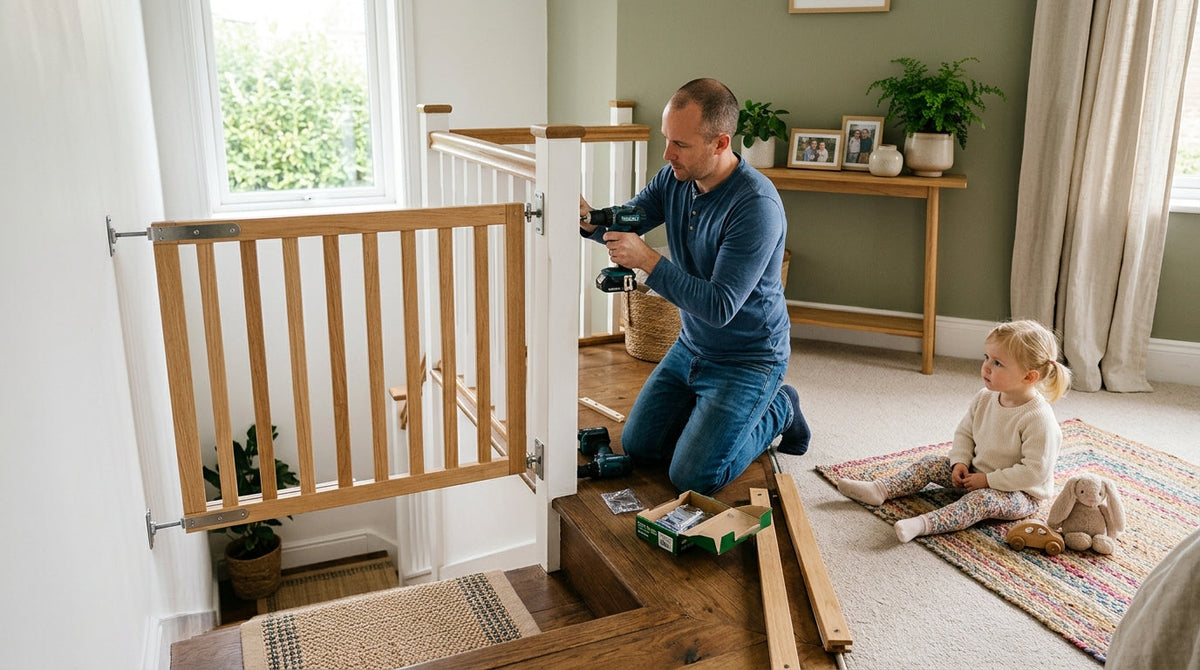
Gates: Every stairway needs a gate at both the top and the bottom. Pressure-mounted gates are not acceptable at the top of stairs. Use hardware-mounted gates only. ASTM F1004 is the federal safety standard for expansion gates and expandable enclosures, made mandatory under 16 CFR Part 1239 (effective 2021). Check that any gate you use carries that certification. Decorative baby gates without safety certification may look appropriate but do not meet safety standards.
Windows: Windows accessible to children must have guards or locks that prevent opening more than 4 inches. Window screens do not count. They are not load-bearing and will not stop a fall.
Furniture: Any furniture a child can climb, bookshelves, cubbies, storage units, must be anchored to the wall. Use anti-tip straps rated for the weight of the piece plus a reasonable margin. Check the anchors monthly. Drywall anchors loosen over time, especially in older buildings.
Choking Hazard Audits
Choking is one of the leading causes of unintentional injury in young children. In a daycare environment, toys migrate between age groups constantly. A toy that’s appropriate for a five-year-old can kill a two-year-old.
Conduct a physical audit of every toy and material in the space at least monthly. Any item that fits entirely inside a standard small-parts tester cylinder is a choking hazard for children under three. Remove it from the accessible play area immediately.
Specific items to remove or lock away:
- Balloons and latex products (keep these away from children under 8, and away from any child with a latex sensitivity regardless of age)
- Coins, buttons, batteries, and small figurines
- Uninflated or broken balloon pieces
- Marbles, small balls, and game pieces
All toys in the facility should meet ASTM safety standards for the age group using them. Check the age label on every toy. When in doubt, remove it.


Safe Sleep Practices
The AAP recommends that infants sleep on firm, flat, bare surfaces, on their backs, for every sleep. No pillows. No blankets. No bumper pads. No positioners. This applies to every nap, every day, not just nighttime sleep at home.
Providers must follow AAP guidance on room-sharing without bed-sharing for infants. Each infant needs their own separate sleep surface. Placing two infants in the same crib is not acceptable under any circumstance.
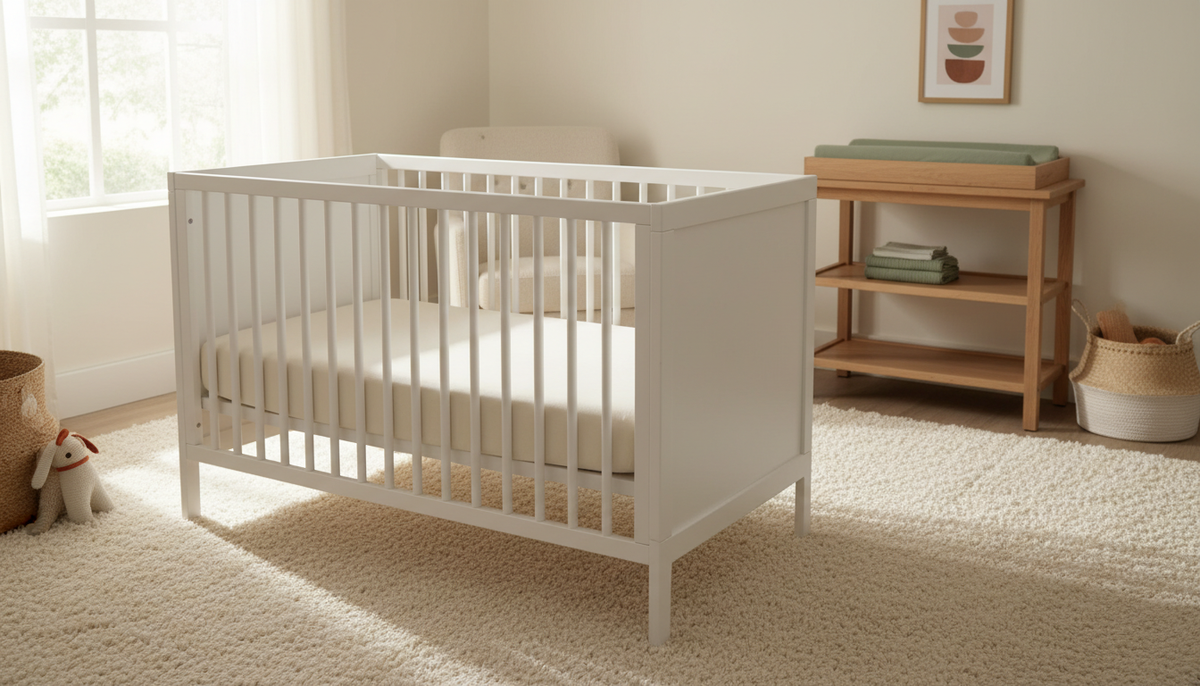
Crib inspection checklist:
- Slats are intact and spaced no more than 2–3/8 inches apart
- Mattress fits snugly with no gap larger than two finger-widths between the mattress edge and the crib frame
- No pillows, loose bedding, or soft objects in the sleep space
- No drop-side rails (these have been banned by the CPSC)
- Non-full-size cribs meet CPSC standards for non-full-size baby cribs
Check every crib weekly. A broken slat or a shifted mattress can create an entrapment hazard overnight.
Medication and Cleaning Supply Storage
Every cleaning product, medication, and hazardous substance in a daycare facility must be stored in a locked cabinet that children cannot access, period. Child-resistant containers help, but they are not a substitute for locked storage. In my experience, young children can access under-sink cabinets in seconds. Do not rely on cabinet doors alone.
For medications specifically:
- Maintain a written log for every medication administered, including the child’s name, medication name, dosage, time, and the name of the staff member who administered it
- Store each child’s medication in its original container with the child’s name and dosage instructions clearly labeled
- Never administer a medication to a child without written parental authorization on file
Cleaning supplies and medications should be stored separately. Both should be locked.
Water Safety
Drowning can happen in inches of water. Water tables, sensory bins, bathroom sinks, and toilets are all hazards in a daycare setting.
Non-negotiable protocols:
- Install toilet locks on every toilet accessible to young children
- Empty water tables and sensory bins immediately after use. Do not leave standing water unattended
- Provide constant, uninterrupted supervision during any water play activity. "Constant" means eyes-on, not in-the-same-room
Bathroom use by young children should be supervised directly, not monitored from the hallway.
Allergen Management
Food allergies can be life-threatening, and cross-contamination in a shared meal environment is a real and manageable risk. Managing it requires systems, not just awareness.
Every provider should have a written allergen profile on file for each child before that child’s first day. Staff who handle food must know each child’s allergens and understand cross-contamination. Sharing food between children should be prohibited.
Epinephrine auto-injectors prescribed for individual children must be stored accessibly for staff and inaccessibly for children. That means locked from children but immediately retrievable by a trained adult. Staff responsible for a child with a severe allergy must be trained on recognizing anaphylaxis and administering the auto-injector before that child’s first day in their care.
Playground Safety
Playground equipment must be age-appropriate. Equipment designed for school-age children has different spacing, height, and entrapment specifications than equipment designed for toddlers. Mixing the two is a common and preventable problem.
Monthly inspection checklist:
- Impact-absorbing surface (rubber mats, engineered wood fiber, or mulch) is present under all climbing structures and extends at least 6 feet beyond the equipment perimeter
- No openings between 3.5 and 9 inches that could trap a child’s head
- No protruding bolts, splinters, or broken components
- Swing seats are soft and flexible, not rigid
- No entanglement hazards such as loose ropes, cords, or clothing-catching protrusions
Document every inspection in writing. If a hazard is found, remove access to that equipment until it’s repaired.
Weekly Crib Inspection
Temperature Control and Burn Prevention
Set water heaters to 120°F (49°C) or lower. At 120°F, a serious scald burn takes about five minutes of exposure. At 140°F, it takes five seconds. The lower setting is not optional in a facility with young children.
Keep hot beverages away from any surface a child can reach. This includes staff coffee cups left on low tables during morning drop-off. I’ve seen this in nearly every facility I’ve toured. It’s one of the most overlooked hazards in the room.
Use safety gates to restrict access to kitchens during meal preparation. Children should not be in the kitchen while cooking is happening.
Staff Training and Emergency Preparedness
Every staff member who works directly with children must hold a current pediatric CPR and first aid certification. Not a general adult CPR certification. Pediatric. The techniques differ, and the difference matters.
Beyond certification:
- Maintain current emergency contact information for every child, updated at the start of each enrollment period and whenever a parent reports a change
- Conduct fire drills at least monthly and document them. Drills should include practice with the actual children in the facility, not just staff walkthroughs
- Maintain written lockdown and emergency procedures that all staff have reviewed and signed
Emergency preparedness is not a one-time training event. It requires regular practice and documentation.
Documentation and Parental Communication
A safety checklist completed once and filed away is not a safety system. It’s paperwork. Real accountability requires weekly completion, honest documentation of any issues found, and a clear process for correcting them.
Incident reports should go to parents the same day an incident occurs. Not at pickup if pickup is hours away. Same day, in writing.
Invite parents to participate in periodic safety audits. Parents who have babyproofed their own homes often notice things providers miss, and the conversation builds trust in both directions. In my experience, walking through a facility with the director before enrollment can reveal issues like window locks that have been painted shut and are no longer functioning. These small issues are easy to fix and worth finding.
Providers who treat safety as an ongoing, documented, collaborative practice are doing more than meeting licensing requirements. They’re building the kind of environment where parents can leave their children without spending the day anxious. That’s the actual goal.