
Baby Proofing Hacks: 30 Genius Tricks from Experienced Parents
30 Genius Tricks from Experienced Parents
Every experienced parent has a version of the same story. You turned your back for sixty seconds. Maybe it was the doorbell, maybe a sibling needed something, maybe you just needed to breathe. And in that sixty seconds, your toddler found the one thing you hadn’t locked, latched, or moved out of reach.
My younger daughter emptied the entire under-sink cabinet in the time it took me to answer the door and sign for a package. Dish soap, drain cleaner, a sponge, a bottle of furniture polish. All of it on the kitchen floor. She was fourteen months old and very pleased with herself. I was not pleased at all.
That moment is why I take these hacks seriously. Not as cute life tips. As real risk reduction.
What follows is thirty tricks from parents who’ve been through it, tested by me or vetted against real safety data. Some cost nothing. Some cost five dollars. All of them are worth your time.
The Kitchen and Cabinets
1. Use magnetic locks on the cabinets that matter most. Adhesive strap locks are fine for low-risk drawers. But for under-sink storage and any cabinet holding cleaning products, magnetic locks are harder to defeat. The magnet key stays out of reach, and the lock mechanism is internal. ASTM F3492–21 is the voluntary consumer safety standard that applies to cabinet locks and latches in the U.S., so look for products that reference compliance.
2. Don’t trust child-resistant packaging alone. Under 16 CFR 1700.15, packaging passes the "child-resistant" bar if at least 85% of tested children (ages 42–51 months) can’t open it within ten minutes, or 80% after an adult demonstrates how. This means 15–20% of children in that age range can get in. The packaging is a backup, not a substitute for a locked cabinet.
3. Move cleaning products up, not just behind a lock. A lock can fail. A shelf your toddler can’t reach cannot. I keep anything toxic on a high shelf in the laundry room now. The under-sink cabinet has dish soap and a spare sponge. Nothing that requires a poison control call.
4. Put a rubber band around the fridge dispenser lever. If your fridge has a water or ice dispenser on the door, a thick rubber band looped around the lever prevents a toddler from flooding your floor. Free. Takes three seconds.
5. Use a tension rod under the sink as a second barrier. Even with a magnetic lock, a tension rod installed horizontally across the cabinet opening adds a physical barrier that slows a child down. It won’t stop a determined three-year-old forever, but it buys you time.
6. Check your cabinet locks against the CPSC recall database before you buy. A 2012 CPSC recall pulled 900,000 Safety 1st Push 'N Snap cabinet locks after reports of children as young as nine months opening them. Three children reached toxic cleaning products. The recall database at cpsc.gov is searchable by product name and takes about ninety seconds to check.
Stairs and Gates
7. Use a hardware-mounted gate at the top of stairs. Always. Pressure-mounted gates are for doorways. At the top of stairs, only a hardware-mounted gate belongs. ASTM F1004 is the federal safety standard for expansion gates and expandable enclosures, made mandatory under 16 CFR Part 1239 (effective 2021). Buy to that standard, and mount it properly.
8. Count the spindles on your staircase railing. If your child can fit their head between them, they can get stuck. The standard is no more than four inches between spindles. A pool noodle cut lengthwise and zip-tied to the railing fills the gap cheaply until you can address it permanently.
9. Add non-slip grip tape to wooden stair treads. Socks on hardwood stairs are a fall waiting to happen. Clear grip tape is nearly invisible and costs about twelve dollars for a full staircase. Nationwide Children’s Hospital reports approximately 93,000 children under five are treated in U.S. emergency rooms each year for stair-related injuries (based on CPSC NEISS data).
10. Put a gate at the bottom of stairs too. Most parents gate the top and forget the bottom. A toddler who climbs up unsupervised is a toddler who can fall back down.

- Under-sink cabinet: cleaning products within reach
- Fridge dispenser lever: easy for toddlers to activate
- Low drawer: climbing foothold if unlocked
Furniture and Tip-Over Prevention
11. Strap every tall piece of furniture to the wall. Bookshelves, dressers, TV stands. All of them. The CPSC reports one child death every two weeks from tip-overs. The anti-tip straps cost about eight dollars and take fifteen minutes to install. In my experience, adhesive strap locks can be defeated by determined toddlers, so hardware-mounted solutions are more reliable for structural furniture.
12. Use furniture anchors rated for at least several times the item’s weight. Don’t buy the cheapest strap you can find and assume it’s equivalent. Check the weight rating on the package and make sure it exceeds your furniture’s weight with meaningful margin.
13. Remove the bottom drawer of a dresser to eliminate the climbing ladder. Kids use open drawers as stairs. Pull the bottom drawer out entirely and store it in a closet until your child is older. The dresser is now much harder to climb.
14. Anchor your TV to the wall, not just the stand. A TV on a stand is a tip-over risk even with the stand anchored. Wall-mounting the TV eliminates the risk entirely. If wall-mounting isn’t possible, use a TV strap that connects the set to the wall behind the stand.


Water Safety
15. Empty every container of standing water immediately after use. According to the AAP, a child can drown in as little as one to two inches of water. Buckets, baby pools, pet water bowls. If it holds water and you’re not actively supervising, empty it.
16. Use a toilet lock. Drowning is the leading cause of unintentional injury death in children ages 1–4 (CDC). Toilet locks cost about fifteen dollars and install in minutes. They are unglamorous and effective.
17. Drain the bathtub before you leave the bathroom. Not after you dry off your child. Before you leave. The drain pulls while you’re still in the room.
18. Put a door knob cover on the bathroom door. If your child can’t open the bathroom door independently, they can’t access the toilet or tub unsupervised. Door knob covers are a cheap first line of defense.


Medications and Poisons
19. Lock medications in a box, not just a cabinet. According to CDC PROTECT data, unsupervised medication exposures send roughly 100 children under five to U.S. emergency departments every day. A locked box inside a high cabinet provides two barriers instead of one.
20. Store medications in their original child-resistant containers. Pill organizers are convenient for adults and dangerous around children. Many are not child-resistant at all. Keep medications in their original packaging until you need them.
21. Store purses, bags, and coat pockets out of reach. Visitors’ bags often contain medications, gum with xylitol, loose change, and other hazards. A hook near the front door at adult height keeps bags off the floor. America’s Poison Centers reports that in 2024, 99.2% of poison center cases involving children under six were accidental, and most were preventable.
22. Program Poison Control into your phone now. The number is 1-800-222-1222. Put it in your contacts before you need it. In a real emergency, you don’t want to be searching.


Electrical and Cord Safety
23. Use tamper-resistant outlets instead of plug covers. Modern tamper-resistant outlets (TR outlets) have internal shutters that only open when equal pressure is applied to both slots simultaneously. They’re harder for children to defeat than removable plastic inserts, and you won’t spend time fishing lost plug covers out from behind furniture.
24. Route cords through cable management channels and secure them to baseboards. A loose cord is a tripping hazard and a strangulation risk for infants. Cable channels cost about ten dollars for a six-foot run and keep cords flat against the wall.
25. Shorten or eliminate window blind cords entirely. Corded blinds are a known strangulation hazard. Replace them with cordless versions or cut and retrofit existing blinds. This is one of the few hacks where "replace it entirely" is the right answer.
Sleep Safety and Smoke Detection
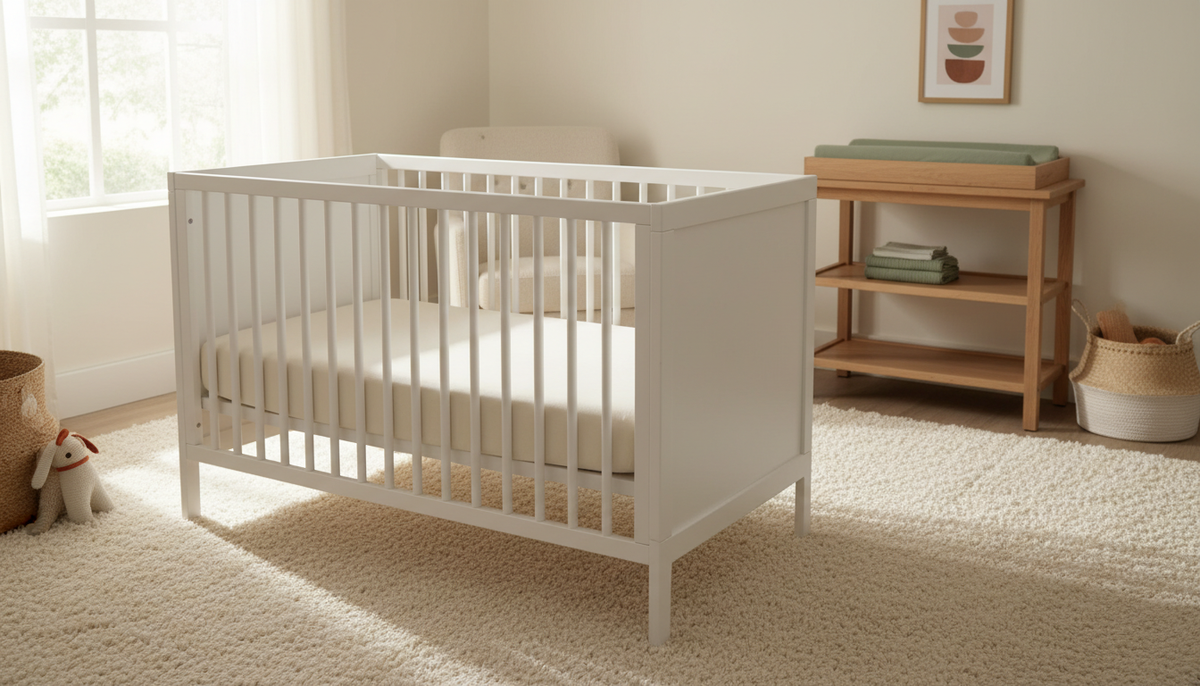
26. Keep the crib bare. No bumpers, no pillows, no positioners, no stuffed animals. The CDC reports approximately 3,500 infants die each year from sleep-related causes in the United States, many involving soft bedding or unsafe sleep surfaces. A firm, flat mattress with a fitted sheet is the complete setup.
27. Test your smoke alarms monthly and replace batteries annually. The NFPA reports that three out of five home fire deaths occur in homes with no smoke alarms or non-functioning ones. Monthly testing takes thirty seconds per alarm.
28. Install a carbon monoxide detector on every level of your home. The CDC reports that CO poisoning kills more than 400 people each year and sends more than 100,000 to U.S. emergency rooms. CO is odorless and colorless. A detector is the only way to know it’s there.
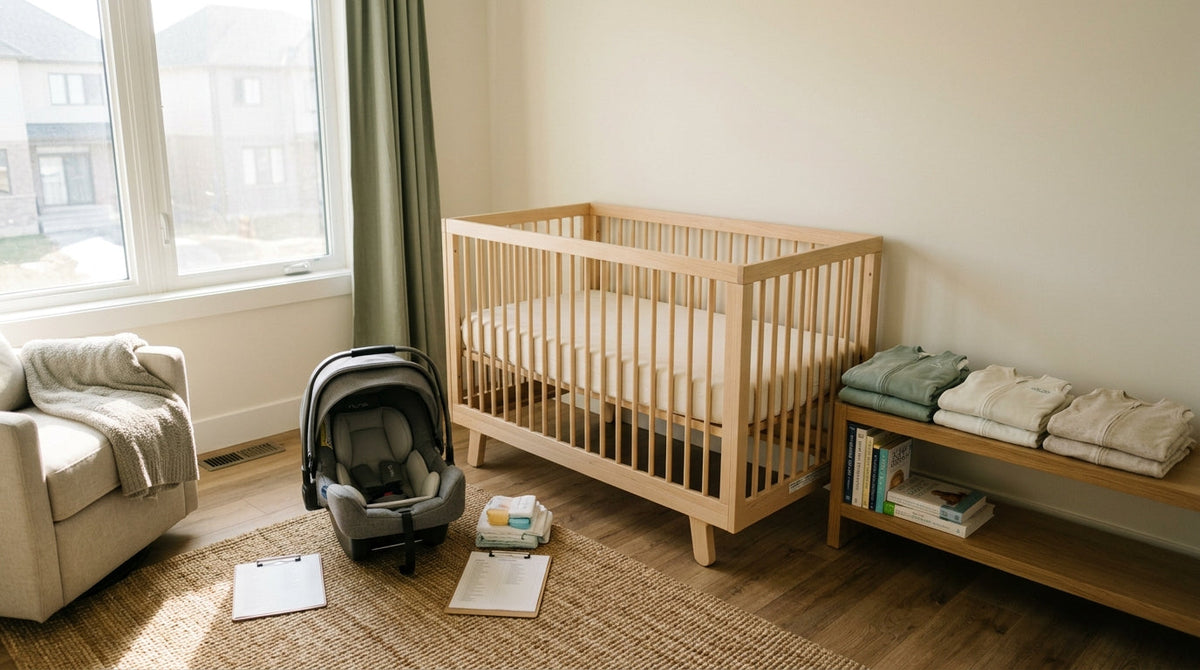
Quick Babyproofing Checklist
Miscellaneous Hacks That Work
29. Use a pool noodle on the bathtub faucet. Cut a pool noodle lengthwise, fit it over the faucet spout, and secure it with a rubber band or zip tie. It’s softer than any commercial faucet cover I’ve tested, costs about a dollar, and replaces easily when it gets grimy.
30. Do a floor-level walk-through of every room. Get down on your hands and knees and look at the room from your child’s eye level. You will see things you missed standing up. Outlets you forgot. Cords you didn’t notice. The corner of a coffee table at exactly toddler-forehead height. I do this every time we stay somewhere new, and I still find something every time.
Start With the Highest-Risk Areas
Thirty hacks is a lot to absorb at once. If you’re just starting out, or if you’ve moved somewhere new, prioritize in this order: water hazards first, medications and poisons second, tip-over anchoring third, then work through the rest.
The under-sink cabinet and the bathroom door are where I’d start. They’re fast to address, and they cover two of the most common emergency scenarios. Everything else builds from there.