Child Safety at Home: A Data-Driven Look at Common Hazards and Fixes
A Data-Driven Look at Common Hazards and Fixes

Every year, parents install cabinet locks, buy baby gates, and move cleaning supplies to high shelves. And every year, children are still seriously hurt at home. The gap between what we do and what protects kids is worth examining closely.
This is not about blame. Most home injuries happen in seconds, in familiar rooms, during ordinary moments. Certain hazards are both more common and more preventable than parents tend to assume, and the fixes are often simpler than the marketing around them suggests.
Furniture Tip-Overs: The Hazard Most Parents Underestimate
CPSC reports one child death every two weeks from furniture, TV, or appliance tip-overs. Not per year. Per two weeks.
Tip-over prevention gets a fraction of the attention that outlet covers and cabinet locks do. We talk about it less. We sell it less. But the injury pattern is severe: a dresser or television falling onto a toddler can cause crush injuries, head trauma, and suffocation, often in a bedroom while a parent is nearby.
The physics are straightforward. A child opens a dresser drawer and uses it as a step. A toddler grabs a TV stand to pull to standing. The center of gravity shifts forward, and the piece tips. Modern furniture, especially flat-pack construction, is lighter than older solid-wood pieces and tips more easily.
The fix is also straightforward: an anti-tip strap anchored to a wall stud, rated to hold at least several times the weight of the furniture piece. Two anchor points are better than one. The strap should be taut, not loose. I have installed these on every dresser, bookcase, and wardrobe in our house, and I check the hardware annually because screws can work loose in drywall over time.
Furniture feet grippers, anti-slip pads, and pushing furniture against a wall do not work reliably. A wall provides no resistance once the tipping motion begins. Only a strap anchored into a stud does.
Stair Falls: The Numbers Are Bigger Than You Think
About 93,000 children under 5 are treated in U.S. emergency rooms each year for stair-related injuries, per Nationwide Children’s Hospital analysis of CPSC NEISS data. That works out to roughly one child every six minutes.
Most of those injuries are falls from the top of the stairs, but a meaningful portion involve falls on the stairs themselves, particularly on open-riser designs and stairs with smooth hardwood treads. The youngest children, those under 12 months, are often injured when carried on stairs by a caregiver who loses footing.
Gates are the primary intervention, and they are not all equivalent. ASTM F1004 is the federal safety standard for expansion gates and expandable enclosures, made mandatory under 16 CFR Part 1239, effective 2021. A gate sold after that date must meet this standard. But the standard covers construction and labeling, not installation quality, and installation is where most gate failures happen.
Pressure-mounted gates belong at the bottom of stairs only. At the top, you need a hardware-mounted gate with screws going into studs or a solid wood banister. In my experience, a pressure-mounted gate can fail under sustained pushing, my older daughter defeated one at 26 months by pushing repeatedly until the rubber feet slipped. We replaced it with a hardware-mounted gate the same afternoon.
For stairs with banisters rather than walls, you need a gate with a banister adapter kit. These exist, they work, and skipping them because the installation looks complicated is not a reasonable trade-off.

- Open dresser drawers used as climbing steps
- Unsecured TV on low stand, tip risk
- Tall bookcase without wall anchor strap
Drowning: The Hazard That Happens Quietly
Drowning is the leading cause of unintentional injury death in children ages 1–4, per CDC data. It is not a distant or exotic risk. It happens in bathtubs, in buckets, in decorative garden ponds, in the neighbor’s pool.
A child can drown in as little as one to two inches of water, per the AAP. That is a puddle in a bucket. That is a bathtub with three inches of water left in it. That is a toilet with the lid left up.
Most toddler drownings do not match the picture parents have, a child flailing and calling for help in a pool. Children go under silently. The physiological response to sudden submersion suppresses vocalization. By the time a parent notices something is wrong, the window for prevention has already closed.
Layers of protection matter here more than in almost any other hazard category. For pools: four-sided fencing with a self-closing, self-latching gate is the primary barrier. Door alarms on any house door that opens to a pool area. Pool surface alarms as a backup layer, not a replacement for fencing. Toilet locks if you have children under three in the house. Empty all buckets, bins, and containers that could collect water.
Supervision during bath time means within arm’s reach, not in the next room. In my experience, a child can climb into a half-filled bathtub in the time it takes to answer the doorbell. I now empty the tub before leaving the bathroom for any reason.


Medication Exposure: A Daily Emergency
Per CDC PROTECT data, unsupervised medication exposures send roughly 100 children under five to U.S. emergency departments every day. That is about 36,000 children per year.
The medications most commonly involved are not obscure or industrial. They are the ones in most homes: pain relievers, cardiovascular drugs, sleep aids, vitamins with iron, and topical preparations. Grandparents’ medications are a particular risk factor, because they often contain cardiac and blood pressure drugs in doses calibrated for adults, and because grandparents may not have child-resistant caps or may leave medications on accessible surfaces.
Child-resistant packaging reduces risk but does not eliminate it. "Child-resistant" means a child should not be able to open the container within a defined time window in testing conditions. It does not mean childproof. In my experience, a child can open a child-resistant vitamin bottle at age 3 using their teeth.
The storage rule is simple: up and away, in a locked cabinet if possible. Not in a purse on the floor. Not on a nightstand. Not in a bag left by the front door. The Poison Control number is 1-800-222-1222. Program it into your phone now.


Sleep Safety: What the Data Says
About 3,500 infants die each year from sleep-related causes in the United States, per CDC SUID data. Unintentional suffocation kills roughly 1,000 infants under age 1 each year in the United States, per CDC.
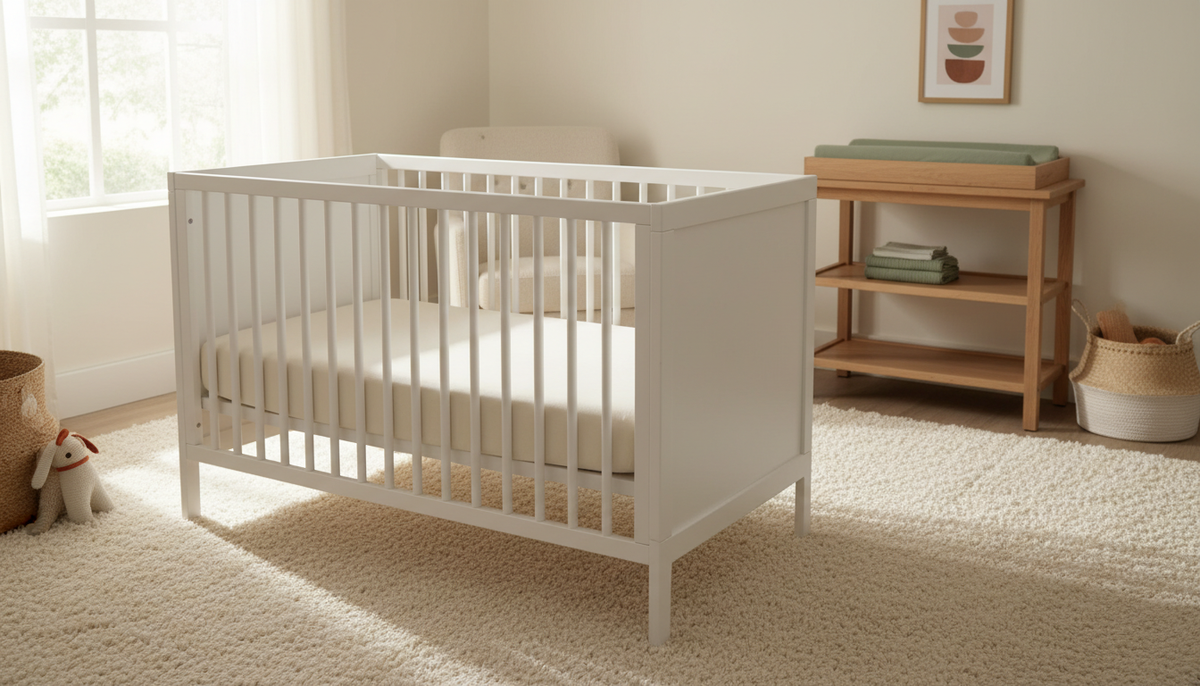
The AAP’s safe sleep guidance is specific: firm, flat surface, no soft bedding, no pillows, no bumpers, no inclined sleepers, no bed-sharing. The infant sleeps alone, on their back, in a crib or bassinet that meets current safety standards.
The products that concern me most in this category are the ones that look safe because they are designed for infants. Inclined sleepers, positioners, and loungers have been associated with infant deaths and have been subject to recalls. A product being sold does not mean it has been tested for sleep safety. The AAP recommendation for a flat, firm surface with no incline is not a conservative interpretation of the evidence. It is the evidence.
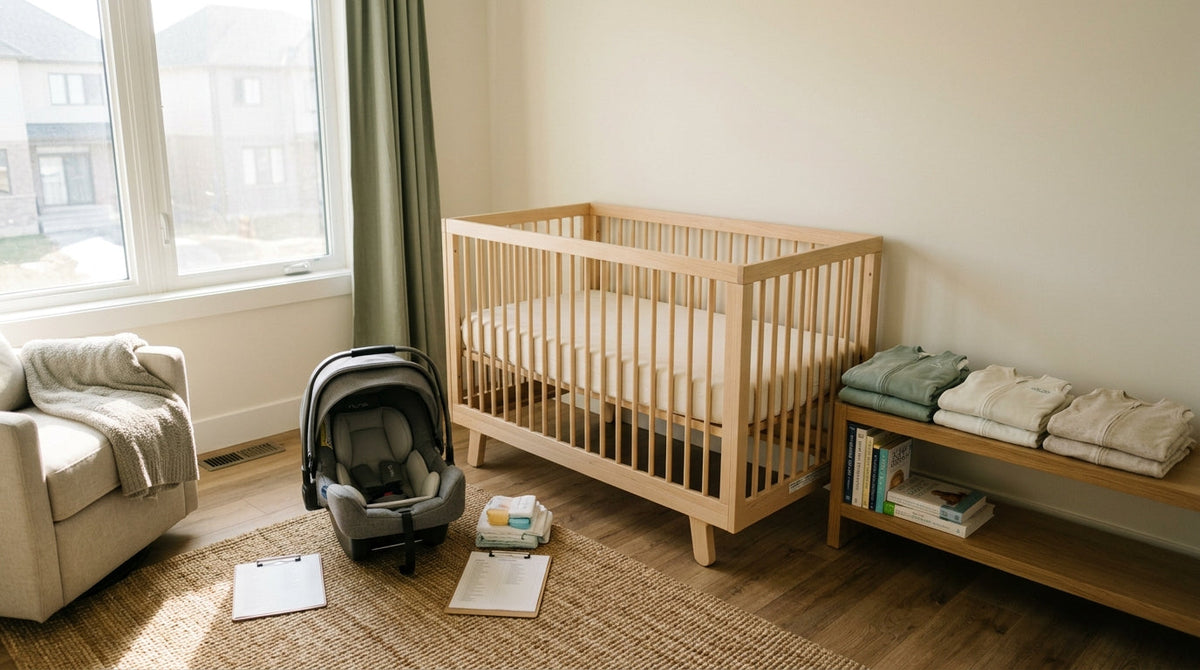
The sleep surface is one place where the risk calculus is clear, and the fix costs nothing: a firm, flat mattress in a crib or bassinet, nothing else in the sleep space.


Carbon Monoxide and Fire: The Invisible and the Fast-Moving
CO poisoning kills more than 400 people each year and sends more than 100,000 to U.S. emergency rooms, per CDC. Children are more vulnerable than adults because they breathe faster and their hemoglobin binds CO more readily.
CO detectors are required by code in most states, but code compliance and actual protection are different things. A CO detector on the ceiling of the main floor does not protect a child sleeping in a basement bedroom. Detectors should be on every level of the home and outside each sleeping area. They have a service life, typically 5–7 years, and need to be replaced, not just have their batteries changed.
Three out of five home fire deaths occur in homes with no smoke alarms or non-functioning ones, per NFPA. Smoke alarms on every level, inside and outside sleeping areas, tested monthly. Interconnected alarms, either hardwired or wirelessly linked, so that when one sounds, they all sound. A child who cannot hear the alarm in their bedroom because it is only sounding in the kitchen has no warning.
Escape planning with children is not a one-time conversation. It is a practice. Children who have walked the escape route, who know the meeting place, and who have practiced getting low under smoke respond better than children who have only been told about it.
Home Safety Action Checklist
The Under-Sink Problem and Chemical Storage
In my experience, a child can empty the cabinet under the kitchen sink in the time it takes to answer the doorbell and retrieve hazardous products like drain cleaner.
Cleaning products, dishwasher pods, drain openers, and pesticides belong in a locked cabinet or on a high shelf, not under the sink. Dishwasher pods are a specific concern because they are colorful, squishy, and look like toys. Ingestion of a single concentrated pod can cause serious injury in a toddler.
The under-sink cabinet is also where many families store plastic bags, which are a suffocation risk. The fix is a two-step latch that requires simultaneous pressing and pulling, or a magnetic cabinet lock with a key kept out of reach. Adhesive-mounted locks are better than nothing, but the adhesive can fail on certain cabinet finishes, particularly painted or laminate surfaces.
Putting It Together: A Risk-Priority Framework
The hazards above are not equally likely, and they are not equally preventable. A useful way to think about home safety is to prioritize by a combination of severity and how quickly the injury can occur.
- Tip-overs and stair falls are high-frequency, high-severity, and highly preventable with hardware. Start here.
- Drowning is lower frequency but highest severity, and prevention depends on layered barriers plus constant supervision near water. This cannot be delegated to a single lock or alarm.
- Medication exposure is high-frequency and often serious. The fix is storage discipline, not child-resistant caps alone.
- Sleep-related suffocation is preventable almost entirely through environment. The products to avoid are as important as the products to use.
- CO and fire are lower probability but catastrophic when they occur. Working detectors and practiced escape plans are the intervention.
- Chemical storage is frequently overlooked and easily fixed.
No home will be perfectly hazard-free. Children fall. They get into things. The goal is not to eliminate all risk but to eliminate the preventable deaths and serious injuries, the ones where a strap, a lock, a gate, or a working alarm would have changed the outcome. The Us where those moments are most likely to happen. The rest is installation.