Co-Sleeping Safety: Risks Guidelines and Safer Alternatives

Every year, about 3,500 infants die from sleep-related causes in the United States (CDC SUID data). That number sits behind every conversation about where babies sleep, and it deserves to be taken seriously rather than filtered through reassurance.
Co-sleeping means different things to different families. Some parents mean room-sharing with a bassinet two feet from the bed. Others mean a baby tucked between them under a duvet. The safety implications of those two arrangements are not even close to equivalent, and the confusion between them costs lives.
What the AAP Recommends
The American Academy of Pediatrics recommends room-sharing without bed-sharing for at least the first six months, and ideally through the first year. The distinction matters. Room-sharing means your baby sleeps in your room, close enough that you can hear and respond to them. Bed-sharing means your baby sleeps on the same mattress as you. The AAP supports the first. It does not support the second.
The reasoning is specific. Bed-sharing exposes infants to soft bedding, pillows, blankets, and adult bodies, any of which can obstruct a small airway. Infants lack the motor control to reposition themselves if their face becomes covered or pressed against a surface. They cannot push away. They cannot turn their head reliably. A situation that a three-year-old would escape in seconds can be fatal for a two-month-old.
Room-sharing without bed-sharing reduces the risk of SIDS and other sleep-related infant deaths by roughly half compared to solitary room sleeping, while avoiding the hazards of a shared mattress. That is a meaningful reduction, achievable without putting a baby in your bed.
Why Bed-Sharing Is Particularly Dangerous
Accidental overlay, where a sleeping parent rolls onto an infant, is a documented cause of infant death. It is not a rare freak event. And the risk rises sharply under specific, common conditions: sleep deprivation, alcohol consumption, sedating medications, and obesity all impair arousal and body awareness during sleep.
Think about the average new parent. Sleep-deprived by definition. Possibly taking a pain reliever or antihistamine. Possibly having had a glass of wine to take the edge off a hard week. Each of those factors independently increases the danger of sharing a sleep surface with an infant. Combined, they create a situation where the protective instincts parents count on may simply not activate in time.
Infants under four months are at highest risk. Their ability to arouse from sleep and regulate breathing is still developing. But the risk does not disappear at four months. It remains elevated through the first year, even as babies gain strength and coordination. Older babies can roll, yes, but they can also wedge themselves between a mattress and a wall, or between a mattress and a headboard, in ways that are just as dangerous.
Unintentional suffocation kills roughly 1,000 infants under age 1 each year in the United States (CDC SUID data). Many of those deaths involve unsafe sleep surfaces or unsafe sleep environments.


Safe Room-Sharing: What It Looks Like
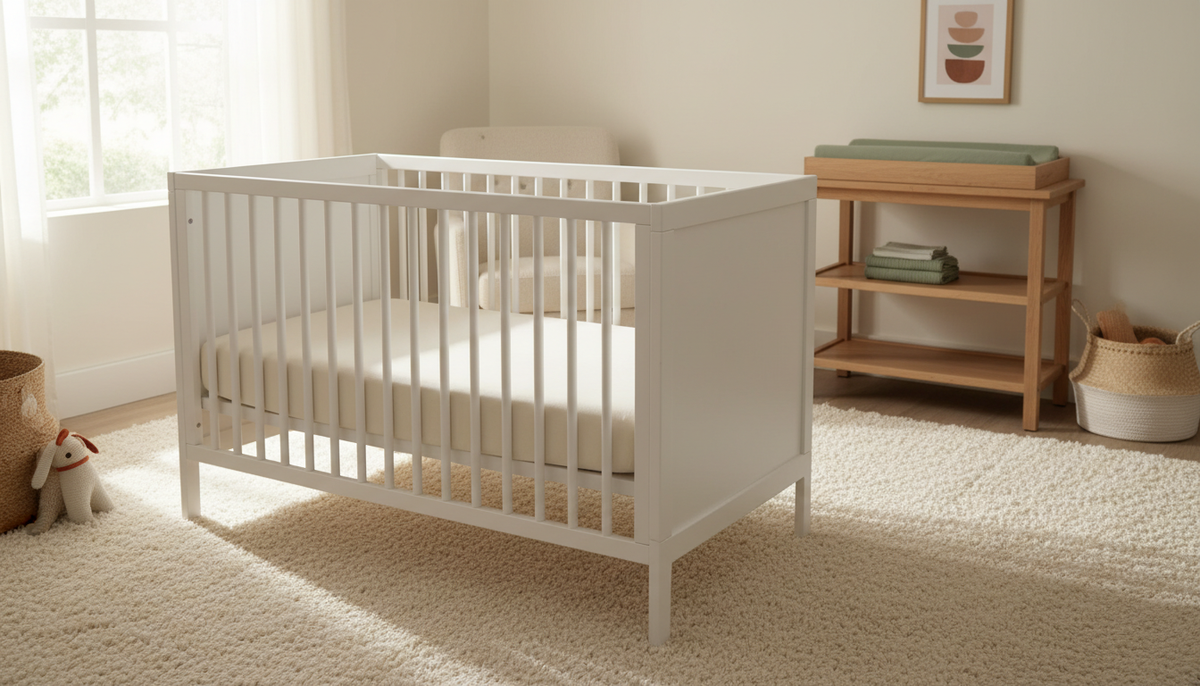
A firm, flat surface with a fitted sheet. No pillows, no blankets, no bumpers, no soft toys. That is the entire formula for a safe infant sleep surface.
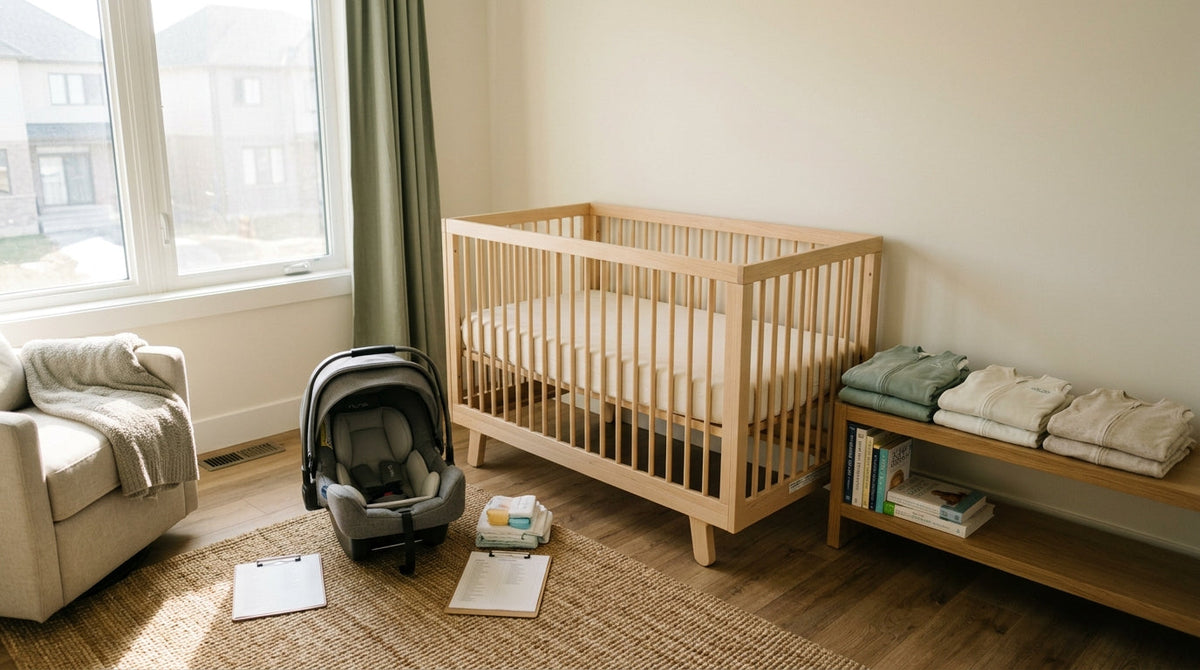
A crib, bassinet, or play yard placed in your bedroom gives you everything room-sharing offers: proximity for nighttime feeding, the ability to hear your baby stir, the comfort of being close. It eliminates the hazards of a shared mattress.
Bedside sleepers, the kind that attach to the side of an adult bed and allow you to reach your baby without getting up, can be a practical option for nursing parents. They must meet CPSC safety standards and be properly secured to the adult bed. An unsecured bedside sleeper that shifts or gaps during the night creates exactly the kind of entrapment hazard you are trying to avoid.
What to skip entirely: sleep positioners, wedges, and inclined sleepers. The AAP does not recommend any of these. Inclined sleepers in particular have been associated with infant deaths, because a baby whose head falls forward in an inclined seat can have their airway compromised. A flat, firm surface is not a compromise. It is the right answer.
The Specific Danger of Sofas, Recliners, and Car Seats
Sofas and armchairs are more dangerous than adult beds for infant sleep, not less. The cushions are softer. The gaps between cushion and armrest are sized exactly wrong for a small infant. A baby who slips into that gap face-first has no way out.
In my experience, infants can wedge themselves into the corner of a couch cushion in seconds flat. An eight-month-old may be old enough to push herself out. A two-month-old is not.
Car seats are not sleep surfaces. They are restraint devices for travel. When a baby falls asleep in a car seat outside of a moving vehicle, their head can fall forward and compress their airway. Move them to a flat surface as soon as you can.
If you fall asleep nursing in a recliner or on a sofa, and you wake up with your baby still there, move the baby to a firm, flat surface immediately. Do not tell yourself it is fine because nothing happened. Move the baby.
Breastfeeding, Night Feeding, and the Accidental Bed-Share
This is where the guidance gets complicated for a lot of nursing parents. You are exhausted. Your baby is hungry at 2 a.m. You bring them into bed to nurse. You fall asleep. You wake up an hour later with the baby still next to you.
This happens constantly. The AAP knows it happens. Their guidance is: if you think you might fall asleep while feeding, set up the sleep environment to be as safe as possible before you start, and move the baby to their separate surface as soon as you wake. If your baby is younger than 4 months, be especially careful not to fall asleep while feeding in bed; the AAP puts bed-sharing risk at 5 to 10 times higher at that age.
A bedside bassinet positioned right next to you makes the transfer easier. You do not have to get up. You do not have to walk across the room. You reach over and lay the baby down. That small reduction in friction matters at 3 a.m. when your judgment is impaired by exhaustion.
The AAP does not recommend bed-sharing under any circumstances. It warns that these situations raise the risk further, from 2 to more than 10 times.
When Bed-Sharing Becomes Far More Dangerous
Supporting Safer Sleep: The Details That Add Up
A few evidence-based practices complement a firm, bare sleep surface without replacing it.
Pacifiers. Pacifier use at nap time and bedtime is associated with reduced SIDS risk. You can introduce one after breastfeeding is established, typically around one month. Do not reattach it if it falls out during sleep. Do not attach it to a cord or clip.
Swaddling. Swaddling can calm young infants, but there is no evidence it lowers SIDS risk. Always place a swaddled baby on their back, keep the swaddle snug at the chest but loose at the hips and knees, never use a weighted swaddle, and stop swaddling as soon as your baby shows any sign of trying to roll (usually 3 to 4 months, sometimes earlier). A swaddled baby who rolls onto their stomach cannot push up.
Room temperature. The AAP does not set a specific room temperature; many parents aim for about 68–72°F (20–22°C). Overheating is a risk factor for SIDS. If you are comfortable in a light layer, your baby is probably comfortable in a sleep sack.
White noise. A white noise machine can help babies sleep longer stretches and may reduce how often you need to go in and resettle them. Keep the volume reasonable and position it away from the baby’s head.
The AAP recommends keeping your baby’s crib, bassinet or play yard in your room ideally for at least the first 6 months, when sleep-related deaths are most common. The specifics of your setup can vary. The core principles do not.
Putting It Together
The safest sleep arrangement for an infant is a firm, flat, bare surface in the same room as a caregiver, separate from the adult bed. That arrangement is achievable for most families with a bassinet, a crib, or a play yard. It does not require expensive equipment. It requires consistency.
The risks of bed-sharing are real, documented, and concentrated in the first year of life. The harm-reduction measures for families who choose to bed-share are real too, and worth knowing. But the baseline recommendation exists because the data behind it is solid: room-sharing without bed-sharing reduces sleep-related infant death, and a separate sleep surface in your room is the most practical way to get there.