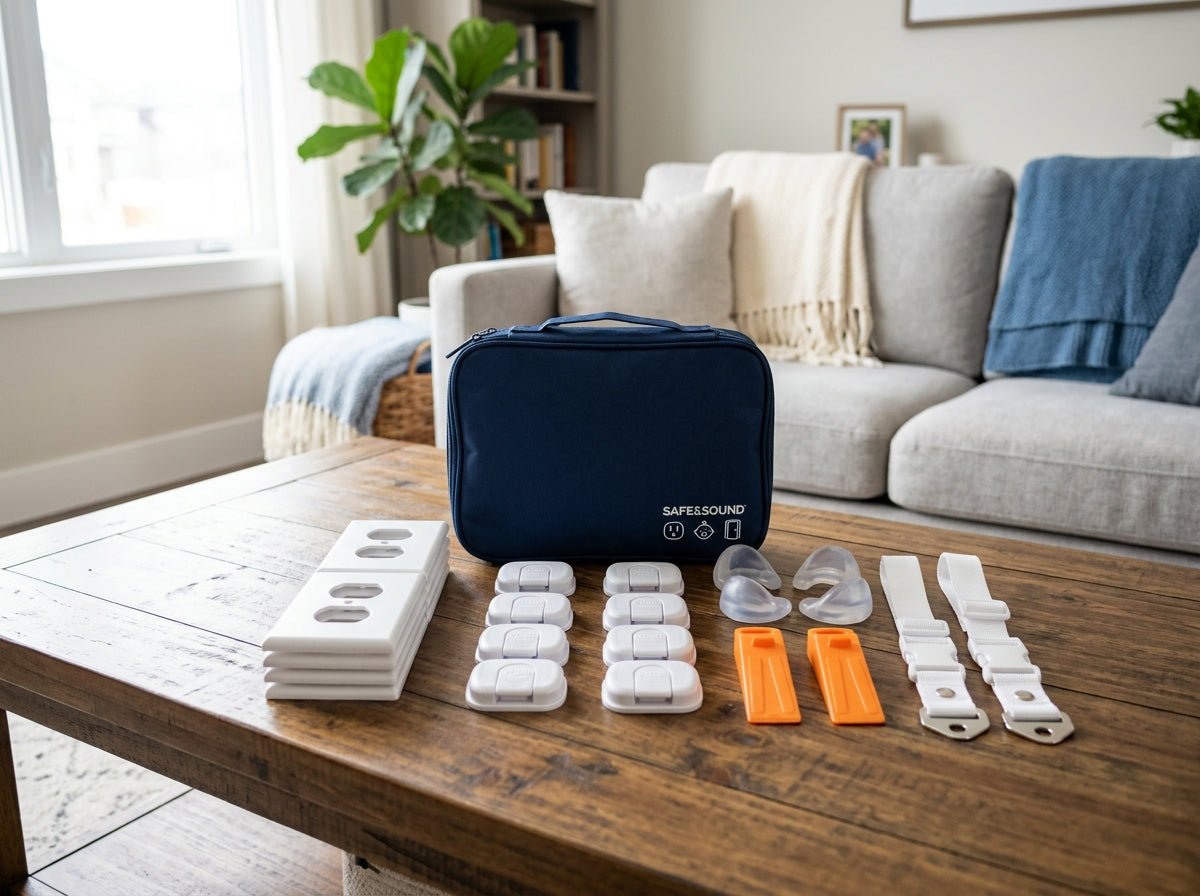
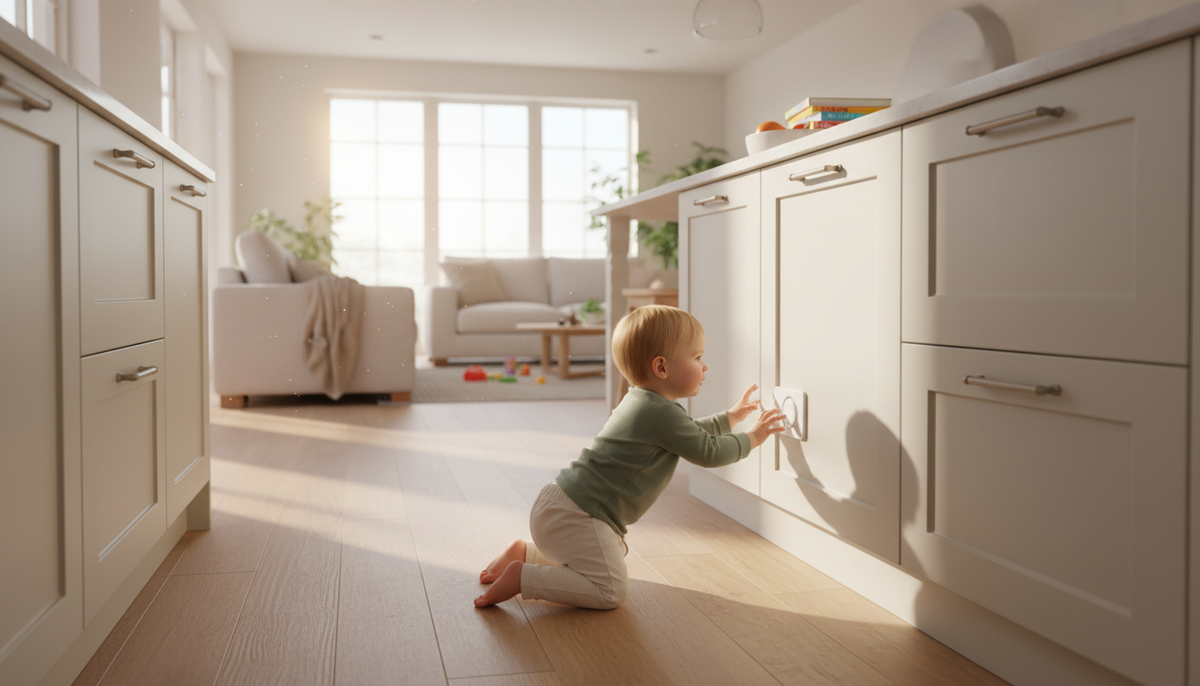
The nursery feels done. The crib is assembled, the dresser is full of tiny folded onesies, and the mobile turns slowly above the mattress. It’s the most prepared you’ve felt since the positive test. But preparation and safety are two different things, and most nurseries I’ve walked into, including my own before I knew better, have at least five hazards hiding in plain sight.
Start With the Crib: Your Highest-Stakes Piece of Furniture
The crib is where your baby will spend the majority of their first year. Get this right before anything else.
The mattress should fit snugly enough that you cannot fit two fingers between it and the crib frame. A gap is a suffocation risk. Full stop. A poorly fitted mattress is one of the contributing factors the AAP has flagged repeatedly.
What goes in the crib: a firm, flat mattress and a fitted sheet. Nothing else. No bumpers, no pillows, no positioners, no stuffed animals, no blankets. I know the quilted bumper set looks beautiful. I bought one. It came out of the crib before my older daughter came home from the hospital, once I read the actual guidance.
Place the crib away from windows, blinds, and curtains. Cord loops from window coverings are a strangulation hazard for infants. Keep it away from the wall-mounted monitor too, and make sure the monitor cord is secured well out of reach.
Anchor Everything to the Wall
A child dies every two weeks from furniture, TV, or appliance tip-overs (CPSC). The nursery dresser is one of the most commonly involved pieces.
Every piece of freestanding furniture in this room needs to be anchored. The dresser. The bookshelf. The wardrobe. If you have a TV in the nursery, anchor it to a wall-mounted bracket or place it on a low, anchored stand. Anti-tip straps cost under $20 and take twenty minutes to install. This is the highest return-on-effort task in the entire room.
I learned this lesson the hard way with a different room. My older daughter pulled a bookcase toward herself at 18 months. It was a small one, and the books slowed the fall, and she was fine. I had every piece of furniture in the nursery anchored within the week. Don’t wait for a near-miss.
When you’re anchoring, check the stud. Drywall anchors alone are not enough for a loaded dresser. Drive into the stud, use the right hardware for your wall type, and test it by pulling firmly on the top corners of the piece.


The Changing Table: A Narrow Surface at Height
ASTM F2388–21 is the mandatory federal safety standard for baby changing products, covering changing tables and contoured changing pads for children up to 30 lb (13.6 kg). What that means practically: any changing table or contoured pad sold in the U.S. must meet this standard. Check that yours carries the certification.
But the standard doesn’t change the physics. You are placing a wriggling infant on a surface roughly 36 inches off the ground. The safety rule is simple: one hand on the baby at all times. Keep everything you need within arm’s reach so you never have to turn away. Diapers, wipes, cream, a spare onesie. If it’s not within reach, it doesn’t belong on the changing table.
The safety strap on the changing pad is not optional. Use it every time, even when your baby is too young to roll. They learn to roll faster than you expect.

- Window open more than 4 inches
- Unanchored dresser, tip-over risk
- Loose blind cord near crib
- Uncovered outlet at floor level
- Monitor cord draped over crib rail
Windows: Four Inches Is the Number
About 3,300 children age 5 and younger are treated in U.S. emergency rooms each year for window fall injuries (CPSC). The nursery window is often left open for ventilation, especially in warmer months.
Windows in homes with young children should not open more than 4 inches (CPSC and AAP). That’s the standard. A window screen does not count as a fall prevention device. Screens are designed to keep insects out, not to support a child’s weight.
Your options: window stops (inexpensive devices that prevent the window from opening beyond 4 inches), window guards with quick-release mechanisms for fire egress, or window locks. Install one before the baby comes home. If you’re in a rental, window stops are typically removable and leave no damage.
Keep the crib, the dresser, and any climbable furniture away from windows. Once a child can pull to stand, they can use furniture as a ladder.


Smoke and Carbon Monoxide Alarms
Three out of five home fire deaths occur in homes with no smoke alarms or non-functioning ones (NFPA). Put a working smoke alarm inside the nursery and test it monthly.
Carbon monoxide is the other threat. CO poisoning kills more than 400 people each year and sends more than 100,000 to U.S. emergency rooms (CDC). CO is colorless and odorless. You will not smell it. A detector on the same floor as the nursery, ideally in or just outside the room, is the only protection you have. Combination smoke/CO detectors are widely available and meet the need with a single device.
Check the expiration dates on your existing detectors. Smoke alarms have a lifespan of roughly 10 years. CO detectors typically last 5–7 years. The date is usually printed on the back.
Outlets, Cords, and Small Objects
Standard outlet covers are better than nothing, but tamper-resistant outlets are better than outlet covers. Tamper-resistant outlets are now required by the National Electrical Code in new construction, and they’re worth retrofitting in an older home. They have spring-loaded shutters that require simultaneous pressure on both slots to open. A child pressing a single object into one slot gets nothing.
Electrical cords are a tripping hazard and a strangulation risk for infants. Route them behind furniture, use cord shorteners for window blind cords, and keep charging cables off the floor. The nursery is not a room where you want loose cords at ground level.
Scan the room from 18 inches off the floor. That’s roughly your baby’s eye level once they’re pulling to stand. Anything small enough to fit through a toilet paper tube is a choking hazard.
Button batteries deserve special attention. An ingested button battery can cause severe internal burns in as little as two hours (Poison Control, AAP). Remote controls, musical greeting cards, and some nightlights use them. Keep those items out of the nursery entirely, or in a locked drawer.
The Dresser Drawers and Closet
The nursery dresser and closet contain small objects, plastic bags from clothing packaging, and drawers that can be pulled out and climbed.
Install drawer stops or drawer locks on the dresser. These prevent drawers from being pulled all the way out and dropped on a child’s feet, and they prevent climbing. Remove any plastic bags from the room entirely. Plastic bags, including dry-cleaning bags and the bags that crib mattresses come in, are a suffocation hazard.
The closet door should have a handle lock or door knob cover if it’s accessible from the nursery. Once your child is mobile, a closet full of hangers, shoes, and small accessories is an injury waiting to happen.
Nursery Safety Walk-Through Checklist
Lighting, Temperature, and the Monitor
A nightlight is useful for middle-of-the-night feeds. Choose one that doesn’t get hot to the touch and plugs flush to the wall rather than protruding. Protruding nightlights can be grabbed and pulled out by a toddler.
Keep the room temperature between 68°F and 72°F (20°C–22°C) for sleep. The AAP does not set a specific room temperature; this range is a practical target. What matters is avoiding overheating, which is a risk factor in sleep-related infant deaths: dress your baby in no more than one layer more than you are wearing. A room thermometer is a $10 investment that removes the guesswork.
The baby monitor’s camera should be mounted at least 3 feet away from the crib, with its cord secured and out of reach. I’ve seen monitor cords strung along the crib rail. That is a strangulation hazard at exactly the height where your baby will eventually pull to stand.
A Final Walk-Through Before Baby Arrives
Get on your hands and knees and look at the room from the floor. You will see things you missed standing up.
Revisit this list at 6 months, when your baby starts rolling, and again at 9–10 months, when pulling to stand begins. The hazard profile of the room changes as your child does, and a nursery that was safe in February may have new gaps by August.