Every drawer in your house is a small invitation to disaster. The kitchen junk drawer with scissors and batteries. The bathroom vanity with razors and medication. The nightstand with things you’d rather not think about. Toddlers find all of it, and they find it fast.
My younger daughter once pulled open three bathroom drawers in the time it took me to answer the front door. She wasn’t even two yet. By the time I got back, she had a nail file in one hand and a lip liner in the other. Lucky outcome. It isn’t always.
The good news: drawer locks work. The harder part is knowing which type to use where, and how to install them so they stay put.
Why Drawers Deserve More Attention Than They Get
Parents tend to fixate on cabinet locks for under-sink storage, and rightly so. But drawers get overlooked, partly because they seem less dramatic. A drawer doesn’t swing open and expose a full cabinet of hazards. It slides out, offers something interesting, and gets closed again. Toddlers figure this out quickly.
The real danger is what’s inside. Kitchen drawers hold knives, skewers, and graters. Bathroom drawers hold medications, razors, and small batteries. According to the CDC, approximately 300 children and teens ages 0–19 are seen in U.S. emergency departments every day for medication-related poisoning. A significant share of those exposures start with a drawer someone forgot to lock.
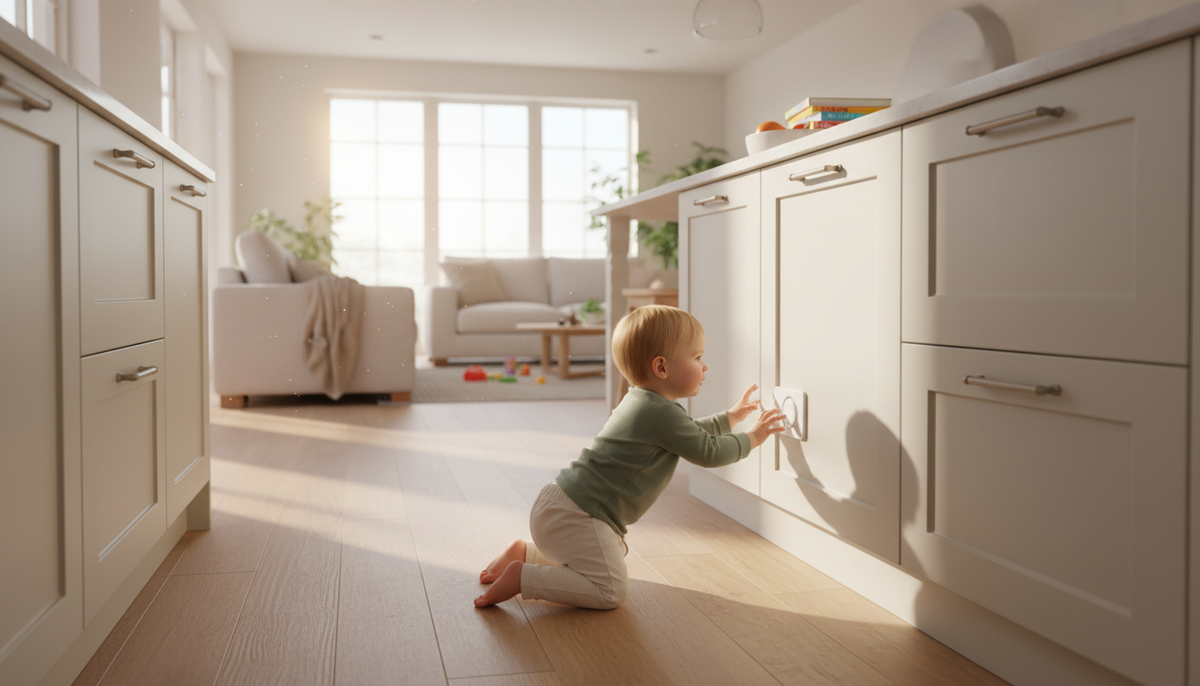
And then there’s the physical hazard of the drawer itself. A toddler who pulls a heavy drawer out too far can bring it down on their head, or use it as a step stool to climb higher. Drawers are not passive.
Understanding the Two Main Lock Types
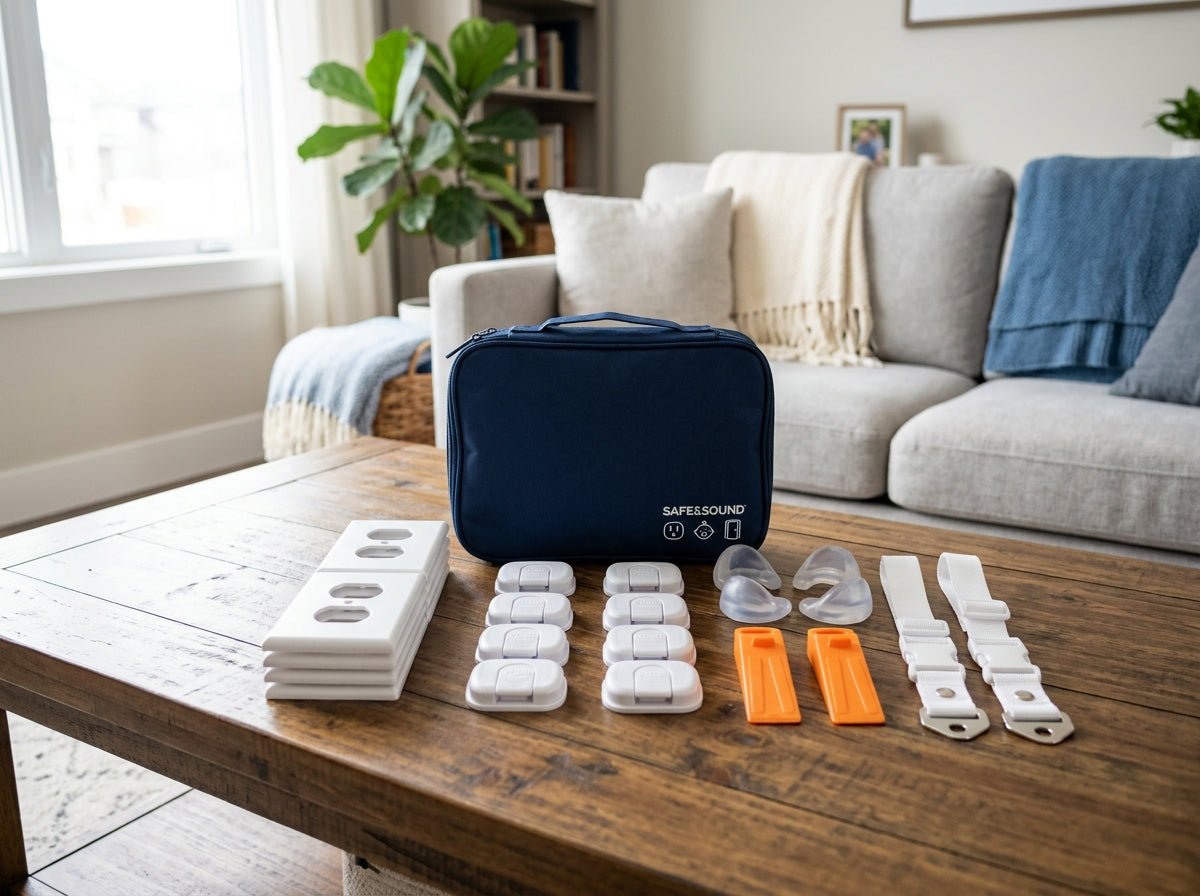
Drawer locks fall into two broad categories: magnetic cabinet locks and adhesive strap or spring locks. Each has a place. Neither is universally better.
Magnetic locks mount inside the drawer or cabinet, hidden from view. A magnetic key held to the outside of the drawer releases the lock. No visible hardware, no mechanism for a curious child to study and defeat. These are the locks I recommend most often for kitchen drawers and bathroom vanities, because the concealment removes the puzzle-solving opportunity entirely.
Adhesive strap locks (sometimes called flex locks or multi-use locks) wrap around a drawer pull or thread through handles to prevent opening. They’re visible, they’re adjustable, and they require no drilling. They’re also the type my older daughter defeated at 26 months. She watched me open it twice, figured out the release button, and that was the end of that. Strap locks work well for lower-risk drawers and for renters who can’t drill. For anything containing medications, sharp objects, or batteries, I’d go with magnetic.


| Drawer Type | Risk Level | Best Lock | Drill Required |
|---|---|---|---|
| Medications, razors, batteries | High | Magnetic, screw-mounted | Recommended |
| Knives, sharp tools | High | Magnetic, screw-mounted | Recommended |
| Junk drawer, batteries | High | Magnetic | Optional |
| Cleaning supplies, tools | Medium | Magnetic or strap lock | Optional |
| Dish towels, oven mitts | Low | Strap lock or none | No |
| Shallow drawers under 1.5" | Any | Strap lock only | No |
Magnetic Locks: What to Know Before You Buy
Magnetic locks are the most secure option for most drawer configurations. The mechanism sits inside, out of sight, and the only way to open the drawer is with the paired magnetic key.
A few things matter when you’re shopping:
- Magnet strength. Cheaper locks use weaker magnets, which means the key has to be positioned almost perfectly to release the latch. In practice, this is annoying enough that parents stop using them. Look for locks rated for a strong, wide release zone.
- Surface compatibility. The adhesive backing on most magnetic lock mounts is industrial-grade, but it struggles on textured, painted, or laminate surfaces. If your cabinets have a rough interior, use the included screws instead of relying on adhesive alone.
- Key storage. You need a dedicated spot for the magnetic key, high enough that your child can’t reach it. I keep mine on top of the refrigerator. Losing the key means disassembling the lock from inside the drawer, which is exactly as annoying as it sounds.
- Drawer depth. Most magnetic locks need at least 1.5 inches of clearance inside the drawer to mount properly. Shallow bathroom drawers sometimes don’t have it. Measure before you buy.
In my experience, I’ve installed magnetic locks in three kitchens, including two rental units where I used the adhesive mount rather than screws. One adhesive failed after about eight months on a painted particleboard surface. The screw-mounted ones have never moved.


-
Measure drawer depth
Confirm at least 1.5 inches of interior clearance. Shallow drawers require a strap lock instead. -
Use the included template
Position the template inside the drawer frame to mark screw or adhesive placement accurately. -
Mount the lock body
Attach to the inside top of the fixed drawer frame, not the drawer itself. Use screws on painted or laminate surfaces. -
Attach the strike plate
Mount to the inside front of the drawer so the latch arm catches cleanly when the drawer closes. -
Test alignment with the magnetic key
Open and close the drawer several times. Adjust the strike plate if the latch sticks or misses. -
Store the key out of reach
Place the magnetic key somewhere high and consistent, such as on top of the refrigerator.
Adhesive Strap Locks: Where They Work and Where They Don’t
Strap locks have a real use case. They’re fast to install, they work on drawers with no interior clearance, and they’re removable without leaving holes. For a rental, or for a drawer that contains nothing dangerous (think: the drawer with dish towels and oven mitts), they’re a reasonable choice.
The problem is the visible mechanism. Any toddler who watches you open a strap lock has a model to work from. My older daughter needed exactly two observations. Some kids take longer. Some never figure it out. But if the drawer contains anything you’d be alarmed to find in small hands, don’t rely on a mechanism your child can see and study.
A few practical notes on strap locks:
- Clean the surface with rubbing alcohol before applying. Adhesive on a greasy kitchen surface will fail.
- Give the adhesive 24 hours to cure before testing. Most instructions say this. Most parents ignore it. Don’t.
- Replace them if the adhesive starts to peel at the edges. A half-attached strap lock is worse than no lock, because it creates a false sense of security.

- Medications and pill bottles within reach
- Razors and nail scissors in open drawer
- Button batteries loose in vanity drawer
- Open drawer used as a climbing step
Installing Magnetic Locks: A Room-by-Room Approach
The installation process is similar across brands, but the placement decisions are room-specific.
Kitchen: Prioritize the knife drawer, the junk drawer (batteries, scissors, twist ties that look like toys), and any drawer at or below counter height that contains sharp tools. If your kitchen has a drawer directly under the stove or oven, lock it. Children pull those out and use them as steps.
Bathroom: Lock every drawer that contains medications, razors, nail scissors, or anything battery-powered. According to the American Academy of Pediatrics, an ingested button battery can cause severe internal burns in as little as two hours. That number should make every bathroom drawer feel urgent.
Bedroom and nightstand: Nightstands are easy to forget. They often contain medications, small batteries, and other hazards. Lock them.
Home office: Scissors, staples, paper clips, rubber bands, and pens all live in office drawers. None of them are immediately life-threatening, but a toddler with a full stapler is a problem. Lock the desk.
For installation: mount the lock body to the inside top of the drawer frame (the fixed part, not the drawer itself). The latch arm should extend down to catch on a strike plate mounted to the inside front of the drawer. Most kits include a template. Use it. Misaligned locks either don’t catch or are too stiff to release cleanly, and you’ll end up bypassing them yourself.
Drawer Safety Walk-Through Checklist
When Locks Aren’t Enough
Locks are a layer of protection, not a substitute for supervision. They buy you time when attention lapses. They don’t replace it.
A few situations where locks alone fall short:
- Multi-child households. Older siblings open locked drawers and don’t always close them. Teach older children why the locks exist.
- Guests and caregivers. Anyone who uses your kitchen or bathroom needs to know where the magnetic key is and why it matters. A babysitter who can’t open the utensil drawer will find a workaround.
- The drawer you forgot. Do a full walk-through of your home at toddler height. Literally get on your knees and look at what’s accessible. You will find at least one drawer you hadn’t thought about.
Choosing the Right Lock for Each Situation
Here’s the short version:
- High-risk drawers (medications, sharp objects, batteries): magnetic lock, screw-mounted if possible.
- Medium-risk drawers (tools, cleaning supplies): magnetic lock or heavy-duty strap lock.
- Low-risk drawers (dish towels, plastic wrap, non-sharp utensils): strap lock is fine, or no lock at all.
- Rental or no-drill situations: adhesive magnetic locks for high-risk, strap locks for everything else. Check the adhesive monthly.
- Shallow drawers under 1.5 inches deep: strap lock only, since magnetic locks won’t fit.
The goal is to match the security level to the actual hazard. Over-locking every drawer in the house means you’ll start bypassing the locks yourself, which defeats the purpose entirely.
Start with the drawers that scare you most. Get those locked first, properly, with hardware that matches the surface. Then work outward. A systematic approach beats a rushed one, and a well-installed lock on the knife drawer matters more than a poorly installed one on the spatula drawer.