How to Remove Adhesive Cabinet Locks Without Damaging Your Cabinets
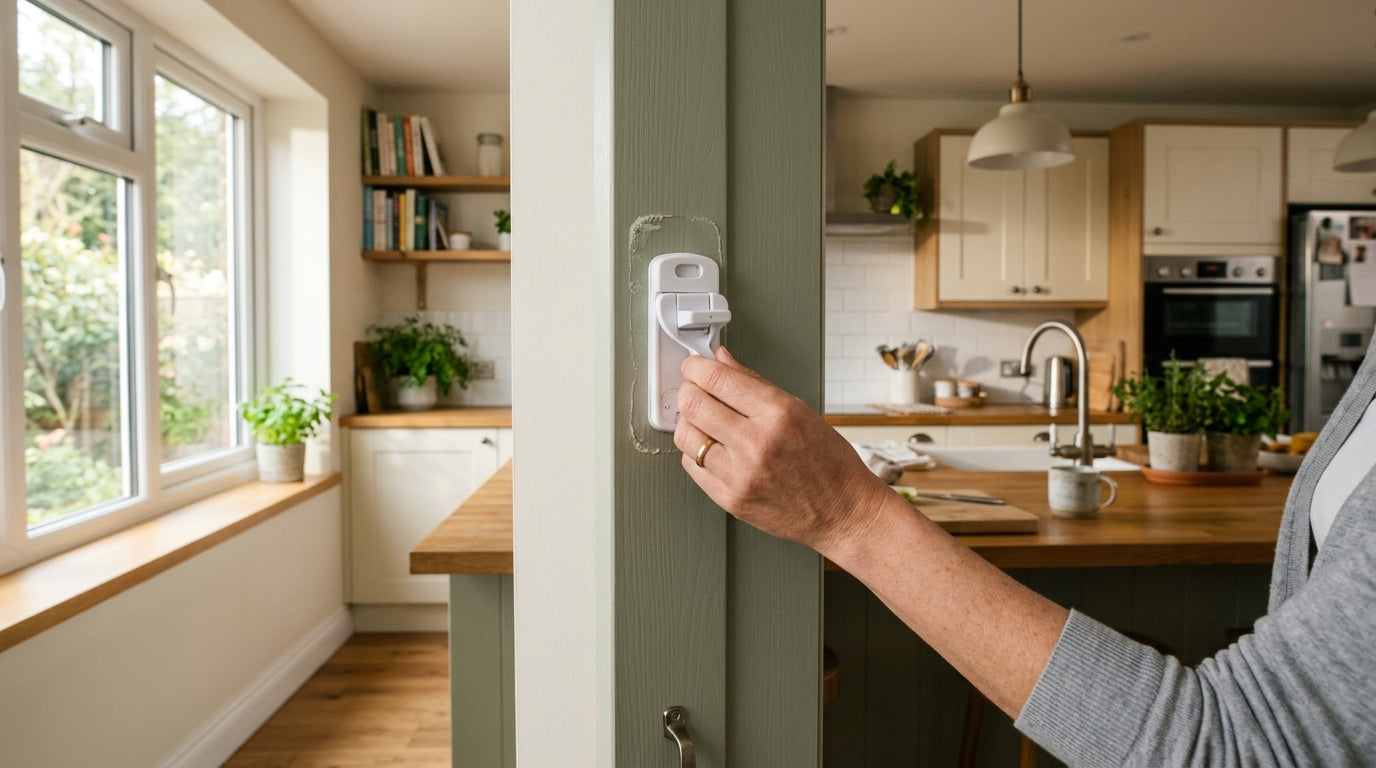
Adhesive cabinet locks have a short shelf life in most homes. Your kids get older, your curiosity gets the better of you, or you’re moving out and need to restore the cabinets to their original condition. Whatever the reason, the removal process is where most parents make mistakes that leave them with peeling paint or sticky residue. If you're considering installing new locks after removal, adhesive cabinet locks offer easy no-drill installation.
Here’s how to do it cleanly.
Key Takeaways
- Always heat the adhesive first, warm adhesive releases cleanly, cold adhesive pulls paint.
- Use dental floss to cut laterally through the bond, not your fingers to peel it off.
- Use rubbing alcohol on thermofoil cabinets, petroleum removers can lift the surface.
- Remove locks sooner rather than later, adhesive cured for years is much harder to clean up.
- Hair dryer is safer than a heat gun for most cabinet finishes.
Why Adhesive Locks Are Tricky to Remove
Most adhesive cabinet locks use a high-bond mounting tape, often a variant of the same foam-core tape 3M makes for permanent mounting applications. That’s the point. The adhesive is designed to resist the pulling force of a curious toddler, which means it also resists your attempts to remove it. If you're considering a replacement, learn whether magnetic cabinet locks work on frameless cabinets.
The bond isn’t uniform across surfaces, either. Painted MDF cabinets, lacquered wood, and thermofoil all respond differently. What lifts cleanly off one surface can strip a layer of paint off another. For magnetic lock alternatives, learn about removing magnetic cabinet locks without damaging cabinets.
What You’ll Need
- A hair dryer or heat gun set to low
- Dental floss or fishing line (unflavored floss works best)
- A plastic scraper or old credit card
- Adhesive remover like Goo Gone, or rubbing alcohol
- A soft cloth
Skip metal scrapers entirely. They will scratch your cabinet finish.
Quick Removal Reference
- Heat the Lock: Hold a hair dryer 2–3 inches away on medium heat for 30–45 seconds until the adhesive is warm and pliable.
- Floss the Bond: Work dental floss behind one edge and saw laterally across the adhesive pad. Keep the floss flat against the cabinet.
- Dissolve the Residue: Apply Goo Gone or rubbing alcohol to a soft cloth, let it sit 60 seconds, then wipe in one direction.
- Touch Up if Needed: For minor paint lift, use a matched touch-up pen. For MDF damage, sand lightly, prime, and apply two thin coats.
Step One: Heat the Adhesive
This is the most important step, and the one people skip. Cold adhesive is brittle and bonds tightly to the surface beneath it. Warm adhesive becomes pliable and releases much more cleanly.
Set your hair dryer to medium heat and hold it 2–3 inches from the lock for about 30–45 seconds. You’re warming the adhesive pad through the plastic housing, so give it enough time. The lock should feel warm to the touch but not hot enough to burn you. If you’re using a heat gun, keep it on the lowest setting and keep it moving. Heat guns concentrate heat fast, and you can bubble a finish in seconds if you hold it still.
In my experience, a heat gun on the first lock held too close for too long can bubble a cabinet finish. Hair dryer is the safer tool for most people.
Step Two: Cut Through the Adhesive with Floss
Once the adhesive is warm, take a length of dental floss and work it behind one edge of the lock. Use a sawing motion, pulling the floss toward you while keeping it flat against the cabinet surface. The goal is to slice through the adhesive pad rather than peel the lock away from it.
This technique works because it distributes the force laterally across the adhesive rather than pulling it perpendicular to the surface. Perpendicular pulling is what causes paint to lift. The floss cuts the bond instead.
Work slowly from one side to the other. The lock should release without much resistance if the adhesive is still warm.
Step Three: Remove the Residue
The lock is off, but there’s almost always a sticky rectangle left behind. Don’t scrub it dry. Apply a small amount of Goo Gone or rubbing alcohol to a soft cloth and let it sit on the residue for about 60 seconds. Then wipe in one direction. Circular scrubbing can dull a finish.
For thermofoil cabinets, use rubbing alcohol rather than Goo Gone. Petroleum-based removers can soften thermofoil adhesive and cause the surface to lift at the edges.
How to Handle Paint Lift
If some paint came up with the lock, you’re not necessarily looking at a full repaint. For small areas, a touch-up paint pen matched to your cabinet color can cover minor damage. If you’re dealing with MDF cabinets and a chunk of the surface layer came away, that’s a harder fix. Sand the area lightly, prime it, and apply two thin coats of matching paint.
The honest answer is that some finishes don’t survive adhesive removal intact, especially flat or matte painted surfaces. Satin and semi-gloss finishes hold up better. If your cabinets have a flat finish, heat slowly and use the floss method carefully.
A Note on Timing
Remove adhesive locks sooner rather than later. Adhesive that has cured for two or three years is significantly harder to remove cleanly than adhesive that’s been on for six months. If you know you’ll be moving or remodeling, pull the locks before the bond has fully set into the surface.