Is It Safe for Babies to Crawl on Carpet vs. Tile?

Parents often focus on what’s on the floor before their baby starts crawling, then scramble to address it once a newly mobile baby is already halfway under the coffee table.
The carpet-versus-tile question comes up constantly, and the honest answer is that neither surface is automatically safer. Each has real trade-offs. What matters is understanding them so you can set up the best possible crawling environment for your specific home.
When Crawling Starts and Why the Floor Suddenly Matters
The AAP notes that most babies begin crawling somewhere between 6 and 10 months, though that window is wide. Some babies skip crawling entirely and go straight to cruising along furniture. The CDC’s developmental milestone guidance echoes this: readiness depends on a baby’s individual strength and coordination, not a fixed date on the calendar.
Once crawling begins, the floor becomes your baby’s entire world. They’re pressing their palms and knees into it for hours a day. They’re putting their faces close to it. They’re tasting it, because of course they are. The surface type affects traction, fall impact, hygiene, and the kinds of hazards you need to manage. All four of those things matter.
Carpet: The Cushioning Advantage and the Hidden Trade-offs
Carpet wins on impact. When a baby loses balance mid-crawl and tips sideways or forward, carpet absorbs force that tile does not. Hard flooring increases the risk of head injuries and fractures when a baby falls, and babies at this stage fall constantly. In my experience, moving crawling practice from hard tile to carpet reduced the frequency of falls significantly.
Carpet also provides traction. Babies learning to crawl need grip. Smooth tile can make it difficult to get purchase, especially in footed pajamas. A baby who keeps slipping may get frustrated and abandon the movement pattern. Textured surfaces, including low-pile carpet, give hands and knees something to push against.
The trade-off is hygiene. Carpet fibers trap dust mites, pet dander, bacteria, and food particles in ways that hard floors do not. For babies with asthma, allergies, or respiratory sensitivities, a heavily contaminated carpet can be problematic. Regular vacuuming with a HEPA-filter vacuum helps, and professional deep cleaning every 6–12 months reduces allergen levels. If you have pets, the cleaning frequency needs to increase.
High-pile carpet introduces another issue: fiber ingestion. Babies mouth everything, and loose fibers from plush or shaggy carpet can end up in a baby’s mouth. Low-pile or commercial-grade carpet reduces this risk. If you’re buying new carpet specifically for a crawling area, low-pile is the right call.


Tile and Hard Floors: Easier to Clean, Harder to Fall On
Hard flooring, whether tile, hardwood, or laminate, is easier to sanitize. Spills wipe up completely. You can disinfect the surface. In households with multiple children, pets, or immunocompromised family members, that’s a real advantage. Food that drops on tile can be cleaned up in a way that food ground into carpet simply cannot.
But tile is unforgiving. There’s no cushioning when a baby goes down, and at 6–10 months, babies fall frequently. The risk of head impact is higher on hard floors, and the risk of a baby’s hands slipping out from under them mid-crawl is also higher. Socks on tile are particularly hazardous. Bare feet or grippy-soled socks are safer on smooth hard floors.
Tile in high-moisture areas, like bathrooms and kitchens, presents an additional concern. Wet tile is slippery even for adults. For a baby just learning to coordinate four limbs simultaneously, a wet kitchen floor is a fall waiting to happen. Non-slip mats help, but they need to have suction backing or weight to stay in place. A mat that slides is worse than no mat.
The Hybrid Approach: Foam Mats and Washable Rugs
A hybrid approach works well: foam interlocking play mats on hard floors provide cushioning and grip without the allergen-trapping of carpet. They’re easy to wipe down, easy to disinfect, and easy to replace if damaged. In my experience, foam tiles in the kitchen allowed supervision during cooking while eliminating fall risk on hard flooring.
Washable rugs are another good option. A flat-weave cotton rug with a non-slip backing provides traction and some cushioning, and you can throw it in the washing machine. That’s a meaningful hygiene advantage over wall-to-wall carpet.
Whatever you put down, make sure it lies flat. Curled edges or bunched corners are trip hazards for babies who are starting to pull up and cruise.
Transition Zones Between Flooring Types
This one catches parents off guard. The edge where carpet meets tile, or where a foam mat meets hardwood, can be a real hazard. Babies can catch their fingers or toes on the lip of a transition strip. A raised edge can cause a forward fall. If your home has multiple flooring types, use flush transition strips rather than raised ones, and consider using baby gates to keep crawling babies in zones with consistent flooring until they’re more stable on their feet.
Frequently Asked Questions
Is carpet safer than tile for a crawling baby?
What are the biggest risks of tile for crawling babies?
Does carpet cause allergy or hygiene problems for babies?
Can babies ingest carpet fibers?
What is the safest flooring option for a crawling baby?
Are flooring transitions between carpet and tile dangerous?
Does the floor type keep my baby safe from other hazards?
What the Floor Type Cannot Do
Here’s the thing that gets lost in the carpet-versus-tile debate: the floor material is not a safety system. It’s one variable in a much larger environment.
The CPSC’s baby safety guidance is clear that crawling areas need to be free of choking hazards, toxic substances, and unstable furniture that could tip. A baby crawling on the softest carpet in the world is still at risk from an electrical outlet, a small toy left by an older sibling, or a cleaning product stored at floor level. The floor absorbs falls. It doesn’t remove hazards.
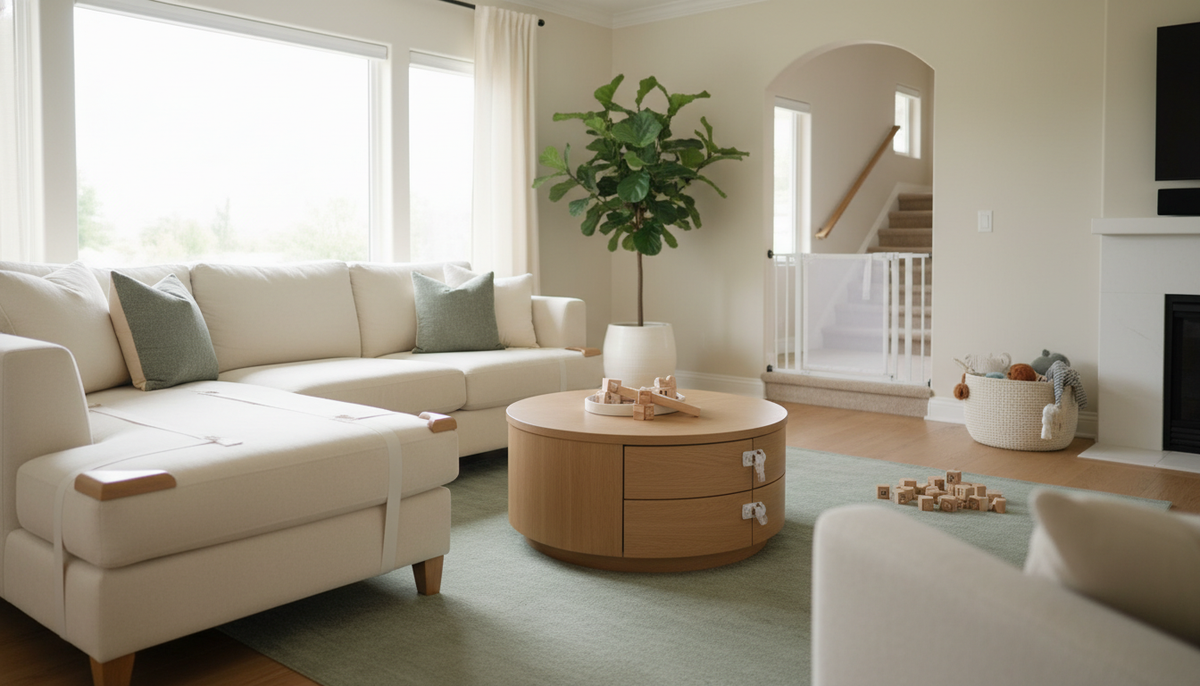
Continuous supervision is the actual safety layer. Every surface type, including foam mats, requires an adult who is present and paying attention. Unsecured cabinets at floor level pose hazards regardless of the flooring material beneath them.
Crawling Area Safety Checklist
Building the Safest Crawling Environment
The floor choice matters, but it’s one piece. Here’s how to think about the full picture.
- On hard floors, use foam play mats or washable rugs with non-slip backing to add cushioning and traction.
- On carpet, vacuum weekly with a HEPA-filter vacuum, schedule professional cleaning regularly, and choose low-pile over high-pile to reduce fiber ingestion risk.
- In kitchens and bathrooms, stick with hard flooring and use suction-backed non-slip mats. Avoid carpet in these areas entirely because of mold and mildew risk.
- At flooring transitions, use flush transition strips and consider baby gates to keep crawlers in consistent-surface zones.
- Everywhere, do a floor-level sweep before each crawling session. Get down on your hands and knees and look at what your baby sees. Small objects, cords, furniture edges, and cabinet gaps are much more visible from that angle.
- Remove or secure anything within reach that shouldn’t be touched: cleaning products, small decorative objects, unstable furniture, power strips.
The CPSC recommends treating the entire crawling area as a hazard zone, not just the floor surface itself. That means anchoring furniture, covering outlets, and keeping toxic substances locked away, regardless of whether your baby is on carpet or tile.
The best crawling surface is the one you’ve prepared thoroughly, maintain consistently, and stay present on. No flooring material substitutes for that.