Kitchen Table and High Chair Safety: Preventing Falls at Mealtime

About 9,400 children under age 3 are treated in U.S. emergency departments each year for high-chair-related injuries (CPSC). That number stopped me cold when I first read it, because I know exactly how those moments happen. You turn around to grab a paper towel. You answer a text. You step two feet to the left to reach the sink. And in that window, a child who was perfectly still a second ago is suddenly not.
Mealtime feels safe. It’s routine. It’s structured. But the kitchen is one of the most hazardous rooms in the house for young children, and the high chair, which we think of as a containment device, is also a fall risk if it’s used incorrectly.
Choosing a High Chair That Meets Current Safety Standards
The baseline is non-negotiable: any high chair you use should meet current CPSC safety standards. That means a five-point harness, a wide stable base, a crotch post to prevent submarining, and a tray with a locking mechanism that engages positively and audibly. In my experience testing chairs, the "click" on some budget models was more suggestion than confirmation, I could push the tray in, hear something, and then slide it back out with one hand. That’s not a locked tray.
Look for chairs that have been certified to ASTM F404, the voluntary standard for high chairs. Some manufacturers go further and submit to third-party testing. That extra step matters.
What to check before you buy:
- Five-point harness with a buckle that requires two separate motions to release
- Base width that extends beyond the seat on all sides
- No sharp edges on the tray or frame
- Stable on all four legs with no wobble when you apply lateral pressure
- Tray latch that requires deliberate force to disengage
Use the Harness Every Single Time
This is the rule parents skip most often, and it’s the one that leads directly to falls. Most high-chair falls happen when caregivers assume a child won’t move, or when they step away "just for a second." Children don’t telegraph their intentions. They stand up. They lunge for a cup. They twist sideways to watch the dog.
In my experience, I buckled my older daughter in her high chair every meal from the time she could sit upright until she transitioned to a booster, not because she was a climber, but because I couldn’t predict the one time she would be.
Buckle the harness before you put food on the tray. Make it the first step, not an afterthought. And check that the shoulder straps are snug, not just clipped. A harness that’s loose enough to let a child slip a shoulder free provides almost no protection.


Placement: Where You Put the Chair Matters as Much as What’s in It
A high chair on a stable surface, buckled correctly, can still tip if it’s positioned wrong. Children push. With their feet against a wall, they can generate enough force to walk the chair backward. With their hands against a counter, they can lever the front legs off the floor.
Keep the high chair at least 18–24 inches from walls, counters, tables, and cabinets. That sounds like a lot of clearance, but toddlers have surprising reach and leverage. In my experience, my younger daughter at around 14 months managed to get both feet flat against the lower cabinet door under our island and push herself back far enough to tip the chair onto its rear legs. She was buckled and fine, but I moved the chair that same day.
Never place a high chair on an elevated surface. Not on a deck. Not on a table. Not on a step. The chair belongs on level flooring, period. A fall from a high chair at floor level is serious. A fall from a high chair elevated on a table is potentially catastrophic.
Inspect the Chair Weekly
Tray hinges crack. Locking mechanisms wear. Harness webbing frays. These aren’t hypothetical failure modes; they’re what happens to plastic and fabric that gets used three times a day, wiped down, exposed to food acids, and loaded into a dishwasher repeatedly.
Set a weekly inspection habit. It takes two minutes.
- Push and pull the tray through its full range of motion. It should lock firmly and release only when you deliberately operate the latch.
- Check the harness buckle for cracks, especially around the button.
- Run the webbing through your fingers looking for fraying or stiff spots where food has dried into the fibers.
- Rock the chair on all four legs and check for any wobble in the frame joints.
- Look at the base feet. Rubber feet wear down and reduce stability on smooth floors.
If anything fails this check, stop using the chair until it’s repaired or replaced. A cracked tray latch that fails mid-meal can drop the tray suddenly, destabilizing the whole chair.
The Table Itself Is a Hazard
High chairs get most of the attention, but the kitchen table is its own injury risk. Sharp corners and edges are at exactly the height a toddler’s head lands during a fall. A child pulling up on a table edge, leaning against it, or falling near it can hit a corner with significant force.
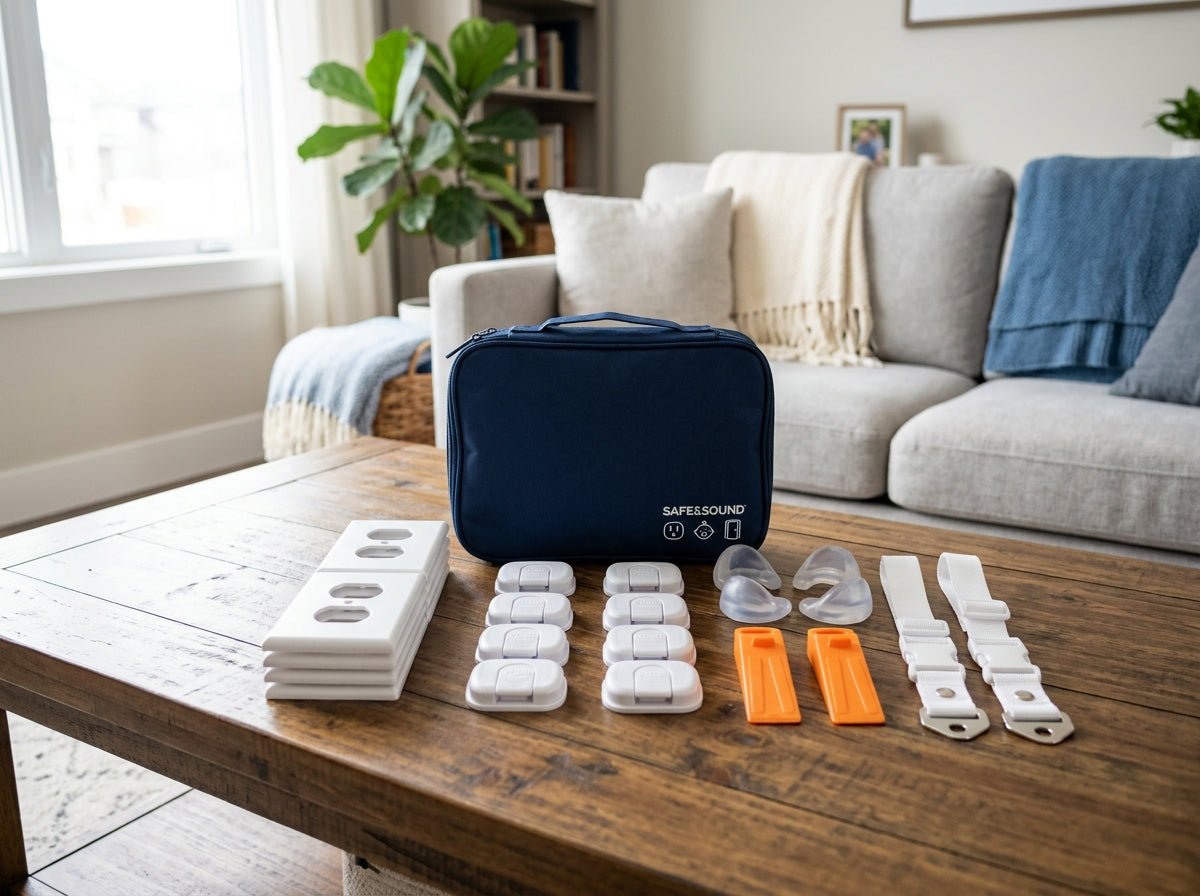
Corner guards and edge bumpers are inexpensive and effective. They belong on any table where a young child eats, plays nearby, or uses for support when walking. Any table where a young child eats, plays nearby, or uses for support when walking deserves the same treatment.
Check that the table itself is stable. A child pulling to stand against a wobbly table can bring it down. Four legs should sit flat on the floor with no rocking. If your table wobbles, tighten the hardware or add furniture feet before assuming it’s fine.
Tablecloths are a specific hazard that often gets overlooked. A child who grabs a hanging tablecloth can pull everything on the table, including hot food, heavy plates, and glasses, directly onto themselves. During the years your child is in a high chair or a booster, a bare table or fitted placemats are safer than any cloth that hangs over the edge.
Booster Seats Require the Same Discipline
A booster seat strapped to a dining chair is convenient and developmentally appropriate for older toddlers. But "strapped to the chair" has to mean strapped, with the harness attached and tightened before the child sits down.
A booster without a proper anchor strap can tip sideways if a child shifts weight suddenly. The booster’s own harness keeps the child in the seat, but without the chair strap, the whole unit can slide or rotate. Use both. Every time.
Check that the adult chair you’re attaching the booster to is sturdy. A lightweight folding chair or a chair with a narrow seat back may not provide adequate support. Solid wood or metal dining chairs are the better choice.
Supervision Is the Safety Net Everything Else Depends On
No harness, no corner guard, and no inspection routine replaces continuous supervision during meals. Children can unbuckle themselves faster than expected. In my experience, my older daughter figured out the buckle on her booster at 26 months, which is earlier than most parents anticipate. From that point on, one of us stayed within arm’s reach for every meal.
Stay in the room. Stay close. If you need to leave the kitchen, take the child with you or make sure another adult is present. Distraction is a factor in most mealtime fall incidents, and the kitchen is full of distractions.
Teach older siblings that the high chair is not a toy. No pushing, no rocking, no hanging on the back. Set a no-running rule in the eating area. A collision between a running child and a high chair can tip the chair before anyone has time to react.
Weekly High Chair Inspection
Keep the Seat Clean and Dry
Food residue on the seat and harness straps reduces friction and lets children slide forward or sideways out of position. A child who has slipped down in the harness is no longer protected by it correctly. Wipe the seat and straps after every meal. Wash the harness fabric regularly according to the manufacturer’s instructions.
Moisture matters too. A wet seat, from a spilled cup or a damp cloth that wasn’t dried, creates a slippery surface. Dry the seat before placing the child in the chair.
A Note on Reaching and Grabbing
Reaching for objects is one of the most common triggers for loss of balance in a high chair. Keep the tray clear of items the child doesn’t need for the current meal. Cups, utensils, and food items that aren’t actively being eaten should be out of reach on the table, not sitting on the edge of the tray where a lunge could shift the child’s center of gravity.
The same applies to nearby surfaces. If a child can reach a counter or the edge of the table from the high chair, anything sitting there is a grab target. Clear the zone around the chair before meals.
Mealtime falls are preventable. The harness, the placement, the weekly inspection, the clear zone around the chair: none of these steps is complicated. Together, they close off most of the pathways that lead to an emergency room visit.