Pediatrician Baby Proofing Advice: What Doctors Actually Recommend

Most parents leave the pediatrician’s office with a growth chart and a vaccine schedule. The baby-proofing conversation, if it happens at all, gets squeezed into the last two minutes of a well visit. But pediatricians have strong, evidence-based opinions about what keeps babies safe at home, and most of it is simpler than the baby product industry would have you believe.
Pediatricians recommend the following, broken down by the hazards they take most seriously.
Falls: The Hazard Pediatricians Mention First
Ask any pediatrician what worries them most about infants and toddlers at home, and falls come up immediately. About 93,000 children under 5 are treated in U.S. emergency rooms each year for stair-related injuries (Nationwide Children’s analysis of CPSC NEISS data, 1999–2008). That number does not include falls from furniture, counters, or changing tables.
The pediatric guidance on this is consistent: safety gates at the top and bottom of every staircase, furniture anchored to walls, and no leaving a baby unattended on any elevated surface. That last one sounds obvious until it happens to you. My older daughter rolled off a changing pad at four months. I had turned to grab a diaper from a drawer that was maybe 18 inches away. She was fine. I was not, for several days afterward.
For stairs, hardware-mounted gates belong at the top. Pressure-mounted gates are acceptable at the bottom or for room dividers, but not at the top where a pushed gate becomes a fall hazard itself.
Safe Sleep: What the Crib Needs
The AAP recommends room-sharing without bed-sharing, ideally for at least the first six months. That means a crib, bassinet, or play yard in your bedroom, not your baby in your bed. The distinction matters because bed-sharing increases SIDS risk, particularly when combined with soft bedding, parental fatigue, or any substance use.
The crib itself should have a firm, flat mattress and a single fitted sheet. Nothing else. No pillows, no loose blankets, no bumpers, no stuffed animals. Pediatricians are direct about this: the items that look cozy and comforting are the items that create suffocation risk. Crib bumpers in particular have no documented safety benefit and have been linked to infant deaths. The CPSC banned padded crib bumpers in 2022 for exactly this reason.
If you are worried about your baby being cold, a sleep sack is the right solution. It keeps them warm without any loose fabric in the sleep space.
Drowning: Faster and Quieter Than You Expect
Drowning is a leading cause of unintentional death in children under five. It does not look like the movies. There is no splashing, no calling for help. A child can lose consciousness in a bathtub in under two minutes.
Pediatricians are consistent on this: constant, attentive supervision around any water. Not supervision from the doorway. Not supervision while checking your phone. Eyes on the child, within arm’s reach. This applies to bathtubs, kiddie pools, buckets, and any standing water. My younger daughter once climbed into an empty laundry tub and turned on the tap before I realized she had gone quiet. She was 18 months old and had been "playing in the living room" approximately 90 seconds earlier.
Pediatricians also strongly recommend that at least one caregiver in the household know infant and child CPR. The AAP offers guidance on where to find certified courses. Knowing what to do in the first minutes before emergency services arrive changes outcomes.


Choking and Button Batteries: Two Separate Emergencies
Choking hazards fall into two categories: food and objects. On the food side, pediatricians flag whole grapes, nuts, popcorn, hard candies, large chunks of raw vegetable, and hot dogs cut into rounds. The shape and texture of these foods match the diameter of a toddler’s airway almost exactly. The AAP’s guidance is to cut food for infants and young children into pieces no larger than one-half inch, and to serve round, firm foods such as grapes and hot dogs only if they are completely chopped into tiny pieces.
On the object side, coins, small toy parts, and button batteries are the main concerns. Button batteries deserve their own sentence. If a child swallows a button battery, it is an immediate emergency room visit, not a wait-and-see situation. The battery can cause a chemical burn to the esophagus within two hours of ingestion. Symptoms may be delayed, which is part of what makes it so dangerous. A child may seem fine and still have serious internal injury developing.
Keep all devices with button batteries secured. Remote controls, key fobs, small flashlights, hearing aid cases: all of these should be stored out of reach or have the battery compartment taped shut.
Furniture Tip-Overs: The Hazard Behind the Dresser
Children climb. They pull on drawers. They reach for things on shelves. Unsecured furniture tips, and it tips fast. Dressers, bookshelves, televisions, and bookcases all need to be anchored to wall studs with appropriate anti-tip brackets.
This is one of the most frequently skipped baby-proofing steps because the furniture looks stable until it is not. Pediatricians recommend anchoring before the baby is mobile, because once a child is pulling to stand, the window for "I’ll get to that" has closed.
Flat-screen televisions mounted to the wall are safer than televisions on stands. If a TV is on a stand, the stand needs to be anchored, and the TV needs to be secured to the stand.
Hot Water and Burns: A Thermostat Setting That Matters
Pediatricians recommend setting your water heater to 120°F (49°C). At that temperature, a serious scald takes several minutes of exposure. At 140°F (60°C), it takes about five seconds. Most water heaters ship from the factory set higher than 120°F.
Before every bath, test the water with your elbow or inner wrist, not your hand. Hands are less sensitive to heat. The water should feel warm, not hot. Fill the tub before putting the baby in, and never add hot water while the baby is in the tub.
Keep hot liquids away from the edges of tables and counters. A pulled tablecloth or a grabbed cup of coffee causes burns that require hospitalization. Pediatricians specifically mention coffee and tea because they stay hot longer than most parents expect.
Medications and Poisons: Locked, Not Just High
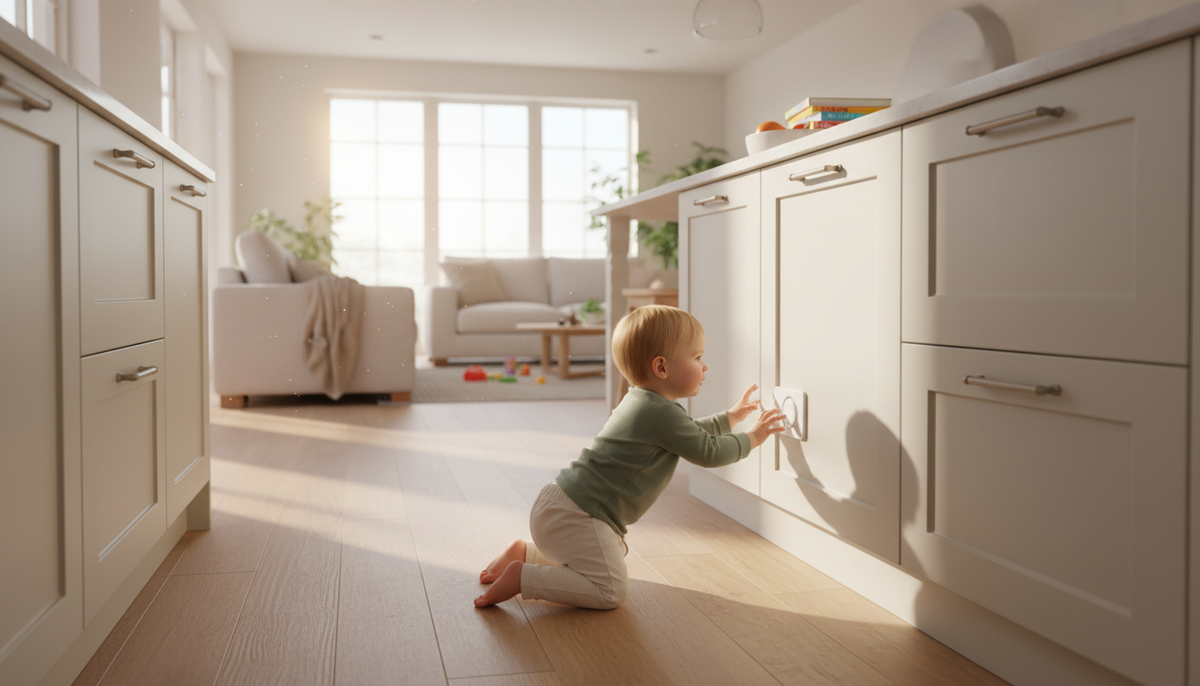
Pediatricians are clear that "out of reach" is not enough. Medications, supplements, vitamins, cleaning products, and any chemical should be in a locked cabinet. Children climb and find things. High shelves are not secure storage.
Keep everything in its original container. Do not transfer medications to unlabeled bottles or pill organizers that are left accessible. If you suspect ingestion of any substance, call Poison Control at 1-800-222-1222 immediately. Do not wait for symptoms.
This applies to grandparents’ homes and any other place your child spends time. Purses and bags left on the floor are a common source of accidental ingestion because they often contain medications, gum with xylitol, and small objects.
Car Seats: Rear-Facing as Long as Possible
The AAP recommends keeping children in rear-facing car seats until they reach the maximum height or weight limit allowed by the seat’s manufacturer, which for most seats is well past age two. Rear-facing distributes crash forces across the back, head, and neck rather than concentrating them on the harness points. The physics favor it significantly.
Installation matters as much as orientation. A correctly installed rear-facing seat should not move more than one inch side-to-side or front-to-back when tested at the belt path. Many fire stations and certified Child Passenger Safety Technicians offer free installation checks. Use them.
What type of safety gate does a pediatrician recommend for the top of stairs?
Is it safe to put anything in the crib with my baby?
What should I do if my child swallows a button battery?
At what temperature should I set my water heater?
Is a high shelf enough to keep medications away from children?
When can my child switch from a rear-facing car seat?
Are infant walkers safe if I supervise closely?
Where should carbon monoxide detectors be placed?
Walkers: A Product Pediatricians Recommend Against
Infant walkers, the kind with a wheeled frame and a fabric seat, are something pediatricians advise against. The AAP has called for a ban on their sale in the United States. Walkers allow infants to move faster than they can be supervised, and they provide access to hazards the infant could not otherwise reach. Stair falls in walkers are a documented source of serious injury.
Stationary activity centers (sometimes called "exersaucers") and play yards give babies a safe place to practice weight-bearing and movement without the mobility risk.
Quick Baby-Proofing Checklist
Smoke and Carbon Monoxide Detectors: Monthly Testing
Every level of your home needs both a smoke detector and a carbon monoxide detector. CO is odorless and colorless. You will not know it is accumulating without a detector.
Test both types of detectors monthly. Replace batteries annually or use detectors with sealed 10-year batteries. Know your home’s escape routes, and practice them with your children. A fire escape plan that exists only in your head is not a plan.
Pediatricians also recommend placing CO detectors near sleeping areas, not just near the garage or furnace. The goal is early detection while everyone is still alert enough to respond.
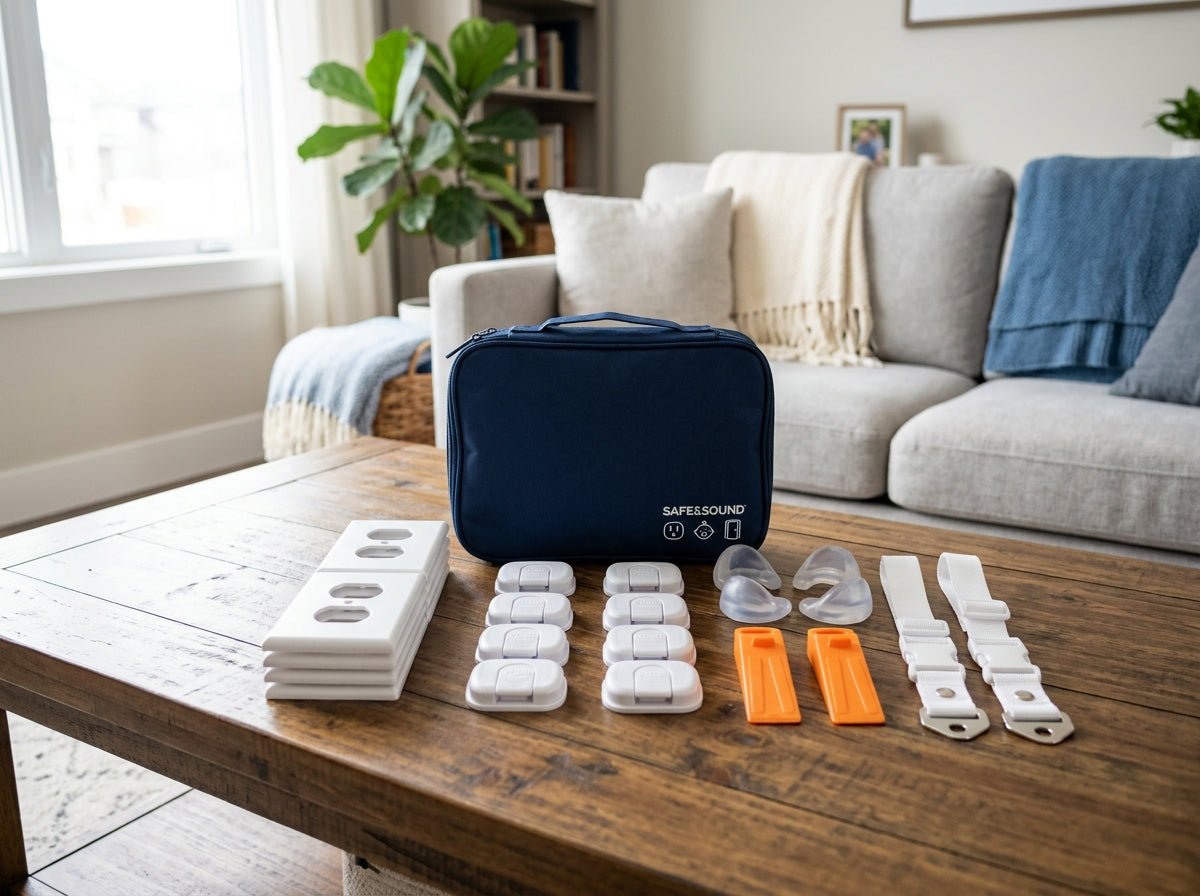
Most of what pediatricians recommend costs very little and takes an afternoon to implement. The gate, the water heater setting, the furniture anchors, the locked cabinet: none of these require expensive products or complicated installation. What they require is doing them before the moment you need them, because that moment arrives without warning.