Safe Sleep Practices for Newborns: AAP Guidelines Explained Simply

About 3,500 infants die each year from sleep-related causes in the United States, according to CDC SUID data. That number stopped me cold when I first read it during my older daughter’s newborn weeks, when I had absolutely no idea whether what I was doing was safe. I had good intentions. I had a beautiful crib. And I had a pile of well-meaning advice from relatives that contradicted almost everything the AAP recommends.
Safe sleep guidance exists because the science is clear. The practices work. And yet the gap between what the research supports and what new parents do in those exhausted early weeks is enormous. Every major AAP recommendation is covered here, with the reasoning behind each one and the practical details you need to set up a safe sleep environment before your baby comes home.
Back to Sleep, Every Single Time
The AAP recommends placing babies on their backs for every sleep period, including naps, from birth until at least age one. This is the single most evidence-backed positioning practice in infant safety. Back sleeping keeps the airway open and reduces the risk of SIDS.
A common concern is that babies will choke if they spit up while on their backs. The AAP has addressed this directly: healthy babies have a natural gag reflex that protects the airway, and back sleeping does not increase aspiration risk. Do not place your baby on their side or stomach for sleep, even if they seem to prefer it. Once a baby can roll both ways independently, you don’t need to reposition them if they roll during sleep. But you still start every sleep on their back.
The Sleep Surface Itself
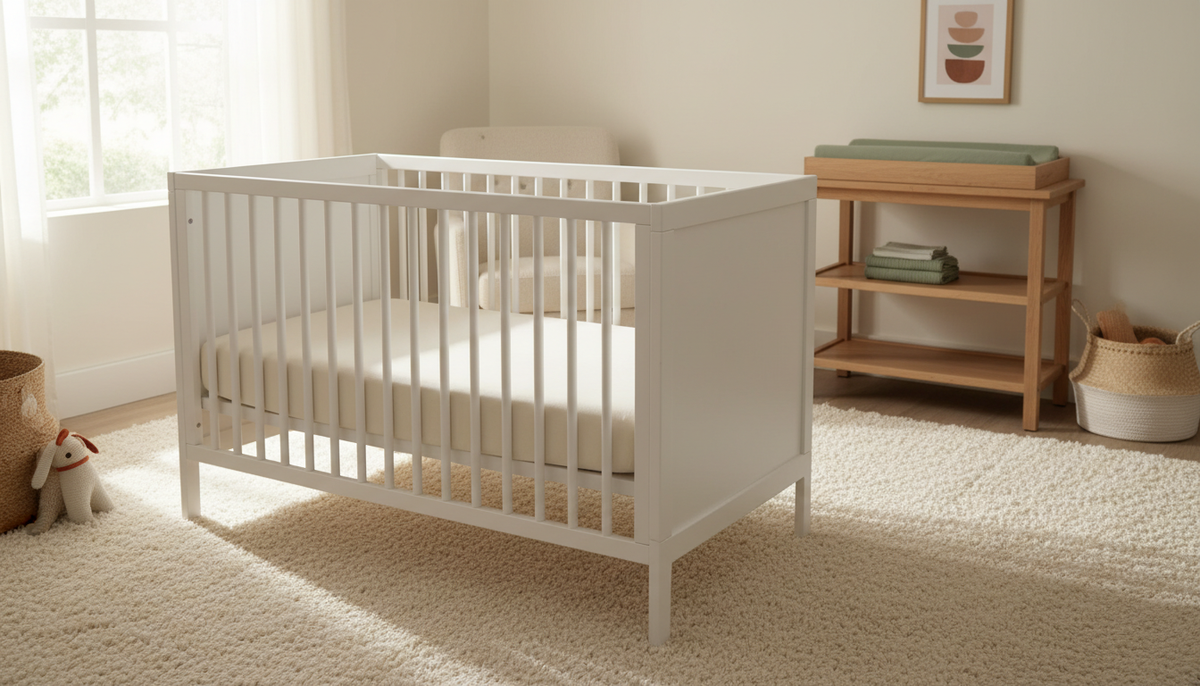
A firm, flat surface is non-negotiable. That means a crib, bassinet, or play yard that meets CPSC safety standards, with a firm mattress and a fitted sheet designed for that specific product. Nothing else belongs in the sleep space.
No pillows. No loose blankets. No bumper pads. No sleep positioners. No stuffed animals. I know how that sounds when you’re looking at beautifully styled nursery photos, but soft objects in the sleep space are a suffocation hazard. Unintentional suffocation kills roughly 1,000 infants under age 1 each year in the United States according to CDC data, and soft bedding is a leading contributing factor.
The Safe Sleep for Babies Act (2022) bans padded crib bumpers and infant inclined sleep products with a sleep surface angle greater than 10 degrees. That ban exists because these products caused deaths. Inclined sleepers, in particular, were linked to infant fatalities before they were pulled from the market. If you received a hand-me-down sleep product and aren’t sure whether it’s compliant, check the CPSC recall database before using it.
One thing I learned the hard way with my younger daughter: the mattress firmness that feels uncomfortably hard to an adult is exactly right for an infant. Press your hand into the center. It should spring back immediately. If it conforms to your handprint, it’s too soft.
Room-Sharing Without Bed-Sharing
The AAP recommends that your baby sleep in your room, close to your bed but on their own separate sleep surface made for infants, for at least the first six months. This arrangement, room-sharing without bed-sharing, is associated with reduced SIDS risk. Having your baby close makes nighttime feeding easier and lets you respond quickly if something seems wrong.
Bed-sharing is a different matter. Sharing a sleep surface with an infant significantly increases the risk of suffocation, entrapment, and SIDS, particularly if either parent smokes, has consumed alcohol, or is taking sedating medication. The family bed is not a safe sleep surface for a newborn, regardless of how carefully you position yourself. Sofas and armchairs are even more dangerous: the AAP says the risk of sleep-related infant death is up to 67 times higher when a baby sleeps with someone on a couch, soft armchair or cushion. If you feel yourself getting drowsy while feeding or holding your baby, put them down on their back in the crib or bassinet first.
A bedside bassinet or a standalone crib within arm’s reach gives you proximity without the risk. That’s the setup I used with both of my daughters, and it made the early weeks more manageable.


Temperature and What Your Baby Wears to Sleep
Overheating during sleep is a known SIDS risk factor. The AAP recommends keeping the room at a temperature comfortable for a lightly dressed adult, typically somewhere in the range of 68–72°F (20–22°C), though the specific number matters less than avoiding obvious overheating.
Dress your baby in a single layer appropriate for the room temperature. A wearable blanket or sleep sack is the right choice, as long as it is not weighted. It keeps the baby warm without creating loose fabric in the sleep space. The AAP says not to use weighted blankets, sleepers, swaddles or other weighted objects on or near your baby. Do not use loose blankets, and do not put a hat on your baby for sleep indoors. Hats trap heat, and the head is one of the primary ways infants regulate body temperature.
Signs of overheating include sweating, flushed skin, and rapid breathing. If your baby’s chest or back feels hot and damp, they’re too warm.
Pacifiers at Sleep Time
The AAP recommends offering a pacifier at nap time and bedtime, and the association with reduced SIDS risk is well-established. Researchers believe pacifier use may help maintain a more aroused sleep state, which is protective.
A few practical notes. If you’re breastfeeding, wait until breastfeeding is well established before introducing a pacifier. Don’t force it if your baby refuses. Don’t reinsert it once they’ve fallen asleep. And keep it plain: no clips, no attachments, nothing that could become a strangulation hazard in the crib.
Products That Claim to Prevent SIDS
Skip them. Wedges, sleep positioners, specialized anti-SIDS mattresses, and similar products have not been validated by the CPSC or AAP. Some have been associated with entrapment and suffocation hazards. The marketing language around these products can sound convincing when you’re a new parent seeking to reduce risk. But the evidence base for these products is not there, and some have caused harm.
The same applies to wearable monitors and home devices that claim to detect or prevent SIDS. The CPSC and AAP have not validated their effectiveness for SIDS prevention. A standard audio or video baby monitor is fine for convenience. It does not reduce SIDS risk, nor does any consumer wearable currently on the market. If a device is making that claim, treat it with skepticism.
Tummy Time and Why It Matters
Tummy time is essential, and it is entirely compatible with safe sleep. Tummy time happens only when your baby is awake and supervised, never for sleep.
Supervised, awake tummy time supports motor development and helps prevent positional flat head syndrome, which can occur when babies spend extended time on their backs without varied positioning during waking hours. Start with a few minutes several times a day in the early weeks, and build from there as your baby gets stronger.
My older daughter tolerated tummy time better on my chest than on the floor at first. Both count. The goal is supervised, awake time in the prone position, not a specific surface.
Breastfeeding, Smoke, and Other Protective Factors
Breastfeeding for at least the first six months, if possible, is associated with lower SIDS risk. Even partial breastfeeding provides some protective benefit compared to formula-only feeding. If breastfeeding isn’t possible for you, that’s a medical and personal decision, and formula-fed babies absolutely can and do thrive. But if breastfeeding is an option, it’s worth knowing that the protective association exists.
Avoiding smoke exposure is one of the most significant modifiable risk factors for SIDS. This means no smoking during pregnancy, no smoking in the home or car after birth, and no exposure to secondhand smoke from any source. Prenatal care, keeping vaccinations current, and avoiding alcohol and drug exposure during pregnancy and after birth also reduce overall SIDS risk. These aren’t small factors. They are consistently supported by the data.
Safe Sleep Setup Checklist
Car Seats, Swings, and Bouncers Are Not Sleep Surfaces
Car seats are designed for travel. Swings and bouncers are designed for supervised, awake time. None of them are designed for extended sleep, and all of them increase suffocation risk when used that way.
When a baby falls asleep in a car seat during a drive, that’s unavoidable. But once you’re home and the car is parked, move them to a firm, flat surface as soon as safely possible. The same goes for swings and bouncers. If your baby falls asleep in one during supervised time, transfer them to the crib.
The incline in these devices is the problem. An infant’s head can fall forward in an inclined seat, compressing the airway. This risk increases as babies become drowsy and lose muscle tone. It is not a theoretical concern. It has caused infant deaths.
Everyone Who Cares for Your Baby Needs to Know This
Safe sleep practices only work if they’re applied consistently across every caregiving environment. That means grandparents, babysitters, daycare providers, and anyone else who puts your baby down for a nap needs to follow the same guidelines.
This conversation is harder with older relatives who raised children in a different era and believe that stomach sleeping or a blanket in the crib is fine. It was standard practice once; the research has changed. The AAP updated its guidelines based on decades of SIDS data, and the back-to-sleep campaign that began in the 1990s is credited with a significant reduction in SIDS deaths.
Be direct with caregivers. Give them a short written summary if that helps. And check in with childcare providers about their sleep policies before enrollment. A provider who isn’t following AAP safe sleep guidelines is a real concern, not a minor preference difference.
Setting Up the Crib Before Your Baby Comes Home
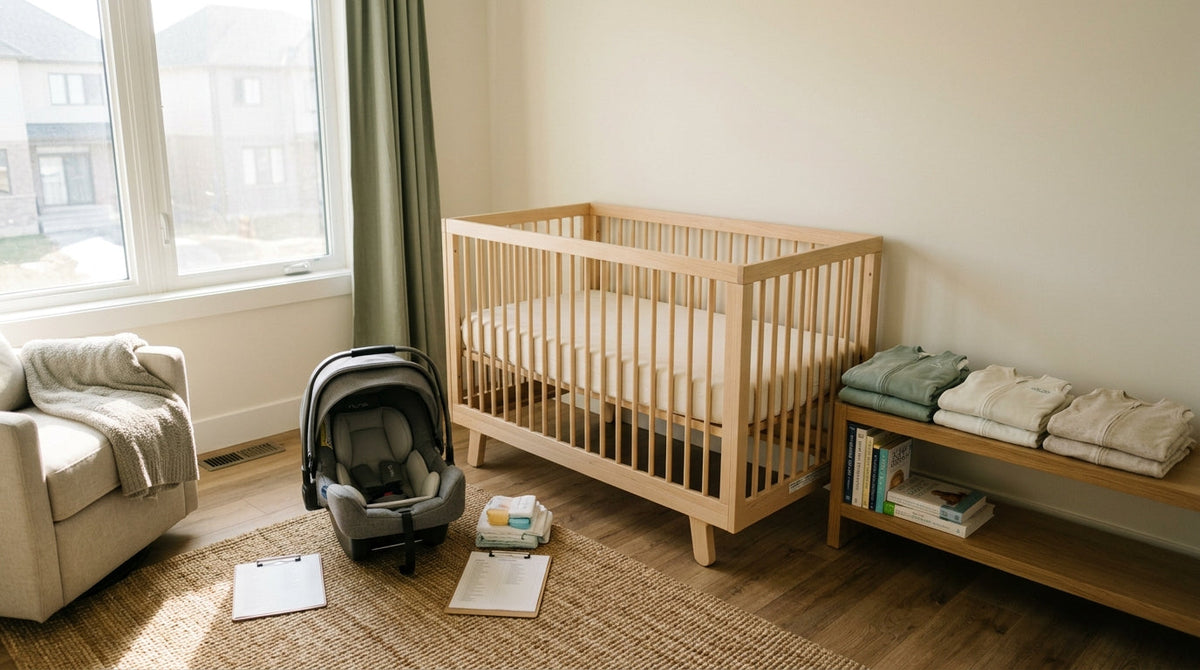
The ideal time to get the sleep environment right is before the baby arrives. A firm mattress, a fitted sheet, nothing else in the crib. Room-sharing setup with the bassinet or crib positioned near your bed. Room temperature checked. Sleep sacks purchased in the right size. Pacifiers on hand for when you’re ready to introduce them.
You will be tired in ways you cannot anticipate. Decisions made at 4 a.m. on no sleep are harder than decisions made in advance. Get the environment right now, so the right choice is also the easy choice when you’re exhausted and someone is telling you to just put a blanket in the crib.
The AAP guidelines are a set of practices that, taken together, represent the strongest evidence for keeping infants alive through their most vulnerable months. Follow them consistently, share them with your caregivers, and revisit them as your baby grows and the guidance evolves.