Baby Proofing for Grandparents: A Quick-Setup Guide

Most grandparents’ homes are frozen in time, safety-wise, at the age their own children left. The cabinet locks came off years ago. The outlet covers went in the trash. The decorative bowl of coins on the entry table has been there so long nobody sees it anymore. Then a toddler arrives, and that home becomes an obstacle course.
This guide is for grandparents who want to get it right, and for parents who want to help them. You don’t need to renovate. You need a focused sweep, a few inexpensive products, and a clear priority order.
Start With a Room-by-Room Audit Before You Buy Anything
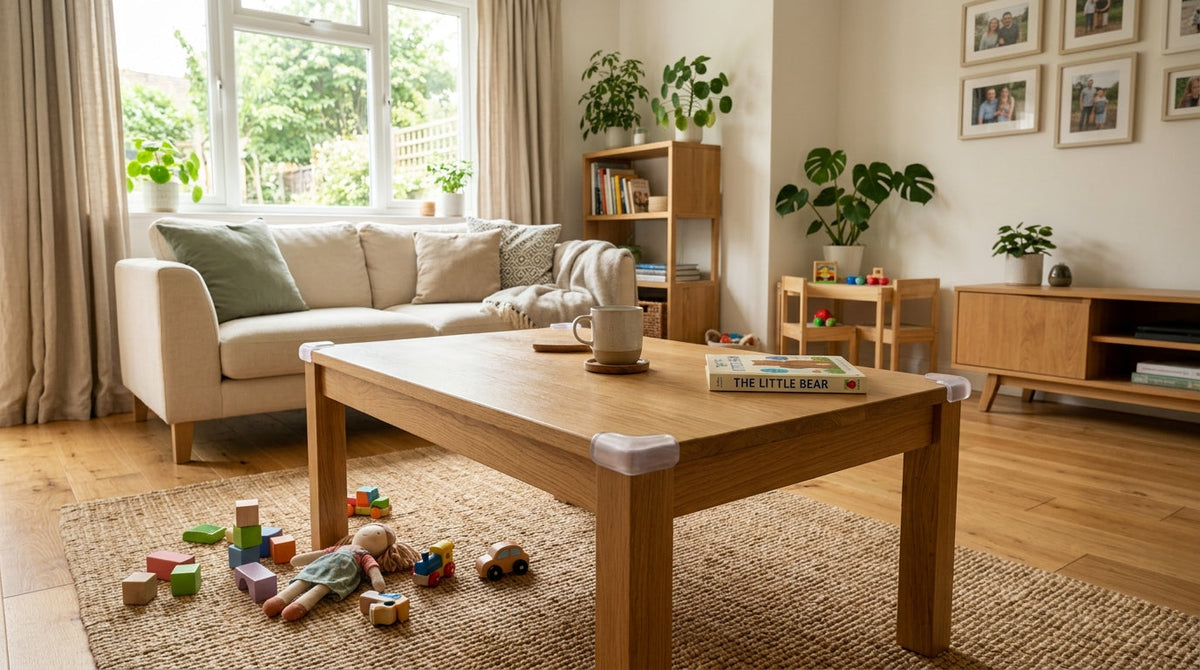
The instinct is to order a bundle kit online and call it done. Resist that. Walk through the home first, at toddler height if you can manage it. Get on your knees in the living room. Look at what’s at eye level. What’s reachable from the floor? What wobbles when you touch it? What’s been sitting on the bottom shelf of that bookcase for fifteen years?
Focus the audit on four categories: furniture stability, small objects, chemical and medication storage, and cord or blind hazards. Write down what you find. A physical list keeps the process from feeling overwhelming and gives grandparents something concrete to work through before the visit. Cover every room where the child will spend time, including bathrooms, the kitchen, any bedroom they’ll sleep in, and the garage if it connects to the house.
Gates and Door Locks: The Fastest Wins
Stairs are the priority. About 93,000 children under 5 are treated in U.S. emergency rooms each year for stair-related injuries, according to a Nationwide Children’s Hospital analysis of CPSC NEISS data from 1999 to 2008. For grandparents who only need protection a few times a year, a pressure-mounted gate handles most doorways and requires no drilling.
One important caveat: pressure-mounted gates should never be used at the top of stairs. At the top, you need a hardware-mounted gate that bolts into the wall or banister. The pressure-mount version can be pushed out by a determined toddler, and at the top of a staircase that’s a serious fall. For the bottom of stairs, for kitchen doorways, for hallways leading to bathrooms, pressure-mounted gates work well and can be repositioned between visits.
Look for gates that meet ASTM F1004, the federal safety standard for expansion gates and expandable enclosures, made mandatory under 16 CFR Part 1239 (effective 2021). That standard is your baseline. Don’t buy a gate without it.
Beyond gates, door handle covers and door knob locks are cheap and fast to install. A bathroom with cleaning supplies or medications behind the door is effectively secured with a $4 cover. Grandparents can keep these in a drawer and put them on before a visit.
Medications and Supplements: The Highest-Stakes Hazard
This one gets underestimated because the products look familiar and benign. Grandparents often have more medications than they realize: prescription bottles, over-the-counter pain relievers, vitamins, iron supplements, sleep aids, heart medications. Many of these are stored in bathroom medicine cabinets at accessible heights, or on bedside tables for middle-of-the-night use.
Iron supplements and cardiovascular medications are among the most dangerous for young children in small doses. But even children’s vitamins, taken in quantity, can cause serious harm. The rule is simple: before a grandchild arrives, every medication and supplement in the home goes into a locked box or onto a shelf that requires a step stool to reach. Bedside table bottles get moved. Purses and bags get hung up or closed in a room the child can’t enter.
In my experience, these hazards don’t register until you’re looking for them. A toddler can open a purse on a low chair and find medications before anyone notices. The risk is real enough that every medication and supplement needs to be secured before a visit.


Furniture Tip-Overs: Cheap Fix, Real Risk
Tall dressers, bookshelves, entertainment units, and freestanding wardrobes can tip forward when a child climbs or pulls on a drawer. In grandparents’ homes, these pieces are often older and heavier, and they haven’t been anchored because there was no reason to anchor them.
Furniture anti-tip straps cost under $20 for a two-pack and take about ten minutes to install. You drill one bracket into the furniture and one into a wall stud, then connect them with a strap. The strap doesn’t have to be visible or permanent-feeling. It just has to be there. Anchor every dresser, bookcase, and TV, and any other piece with drawers, doors, or shelves that could be climbed or pulled, whatever its height.
Check the TV situation specifically. Flat screens mounted on low entertainment units are a common tip-over scenario because children reach for the screen. If the TV isn’t wall-mounted, the stand needs to be secured to the wall or the TV needs to move to a room the child won’t access.
Small Objects and Choking Hazards: The Sweep
A Nationwide Children’s Hospital study published in Pediatrics estimated that more than 759,000 children under six were evaluated in U.S. emergency departments for swallowing a foreign object between 1995 and 2015. Coins were the most common object, accounting for 62% of cases. Jewelry accounted for 7%. Batteries accounted for another 7%.
Grandparents’ homes tend to accumulate exactly these things on low surfaces: a dish of coins by the door, a jewelry box on a low dresser, loose batteries in a junk drawer that’s easy to open. Button batteries deserve special attention. They’re flat, shiny, and sized to look swallowable. And they cause severe internal burns if ingested.
The test is simple: if an object fits through a toilet paper tube, it’s a choking hazard. Do a sweep of every low table, shelf, and accessible drawer in rooms where the child will be. Move anything that fails the test to a high shelf or a closed room. This takes twenty minutes and eliminates most of the ingestion risk.
Window Cords and Drapery Pulls: The Overlooked One
Older homes have more corded blinds and drapery pulls than newer construction. These cords create a strangulation hazard for young children, and the risk is highest when a cord loops or pools near a crib, a couch, or any surface a child can climb to. The CPSC has issued repeated warnings about this hazard over the years.
The fastest fix is to wind the cord up and secure it with the cord wind-up clip that often comes with the blinds, or to use a cord cleat mounted high on the wall. The permanent fix is to replace corded blinds with cordless versions, which are inexpensive and widely available. For any room where a child will sleep, cordless is the only acceptable option.
Cleaning Supplies, Garage Chemicals, and Under-Sink Storage
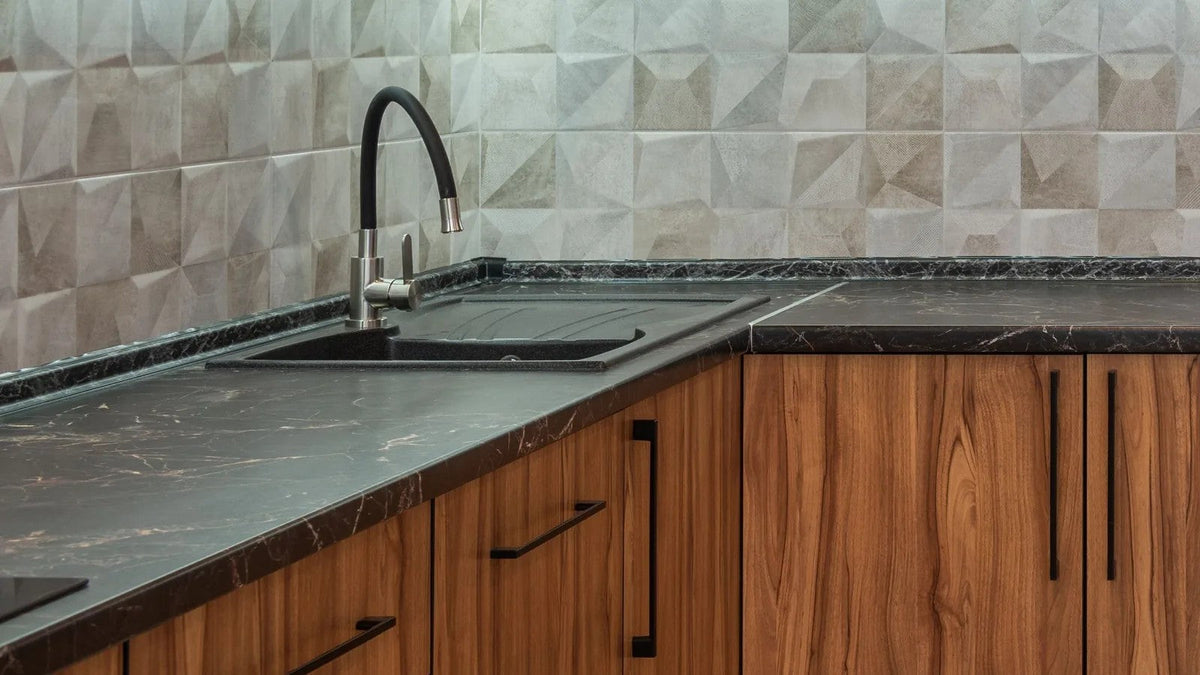
The cabinet under the kitchen sink is one of the most hazardous spots in any home. Dishwasher pods are particularly dangerous because they look like toys and cause severe chemical burns to the mouth and esophagus. Cleaning sprays, drain openers, and pest control products all belong in a locked cabinet or on a shelf that requires a step stool.
The garage is equally important if the child will have any access to it. Pesticides, automotive fluids, fertilizers, and paint thinners are often stored at floor level in garages because there’s no reason to move them otherwise. Before a visit, those products go up or behind a locked door.
A simple cabinet latch on the under-sink cabinet handles the kitchen. For the garage, a hook-and-eye latch on the door to the garage from the house is often enough to keep a toddler out entirely.
Outlets, Cords, and Electrical Hazards
Standard outlet covers are a two-minute fix. Buy a pack of sliding outlet covers, which are harder for children to remove than the plug-in caps, and cover every outlet in the rooms the child will use. Pay particular attention to outlets at floor level near lamps and behind furniture.
Exposed cords from phone chargers, lamps, and small appliances are a separate issue. Cords can be chewed, pulled, and used to yank heavy objects off surfaces. Cord organizers and cord covers are inexpensive and available at any hardware store. The goal is to keep cords out of reach or secured flat against the wall where they can’t be grabbed.
Loose cords at baseboard height are easy to miss until you’re actively looking for them. A phone charger with three feet of cord hanging down takes thirty seconds to unplug and move, but creates a real hazard if left in place.
Pre-Visit Safety Checklist
Bathtub and Pool Safety
Set the water heater to 120°F (49°C) or below before a child visits. This is the threshold the AAP recommends to prevent scalding burns, and many water heaters are set higher than this by default. Test the temperature at the tap with a kitchen thermometer to confirm.
Place a non-slip mat inside the tub and a bath mat on the floor outside it. Toddlers move fast on wet surfaces. If the home has a pool or hot tub, the access point needs a locked gate or door latch before the child arrives. Drowning can happen in minutes and in silence. This is not a hazard to defer.
Lead Paint in Older Homes
Homes built before 1978 may have lead-based paint on walls, trim, and window frames. If the paint is intact and in good condition, the risk is lower. But peeling, chipping, or chalking paint creates dust and flakes that children can ingest. The CDC states there is no safe blood lead level in children.
If grandparents live in a pre-1978 home and aren’t sure about the paint condition, a lead test kit from a hardware store gives a quick answer. If lead paint is present and deteriorating, the right response is professional encapsulation or removal, not sanding, which spreads the dust.
The Checklist Conversation
The most useful thing a parent can do before a grandparent visit is create a one-page written checklist and go through it together. Not as a lecture. As a shared project. Grandparents who feel ownership over the process are more likely to maintain the changes between visits.
The checklist should cover: medications and supplements moved or locked, furniture straps installed, small objects swept from low surfaces, cabinet latches on under-sink storage, outlet covers in place, cords secured, window blind cords tied up or replaced, water heater temperature confirmed, and emergency contact numbers posted in the kitchen. That last item matters. Include the Poison Control number (1-800-222-1222) specifically.
A grandparent’s home doesn’t need to become a padded room. It needs about two hours of focused attention and a handful of inexpensive products. The hazards are real, but they’re also fixable. Most of what makes a home dangerous for a toddler is just stuff that’s been sitting in the same place for years without anyone thinking about it. Now someone is thinking about it.