Can You Change a Baby on the Bed? Safer Night-Time and Away-From-the-Nursery Diaper Changes
Floor first, one hand on your baby, supplies ready: how to handle night-time and away-from-the-nursery diaper changes, and where beds and couches fit.

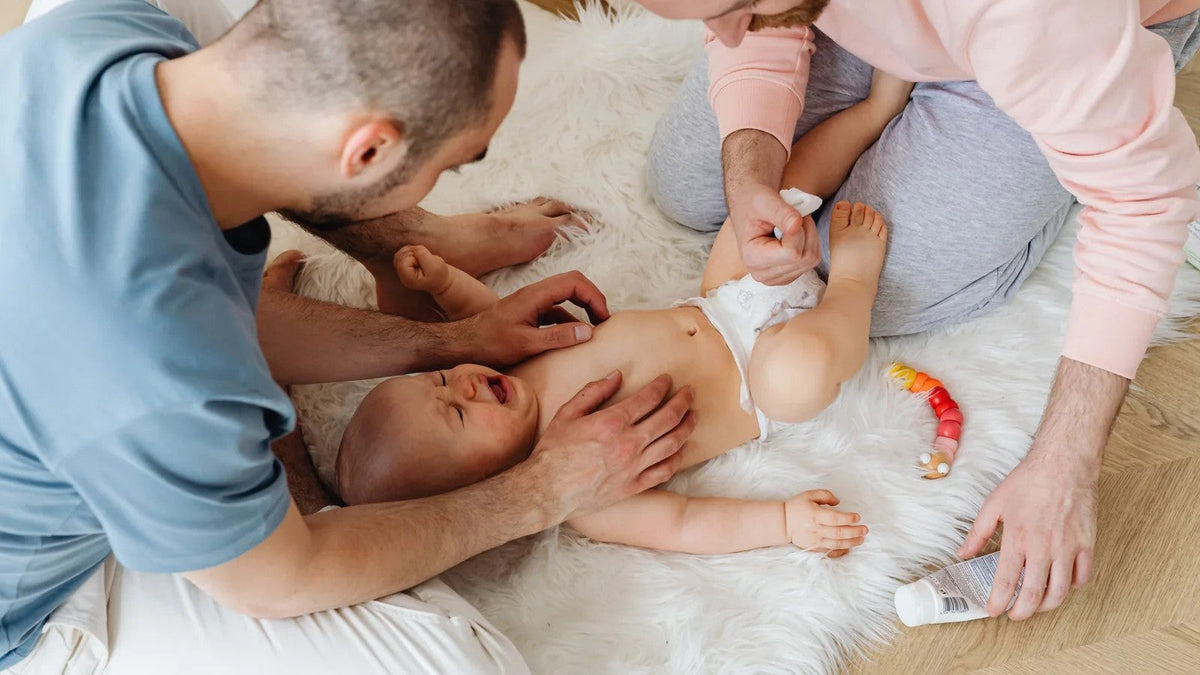
Can you change a baby on a bed? The AAP’s Changing Diapers page says some people use a simple diaper-changing pad in place of a table, and that the floor, bed or couch can serve the same purpose once you are comfortable with the routine. Our position is narrower. The floor is the default, and a bed or couch is not a routine changing surface.
Can You Change a Baby on a Bed? The Short Answer
The AAP does not forbid a bed. It names the floor, the bed and the couch as spots where a pad can do the job of a changing table, with the condition that you are comfortable with the routine.
A bed is a raised surface with open sides. A pad on the floor puts your baby on the lowest surface in the room. When both options are in front of you, we pick the floor, and we do not treat a bed as a place for routine changes.
Think of it as a default, not a promise. No surface removes the need for your attention. But the floor takes away the raised edge of a mattress, and that matters more as your baby grows.
Why Height and Open Edges Matter
The AAP’s Changing Table Safety page says a changing table makes it easier to dress and diaper your baby, but falls from such a high surface can be serious. It also tells parents not to trust their own vigilance alone to prevent falls. Both lines are written about changing tables.
The next step is our own reasoning. A bed is also a raised surface, and its edges are open. A baby on a mattress can shift toward a side in the time it takes you to grab a wipe. A pad on the floor keeps your baby on the lowest surface in the room instead of beside a raised edge.
Rolling changes the picture further. In its advice on diapering technique, the AAP notes that most babies are cooperative during a change at least until they learn to roll, somewhere around four months of age. In our view, a bed with open edges becomes a weaker option still once your baby rolls, which is why we move the change to the floor before rolling starts, not after.
One Hand on Your Baby, Every Time
The core of diaper changing safety is one habit, and it applies on every surface. The CDC’s home diaper-changing steps say to keep a hand on the child for safety at all times. The AAP says never to leave a child unattended on a dressing table, even for a moment, and even if the child is strapped in.
Those lines are written for tables and home changing in general. We apply the same rule to a bed, a couch and the floor. The surface changes. The hand does not.
Picture this: the diaper is open and your phone buzzes on the nightstand. You want to grab it, but one hand stays on your baby, and the call waits until the change is done.
Then there is the belt. The AAP says to buckle the safety strap, but not to depend on it alone to keep your child secure. Treat the strap as a backup. Your hand is the plan.
Set Up Before You Lay Your Baby Down
The AAP says to keep diapering supplies within your reach, but out of your child’s reach, so you don’t have to leave your baby’s side to get them. At night, that translates into a short list you finish before the change begins:
- A fresh diaper unfolded and ready in your hand, or on the floor or bed beside you
- Wipes pulled out and within reach
- Any cream you use opened and placed within reach
- A clean outfit nearby if leaks are likely
Do this before your baby is on the pad. Reaching across the room mid-change is the moment a hand comes off your baby.
Protecting the surface is part of setup too. The AAP says disposable changing pads, sometimes called bed liners, underpads or "chux," can help protect your changing table, crib, bed, floor or wherever else you set up. It adds that a towel can serve the same purpose. The CDC advises keeping a dirty diaper away from surfaces that cannot be easily cleaned.
If you are building a bedroom station, a nursery baby-proofing guide can help you spot what else in the room needs attention. Cords, furniture and clutter near a floor changing spot deserve a look before the first night.


Can I Use a Changing Pad on the Bed? What About the Couch?
You can put a pad under your baby on a bed to protect the sheets, and the AAP’s mention of liners, underpads and towels supports that goal. But a changing pad on bed linens solves a mess problem. It does not change the height of the mattress or the open edges around it. That is our reasoning, and it is why we keep the bed out of the routine.
The couch follows the same logic. The AAP’s Changing Diapers page lists the couch alongside the floor and bed as a spot that can serve once you are comfortable with the routine. We apply the same height and edge reasoning to a sofa, and we do not treat a couch as a changing station.
There is a sleep point too. The AAP’s safe sleep guide warns against falling asleep with your baby on a couch, soft armchair or cushion. Picture a 3 a.m. change where you are exhausted and your baby is finally calm. If you settle onto the sofa afterward and fall asleep with your baby, that is the situation the AAP is warning about.
If a bed or couch has already become your habit, a pad on the floor beside it is an easy replacement. You stay in the same room and change one thing.
A Night-Time Routine That Keeps the Change Short
The AAP recommends room sharing: keep your baby’s sleep area in the same room, close to your bed but not in the same bed. It notes that this makes it easier to feed, comfort and monitor your baby during the night. In our view, a sleep space and a floor changing spot in your own bedroom keep a 3 a.m. change short.
Picture the sequence: your baby fusses in the bassinet beside your bed. You lift your baby, lower them to a pad on the floor with the diaper and wipes already in reach, and keep one hand on your baby the whole time. You finish, fasten the fresh diaper, and lift your baby again.
After the change, your baby goes back to a sleep space, not onto the pad or the bed. CPSC’s 2018 release on the federal standard for baby changing products says the fatal incidents it describes primarily involved suffocation or asphyxia when babies were sleeping on baby changing products. The products it covers include changing tables, changing table accessories, add-on changing units and contoured changing pads.
The AAP says to place your baby in a crib, bassinet, portable crib or play yard that meets CPSC safety standards. If you do fall asleep with your baby in your bed, the AAP says to move them back to their own sleep space as soon as you wake up.
Last, reset the area. The CDC says to clean the diapering surface, especially if there were any spills or leaks of diaper contents. We think a pad with a wipe-clean surface is easier to reset at 3 a.m. than bedding is. Later, moving from crib to toddler bed changes the sleep setup, and the place you change your child changes with it.
Portable Changing Pad Use on the Floor and Away From the Nursery
A pad you can carry makes the floor-first rule easy to follow. You can set one down in the bedroom at night, in the living room during the day, or wherever the next change happens. That is the appeal of portable changing pad use: the same routine in any room, at the same low height.
The Pod EVA Diaper Changing Pad is one example. Its product page describes:
- A waterproof, wipe-clean EVA foam surface with no cover or liner
- Raised sidewalls
- A non-slip base
- An adjustable safety belt
- A lightweight build that is easy to move from room to room
The page calls it "great for use, anywhere in the home." Those are the manufacturer’s descriptions. Our reasoning is that a pad like this suits a floor changing spot in your bedroom, since a wipe-clean surface can be reset quickly after a leak and a light pad is easy to stow or move.
The same product page warns that the pad is not a substitute for adult supervision. That fits everything above. Sidewalls and a belt are backups, and the belt never replaces your hand.
If you are still choosing among contoured, flat and portable changing pads, think about where most of your changes will happen. Night-time floor changes in the bedroom point toward something easy to move.

Putting the Routine Together
Our default is the floor, and a bed or couch is not part of the routine. The AAP says a floor, bed or couch can serve once you are comfortable with the routine, and it warns that falls from a high changing surface can be serious. The CDC says to keep a hand on the child at all times, and the AAP adds that a strap should never be your only protection.
As your child grows, the setup changes again, and toddler bed rail safety becomes its own question for the bedroom. For now, the routine is short: supplies in reach, pad on the floor, one hand on your baby the whole time, then your baby back to a crib, bassinet, portable crib or play yard.