CPR for Infants and Toddlers: Every Pool Parent Must Know This

The pool is quiet. That’s the problem.
Most parents picture a drowning child as one who splashes, screams, and waves. The reality is almost the opposite: a child slipping under the surface makes almost no sound, and the whole thing can be over in under two minutes. The CDC reports that more children ages 1–4 die from drowning than from any other cause of death. And when a child is pulled from the water unresponsive, the next two minutes belong entirely to the adult standing there.
That adult needs to know CPR. Not a vague memory of a class they took in high school. Not a YouTube video they watched once. Actual, practiced, hands-on CPR for infants and toddlers, which is a different skill from adult CPR in ways that matter enormously.
Here is what you need to know.
Why Infant and Toddler CPR Is Different
Adult CPR is built around a body that can take significant force. An infant’s chest cannot. The ribs are still largely cartilage. The organs are close together and close to the surface. Using the heel of your hand on a baby the way you would on an adult can cause serious internal injury.
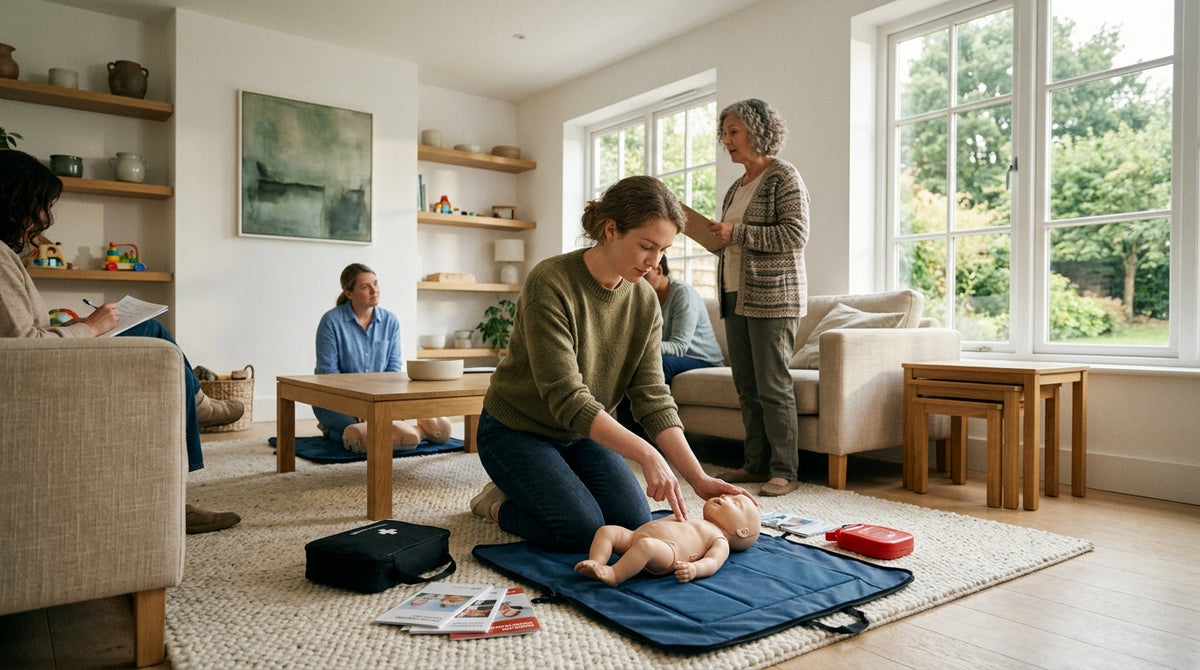
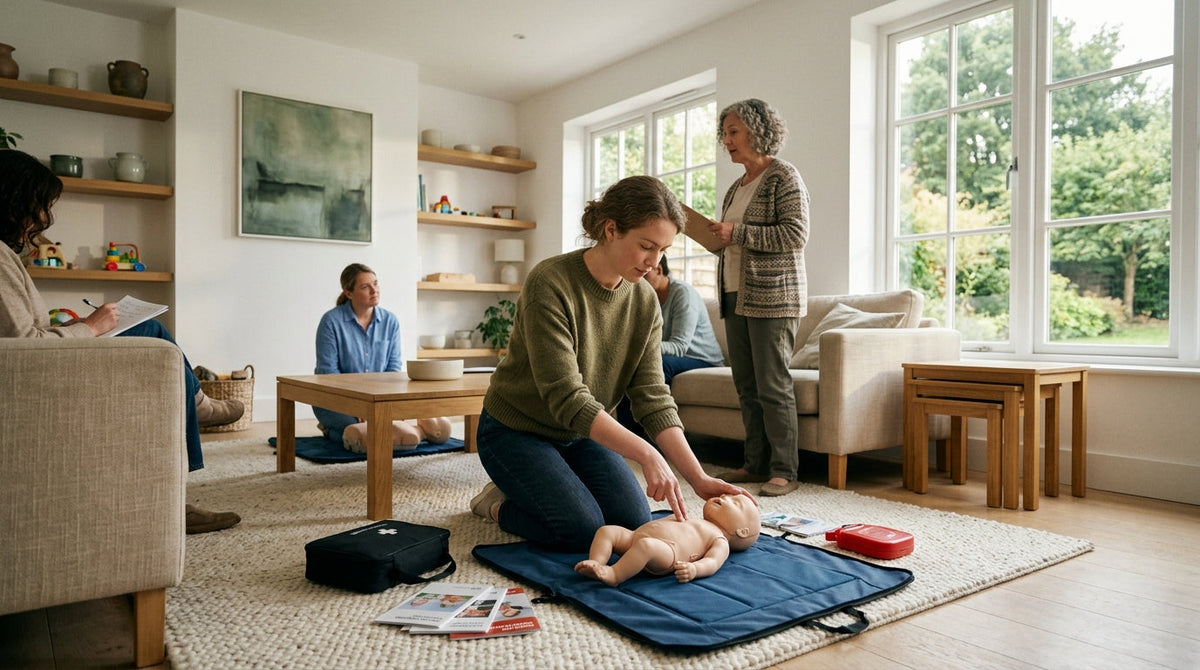
For infants under one year old, use two fingers, typically your middle and ring fingers, placed on the center of the chest just below the nipple line. Press down about 1.5 inches at a rate of 100–120 compressions per minute. That rate is faster than most people expect. It is roughly the tempo of "Stayin’ Alive," which sounds absurd but is useful to have in your head.
For toddlers ages 1–8, the technique shifts. Use one or two hands placed on the center of the chest, pressing down about 2 inches at the same 100–120 compressions per minute. Rescuer hand size and the child’s build will guide whether one hand or two gives you better control. The goal is consistent depth without rocking the child’s body.
The compression-to-breath ratio for both age groups is 30 compressions followed by 2 rescue breaths, repeated continuously. This is different from hands-only CPR, which is acceptable for adults in many situations. For infants and toddlers, the rescue breaths matter. A drowning child’s primary problem is oxygen deprivation, not a cardiac arrhythmia. Getting air back in is part of the treatment, not optional.
Rescue Breaths: Technique by Age
For an infant, cover both the nose and mouth with your mouth to create a seal. Use gentle puffs, not a full adult breath. You are working with very small lungs. If you blow too hard, you risk pushing air into the stomach instead of the lungs, which causes vomiting and complicates everything. Watch for the chest to rise slightly. That is your confirmation the breath went in.
For a toddler, seal your mouth over the mouth only and pinch the nose closed. The breath should still be gentler than what you would give an adult, but you can deliver slightly more volume than you would to an infant.
In both cases, tilt the head back slightly to open the airway before delivering breaths. But do not hyperextend the neck. In young children, pushing the head back too far can fold the airway shut. Think "sniffing position," a very slight tilt, not a full backward lean.


What to Do First When a Child Is Pulled from Water
The sequence matters. If a child is unresponsive and not breathing after water rescue, start CPR immediately. Do not delay to drain water from the lungs, attempt the Heimlich maneuver, or perform any airway clearance unless you can see a visible foreign object blocking the mouth. The instinct to "get the water out first" is understandable and wrong. The water in the lungs is not your immediate problem. The absence of oxygen is.
Have someone else call 911 while you begin compressions. If you are alone, give two minutes of CPR first, then call, then return to CPR. Two minutes of CPR on a small child is roughly four complete cycles of 30 compressions and 2 breaths.
Place the child on a firm, flat surface. A pool deck, a hard floor, the ground. Not a towel, not a lounge chair cushion, not soft grass. Compressions on a soft surface lose most of their force. The chest needs something rigid behind it to compress against.
The American Heart Association reports that starting CPR within the first five minutes after cardiac arrest can nearly double a child’s chances of survival. Two minutes of water submersion. Five minutes to begin CPR. These numbers are not abstract. They are the actual margins you are working within at the pool.
-
Check responsiveness
Tap the child’s shoulder and shout. If no response and no normal breathing, begin CPR immediately. -
Call for help
Send a bystander to call 911. If alone, give two minutes of CPR first, then call. -
Position on a firm surface
Lay the child on a pool deck, hard floor, or firm ground. Avoid soft or padded surfaces. -
Begin compressions
Two fingers for infants (1.5 inches deep), one or two hands for toddlers (2 inches deep), at 100–120 per minute. -
Deliver rescue breaths
After 30 compressions, give 2 gentle rescue breaths. Watch for the chest to rise slightly. -
Continue until help arrives
Keep cycling 30 compressions and 2 breaths. Do not stop until professional responders take over.
Cold Water and the Protective Reflex
One thing that surprises many parents: hypothermia can occur even in warm-water submersion, particularly in smaller bodies. And in cold-water submersion, a physiological response called the mammalian diving reflex can slow the metabolism significantly, reducing oxygen demand and potentially preserving brain function longer than you would expect.
Do not stop CPR on a submerged infant or toddler because time has passed. Recovery has been documented after prolonged cold-water submersion in young children. The rule in pediatric emergency medicine is: a child is not dead until they are warm and dead. Continue CPR until professional responders arrive and take over. That decision belongs to them, not to you.
This also applies to the scenario where a child seems to recover on their own. If a child was submerged, even briefly, even if they cough and seem fine afterward, take them to the emergency room. Secondary drowning, sometimes called delayed drowning or dry drowning, involves water in the airway triggering inflammation and fluid accumulation in the lungs hours after the incident. It is rare but real, and the symptoms, labored breathing, unusual fatigue, persistent coughing, can appear four to eight hours after the event. A child who looks recovered at the pool can deteriorate at bedtime.
Recognizing the Emergency Correctly
CPR is the right response to cardiac arrest. It is not the right response to choking. Knowing which emergency you are dealing with is not a small thing. A child who is choking is conscious, may be coughing or gagging, and has an airway obstruction. A child in cardiac arrest is unresponsive, not breathing normally, and has no detectable pulse. Treating a choking child with chest compressions, or pausing CPR to do back blows on a child who is in cardiac arrest, wastes critical seconds.
Infant CPR certification courses teach you to work through this differential quickly and accurately. That is part of why in-person training matters. You practice the assessment, not just the compressions.
The American Heart Association reports that CPR, if performed immediately, can double or triple the chance of survival from an out-of-hospital cardiac arrest. Most out-of-hospital cardiac arrests (73.4%) happen in homes or residences, where a family member is often the only potential rescuer. For a pool family, that rescuer is you.
Getting Certified and Staying Current
The AAP recommends that every parent and caregiver of young children complete hands-on infant and pediatric CPR training from a certified instructor, and repeat it at least every two years. Guidelines are updated. Technique details change. And the physical memory of compressions fades faster than you think.
Online-only CPR courses do not meet the standard for pool safety competency. Watching someone else do compressions on a screen does not prepare your hands to do them on a real child. The compression depth, the rate, the feel of a chest rising with a rescue breath: these require practice on a mannequin with an instructor who can correct your form.
In my experience, technique drift happens quickly. Compression rate slows, head positioning shifts. Two years of not practicing erodes skills that felt locked in. That is exactly the argument for recertifying on schedule, not when it is convenient.
Pool Safety CPR Readiness Checklist
Keep a Reference Card Poolside
Even trained adults freeze under stress. The combination of adrenaline, a screaming bystander, and a wet, limp child can push recall out the window. A laminated CPR reference card kept in your pool bag or mounted near the gate costs almost nothing and can anchor you when your brain wants to scatter.
The card should show: compression depth by age, compression rate, compression-to-breath ratio, and the two-finger versus hand technique distinction. Some parents add the 911 address for their pool location on the back. That is not overkill. That is preparation.
The Skill You Hope to Never Use
Knowing the skill makes you calmer at the pool, not more anxious. You stop hovering with vague dread and start watching with actual competence. There is a real difference.
The CDC reports that drowning death rates among children aged 1–4 rose significantly in 2021 (28.9%) and 2022 (28.3%) compared with 2019. Pool safety is not a solved problem. But it is a solvable one, layer by layer: barriers, supervision, swim lessons, and the skill to act in the two minutes that matter most.
Register for a class. Bring your partner. Recertify when the two years are up. And keep that card in the bag.