How to Clean Baby Neck Folds and Skin Creases, and Spot Irritation Early
The AAP says to pay special attention to creases around the neck at bath time. How to clean baby neck folds, keep them dry and when to call the pediatrician.

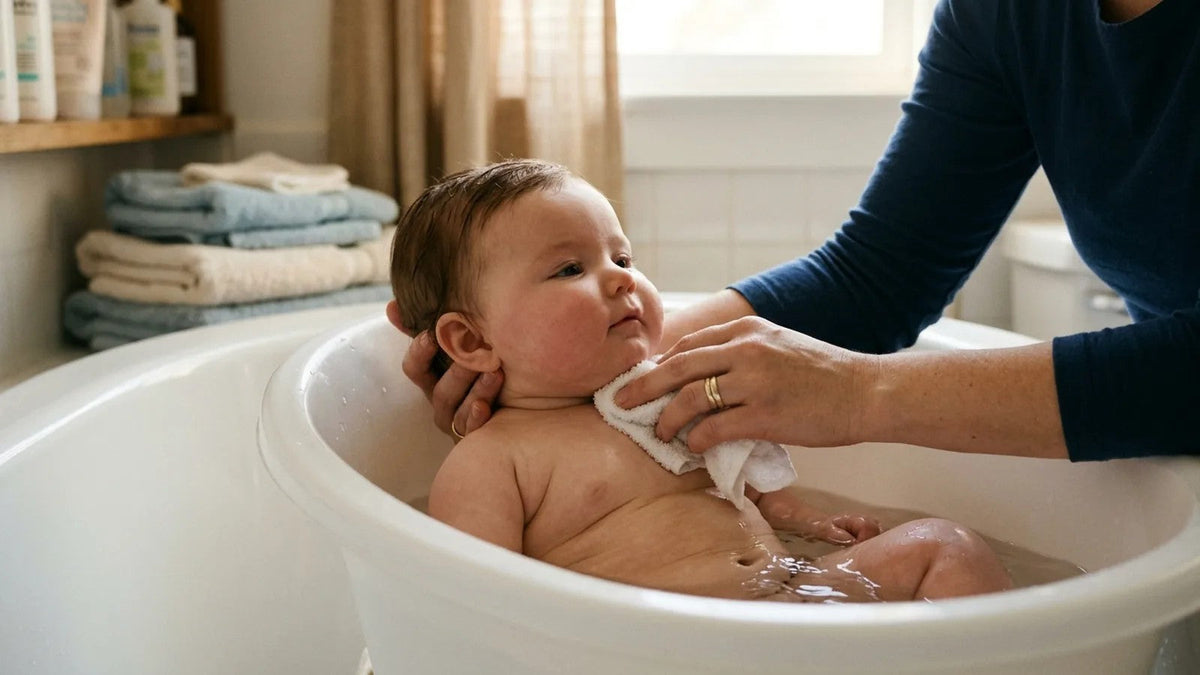
Wondering how to clean baby neck folds without overthinking it? The AAP’s bathing guidance gives a short answer. During the bath, pay special attention to the creases under the arms, behind the ears and around the neck. Anything beyond routine cleaning, like redness or oozing in a fold, is a question for your pediatrician.
Picture this: you lift your baby’s chin after a long stretch in the car seat and the crease underneath looks damp. It is a small moment, and it is the reason these folds deserve a look at bath time.
How to Clean Baby Neck Folds: What the AAP Says
The AAP’s bathing page puts the crease advice inside its sponge-bath tips. The AAP does not describe a separate step-by-step technique for the folds, so there is no special move to learn.
Fold cleaning belongs inside bath time, not in a separate routine. When the washcloth makes its pass over your baby’s body, the neck crease is one of the places it should reach.
The AAP names the creases under the arms, behind the ears and around the neck as places to pay special attention during the bath. If something on the skin worries you, call your pediatrician. See the AAP’s guidance at HealthyChildren.org.
How to Clean Newborn Neck Folds With a Sponge Bath
The AAP says a newborn should have only sponge baths until the stump of the umbilical cord falls off. That usually happens by about one or two weeks of age. So for the first stretch of life, cleaning newborn neck folds means working within a sponge bath.
The AAP says to get your supplies ready before you begin. You need:
- A basin of water
- A damp washcloth rinsed in soap-free water
- A dry towel
- Anything else you might need, within reach
Once your baby is undressed, you do not want to turn away to find something. If you are still putting your supplies together, a baby grooming kit guide can help you sort out what is worth having.


Bath Safety Comes Before Any Crease
Every bath, sponge or otherwise, has safety rules that come first. The AAP says never to leave a baby alone in the bath, even for an instant. Newborn bath time safety starts with rules like this one.
Picture this: you are mid-bath and your phone buzzes on the other side of the room. The AAP’s rule is never to leave, even for an instant, so the call can wait. Stepping away for a forgotten towel is just as easy a way to break that rule, which is why getting supplies ready first protects it.
If your baby is on a surface above the floor for the sponge bath, the AAP says to always use a safety strap or keep one hand on them to prevent falls. For tub and sink baths, the AAP also gives water guidance. Fill the basin with 2 inches of water that feels warm, not hot, to the inside of your wrist or elbow. The hottest temperature at the faucet should be no more than 120°F (49°C).
Wash Order and Soap for Neck Folds
The AAP’s wash order for a sponge bath starts with your baby’s face. Next comes the rest of the body, and finally the diaper area. The neck crease is part of the rest of the body, so the cloth reaches it before the diaper area.
Soap needs a light hand. The AAP’s bathing page says to use soap sparingly because soaps can dry out a baby’s skin. If a cleanser is needed for heavily soiled areas, the AAP says to use only mild, neutral-pH soaps without additives. It also says to rinse soap from the skin right away.
How Often to Clean Baby Neck Folds
Here the AAP’s bath guidance sets the pace. The AAP says newborns do not need a bath every day. It says three baths per week during a baby’s first year may be enough, and that bathing more frequently can dry out a baby’s skin.
The AAP gives no separate schedule for the neck folds. Its crease advice sits inside its bath steps, so the folds get their attention when the bath happens.
This can feel like a gap if your baby has a drooly day or a sweaty afternoon in between. If that tempts you to bathe more often, keep the AAP’s caution in mind: more frequent bathing can dry out a baby’s skin. The next section covers what the AAP says about wet skin.
How to Keep Baby Neck Folds Clean and Dry
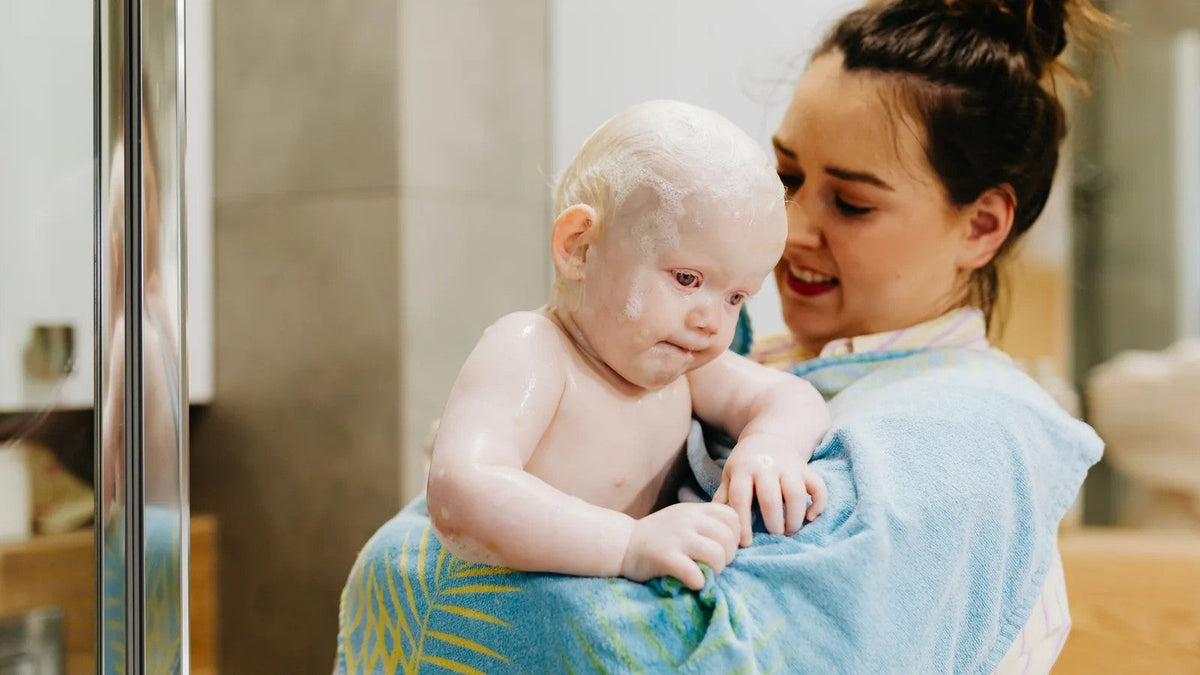
Cleaning is half of it. Dryness is the other half, and the AAP’s bath steps include it. When bath time is finished, the AAP says to promptly wrap a towel around your baby’s head and body to help them stay warm while they are still wet. It also says to gently pat the baby dry.
Moisture also arrives between baths. Two common sources show up on AAP pages: sweat and drool.
The AAP’s heat-rash page lists the neck fold among the areas that heat rash can affect. It also names the upper chest and back, around the hairline and under the diaper, and says most anywhere can be affected. The AAP says heat rash often develops in hot and humid conditions. Examples include a baby wearing many layers of clothes, wrapped in blankets, or buckled into a seat where air can’t flow as easily around them.
Drool is the other source of wet skin under the chin. The AAP’s drooling page says drool rash often appears around the mouth, chin and cheeks. It can also develop on the neck, chest and hands where drool collects.
The same page says to gently wipe your baby’s chin, neck and cheeks, and to take bibs off before naps or nighttime sleep so your baby can breathe safely. For a drool rash, call your pediatrician if you are worried. See the AAP’s guidance at HealthyChildren.org.
Baby Neck Folds Red: More Than One Possible Cause
Red, irritated neck folds can worry a parent quickly. On the AAP’s own pages, redness in that spot has more than one possible source.
The AAP’s heat-rash page says heat rash develops when the openings of sweat glands become blocked, trapping sweat under the skin. The AAP’s drooling page says drool rash can also develop on the neck where drool collects.
The AAP’s cradle cap page adds a third. It says that alongside scalp scales, a parent may also notice scales or redness on the face, in the neck folds and behind the ears. It says this scaly rash may show up in other places too, such as the neck crease.
Those are descriptions, not a way to work out what your baby has. Which one it is, if any, is a question for your pediatrician. And because the AAP says to talk with your pediatrician about any rashes you notice on your baby, redness you are unsure about is worth raising.
Spotting Irritation Early: When to Call Your Pediatrician
Two AAP pages list signs that should prompt a call.
From the cradle cap page, the AAP says to see your pediatrician if the cradle cap becomes crusted, weepy or has pus bumps. It says to talk with your pediatrician if:
- There is a rash in other places besides the scalp, especially if it is severe
- The rash has an odor
- Your baby appears to be in pain or discomfort
- There is oozing fluid or bleeding from the scales
- The affected skin looks swollen
From the heat-rash page, the AAP lists reasons to call your child’s doctor that include a rash that appears infected, meaning tender with pus drainage. It also lists a child who is eating less or is less active.
Picture this: during a bath you notice a fold has a smell, or your baby seems bothered when you touch it. An odor and signs of pain or discomfort are both on the AAP’s cradle cap list. A phone call is the next step, not a home experiment.
The AAP’s newborn-skin page says to be sure to talk with your pediatrician about any birthmarks or rashes you notice on your baby. For more detail, the AAP’s HealthyChildren.org pages on heat rash, cradle cap and newborn skin are the place to go. For red, weeping or bleeding folds, or any fold that worries you, the answer is simple. Call your pediatrician if you are worried.