Bed Bugs With a Baby: Treating the Crib and Nursery Without Putting Your Baby at Risk
What the EPA, NPIC, CDC and AAP say about bed bugs with a baby: bites, pesticide labels, the crib and who to ask.

Finding bed bugs with a baby in the house sends most parents straight to one question: what can go on the crib? The National Pesticide Information Center (NPIC), the EPA and the CDC do not say that any pesticide may be applied to a crib, a crib mattress or a baby’s bedding. The EPA says a pesticide goes only on surfaces its label lists. NPIC says bed bugs are hard to control even for trained professionals, and the AAP’s crib rules do not change while you deal with them.
What Bed Bugs Are and Are Not
NPIC states that bed bugs are not a sign that a house is dirty. They cannot jump or fly. They travel by hiding in the cracks and crevices of incoming luggage, furniture, clothing, pillows and boxes.
NPIC adds that clutter gives them more hiding places. The EPA calls bed bugs a public health pest and says they are not known to transmit or spread disease.
Bed Bug Bites on Baby: What the CDC Describes
The CDC says bed bugs bite people at night while they sleep. Bites can cause itching and loss of sleep and, rarely, allergic reactions. The CDC says bites look similar to mosquito or flea bites: a slightly swollen and red area that may itch.
The CDC says most people do not notice bite marks until one to several days after the bite. NPIC says reactions vary widely and one third of people may show no reaction at all. It also says you cannot tell whether you have bed bugs by bites alone.
Picture this: you spot a red mark on your baby’s arm and wonder whether it points to bed bugs. The CDC’s description of bites and NPIC’s point about reactions explain why a single mark cannot answer that question.
The CDC says intense itching can lead to excessive scratching and possibly a secondary skin infection. It says allergic symptoms can include enlarged bite marks and painful swellings at the bite site. If you think you are having an allergic reaction to bed bug bites, the CDC says to speak with your healthcare provider. For a baby, call your pediatrician with any worry about marks or swelling on your baby’s skin. If your child is not breathing, is having a seizure or is unresponsive, call 911.
Finding Bed Bugs With a Newborn Baby in the Home
NPIC says bed bugs hide near areas where people rest for long periods, mostly on and around the bed. They like tight, dark, sheltered spots such as cracks, crevices, under mattress tags and in box springs.
NPIC lists the signs: eggs, shed skins that look like empty bed bug bodies, and dark spots or stains that are dried droppings. It says to check bed sheets for blood stains and to inspect the seams of mattresses, inside box springs and behind headboards.
Dealing with bed bugs with a newborn baby in the house makes you want a quick answer. But NPIC says carpet beetles, fleas and bat bugs are often confused for bed bugs. The EPA says an extension agent can identify a sample at no cost.
NPIC and the EPA describe beds, mattresses and box springs. Their pages do not say how to inspect a crib.


How to Get Rid of Bed Bugs With a Baby: Slow Treatment and Risky Shortcuts
NPIC says bed bugs are hard to control even for trained professionals. It says many populations are resistant to common insecticides, and many insecticides do not kill the eggs, so a second treatment is often needed. The EPA says treating bed bugs is complex and can take weeks to months.
NPIC describes its list of control methods as a menu of options, not recommendations. It says only a professional familiar with your situation is qualified to recommend specific strategies. Any bed bugs with a baby treatment plan starts there.
The EPA and NPIC name several shortcuts to avoid:
- Off-label surfaces. The EPA lists applying a pesticide to a bed, furniture or clothing that is not on the label as not legal. It says you could accidentally poison yourself or your family.
- Rubbing alcohol. The EPA says it is flammable and has caused numerous house fires when used to control bed bugs.
- Non-registered diatomaceous earth. The EPA says it may harm you when you breathe it in.
- Products on skin. The EPA says no pesticides or repellents are registered for use on human skin against bed bugs, so you could end up poisoning yourself.
- Daily spot treatments. NPIC says to avoid them because they can let the resistant population grow.
NPIC, citing the National Center for Healthy Housing, says bug bombs (total release foggers) are not effective against bed bugs. It says the droplets typically do not penetrate their hiding spaces. The EPA says a fogger should not be the sole source of bed bug control and that too many at once could cause an explosion.
Heating the whole house is no better. The EPA lists do-it-yourself heating with space heaters and fireplaces as legal but not safe, because these have been known to burn down homes. Its do-it-yourself page says raising the indoor temperature with a thermostat, propane space heater or fireplace does not work and is dangerous.
If you work with a pest professional or a landlord, NPIC says to talk to them before using any pesticides yourself. If you do use a product, NPIC says to read the label, choose a pesticide intended for treating bed bugs, and not use more than the label says.
Heat on Household Items: What the Sources Say About the Dryer
There is one heat method the sources endorse for ordinary laundry. NPIC and the EPA say bedding, clothing and other heat-durable items dried on high heat for 30 minutes will kill bed bugs, including eggs. The EPA adds that washing alone might not do the job.
Neither source names a crib mattress, a crib sheet or any other infant item. Whether those can take that heat is a question for the item’s own care label or the crib maker’s instructions, and for your pest professional.
Crib and Mattress: The Label Rule and the AAP’s Crib Rules
Start with the label. The EPA says a pesticide is for the surfaces its label lists. No source from NPIC, the EPA or the CDC says a pesticide may be sprayed on a crib, a crib mattress or a baby’s bedding. Only a product label that lists the surface settles that question.
Encasements come up often in bed bug advice. NPIC says encasements on mattresses and box springs trap bugs that are already present, remove hiding areas and make inspections easier. The EPA says the zippers should close completely and the cover should be sturdy enough to last a year.
Those pages describe beds in general. They do not mention infant mattresses, so nothing there says an encasement may go on a crib mattress. That is a question for the crib or mattress maker.
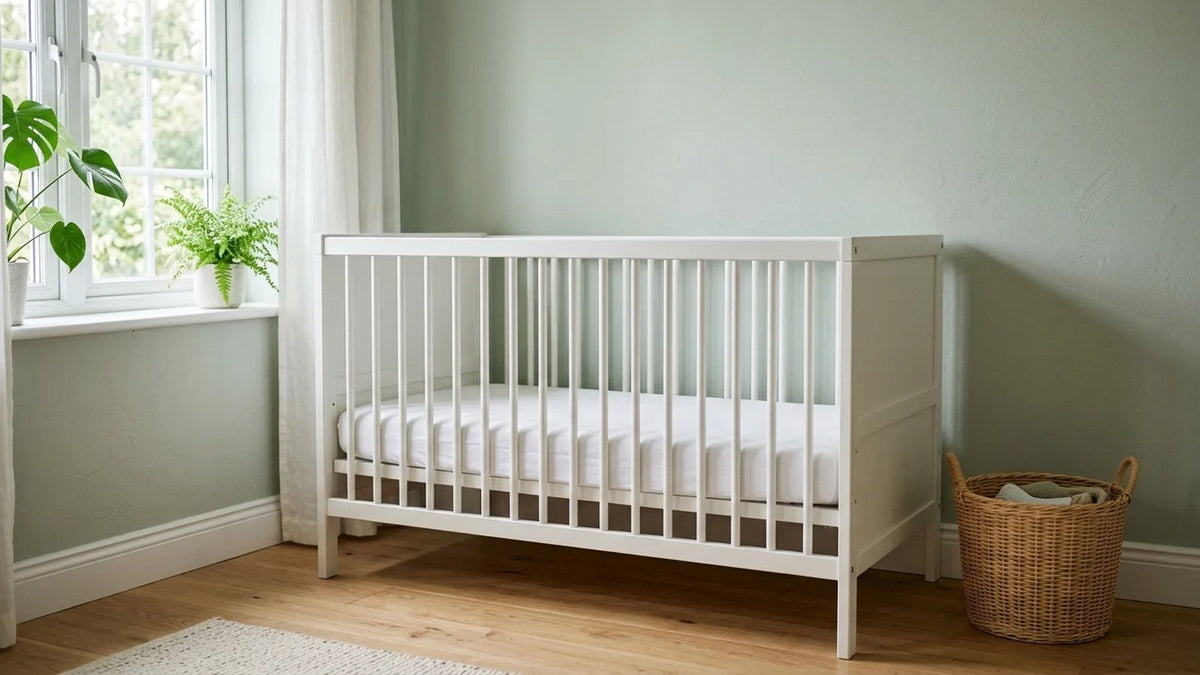
The AAP’s rules for the crib stay in force. The AAP says the mattress should be designed for the crib and fit tightly, with a fitted sheet only and nothing else in the crib. It lists mattress toppers, non-fitted sheets and loose bedding among the soft items to keep out of the sleep area. If you are rechecking the nursery anyway, it is a good moment to review crib placement and mattress guidelines.
Where the Baby Sleeps Stays an AAP Question
The AAP says to share a room with your baby for at least the first 6 months. It says the baby’s sleep area should be close to your bed but not in the same bed. If your baby was brought into your bed, the AAP says to put the baby back in their own sleep space before you sleep.
The EPA and NPIC pages do not address where an infant should sleep during an infestation. For that decision, call your pediatrician. The AAP safe sleep guidelines remain the reference for the sleep space itself.
Hiring a Professional and Preparing the Nursery
Among methods that may be legal but are not necessarily safe or smart, the EPA lists hiring an applicator who does not follow IPM practices, has no or little experience controlling bed bugs, or does not provide a follow-up inspection and repeat treatments if needed.
Questions that follow from those rules:
- Which product will you use?
- Does its label list every surface it will touch?
- How long does the label say to wait before the baby returns?
- Is a follow-up visit included?
For label questions, NPIC takes calls at 1-800-858-7378.
Picture this: the technician arrives tomorrow, and the nursery still holds the crib, bottles, burp cloths and a basket of toys. NPIC’s guidance for homes with babies is to read the product label first and make sure the product can be used where and how you want to apply it. It says to move food, dishes and the baby’s things out of the way before spraying. It also says to make sure babies are out of the treated area during the application.
After the application, NPIC says to open windows and let air flow in. It says to wait at least the time the label gives before returning, or until the pesticide is totally dry or longer if the label is silent. The EPA’s fogger guidance likewise says to leave and not return until the label’s time has passed.
Storing Leftovers and Emergency Numbers
NPIC says to store pesticides in their original containers, never in food or beverage containers, and out of the reach of children. The AAP says to store pesticides in their original packaging in locked cabinets or containers, out of sight and reach of children. That locked-cabinet advice is a good template for storing poisons out of reach everywhere in the house, from cleaners to medicines.
For any swallowed product, call Poison Help at 1-800-222-1222 (America’s Poison Centers). The AAP says to call 911 if the child is unconscious, not breathing, or having convulsions or seizures.
Before and After the Job
Bed bug control with a baby comes down to a few fixed points. Ask a professional which product will be used, whether its label lists each surface, how long to wait before the baby returns, and whether a follow-up visit is included. Keep the AAP’s crib rules in place, and keep leftover products in their original containers, locked up and out of reach. Once the nursery is sorted, an evidence-based guide to home safety can help you check the other rooms the same way.