Downstairs Changing Station: Do You Need a Second One, and How to Set It Up Safely in the Living Room
Do you need a second changing station downstairs? What the AAP says, where to put one in the living room and the safety rules that stay the same.

You do not need a second changing station downstairs. The AAP’s Changing Diapers page says changing tables "aren’t really necessary," and that some parents choose to have more than one around the house. If you don’t want diaper changing limited by where your table happens to be, the AAP says you can simply keep diapers accessible in convenient locations around the house. A downstairs changing station is a convenience, not a requirement. A safe living-room version needs the floor or a stable, dedicated surface, supplies close at hand, and your hand on your baby from start to finish.
Downstairs Changing Station: A Convenience, Not a Requirement
If most of your day happens on the main floor, a second changing station can save you trips. A downstairs diaper changing station is one answer. Diapers kept in convenient spots around the house are another, and the AAP suggests that as an option.
The AAP’s page frames it as a choice. Where a table happens to sit need not decide where a diaper gets changed.
So start with a plain question. Will a downstairs station get used every day, or will it collect clutter? If it will get used, build it carefully. If it won’t, a basic stash of supplies may be all you need.
Downstairs Changing Station Ideas: A Floor Pad or a Stable Surface
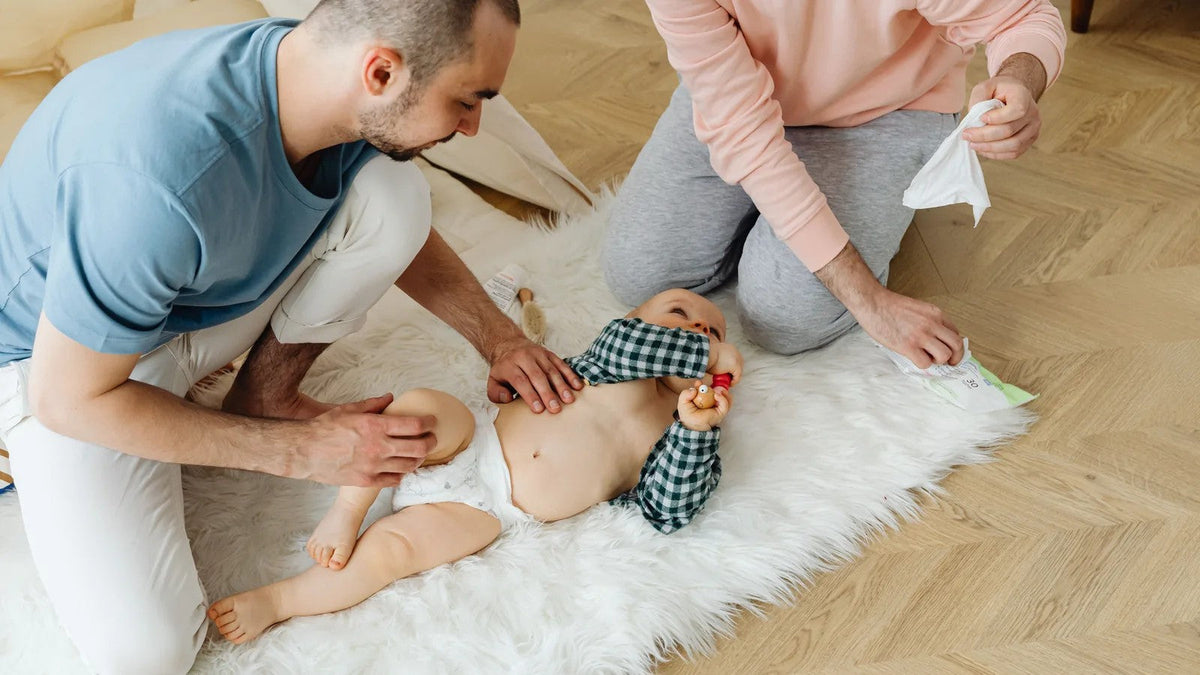
The AAP says some parents use a simple diaper-changing pad in place of a table. It also says the floor can serve the same purpose once you are comfortable with the routine. That gives you two workable options for a living room changing station.
The floor with a pad. The baby is already at ground level, which makes it a natural choice for a room where you spend hours.
A stable, dedicated surface. Dedicated means it is used for changing and nothing else, so it never doubles as a shelf for keys, mail or toys. Stable means it does not wobble when you lean on it.
Whichever you choose, pick one spot and keep it there. The best answer to where to change baby in living room is a consistent place you can reach with your supplies already set out.


Put the Station Close to Its Supplies
Some changes are quick. Others are not. The AAP says particularly messy episodes might need an extra pair of hands, a new outfit and even a trip to the tub. On those occasions, the AAP says you are better off if the changing station is close to all your supplies.
At a minimum, the AAP says to prepare the area so a diaper and something to wipe with are accessible. That means the clean diaper and the wipes are in place before your baby goes down. Anything beyond that minimum is your call.
Whatever you have done for a safe nursery setup upstairs, the downstairs version follows the same logic. Everything you need sits within your reach, so the change never pulls you away from your baby.
One Hand on Your Baby, Start to Finish
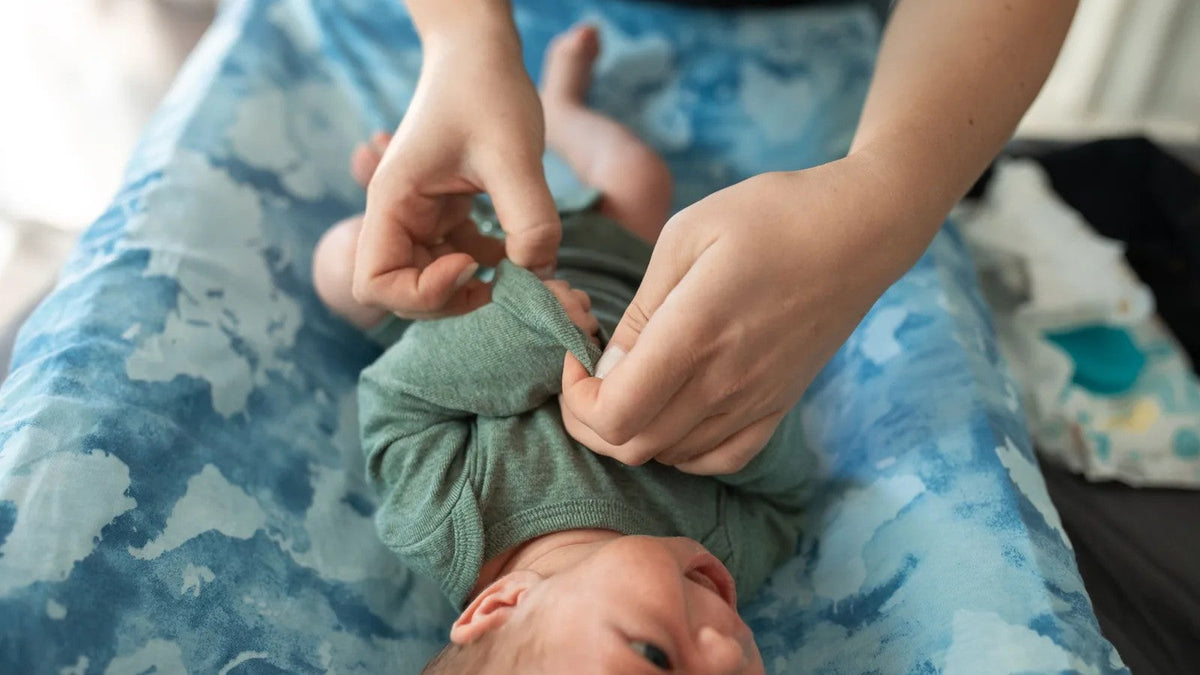
This rule travels to every room. The CDC’s home diaper-changing steps say: "Keep a hand on the child for safety at all times." That line is the center of diaper changing safety in a living room, a nursery or anywhere else.
The AAP adds a second rule. Never leave a child unattended on a dressing table, even for a moment, even if strapped.
Picture this: you are mid-change when the doorbell rings, your phone buzzes, or you realize the wipes are across the room. Those are the moments to plan for. The doorbell can wait. Your hand stays on your baby until the change is done.
The same goes for reaching for a wipe or turning toward a toddler who has wandered into the room. If the supplies are in the right place, you never need to reach far.
The belt is a backup
The AAP says to buckle the safety strap but not to depend on it alone to keep your child secure. The strap adds a layer. It does not replace your hand.
The AAP also notes that although a changing table makes diapering easier, falls from such a high surface can be serious. It says you should not trust your vigilance alone to prevent falls. A strap and a watchful eye still leave room for error, so the hand stays where it is.
If you use a raised downstairs changing table rather than the floor, the AAP recommends a sturdy, stable table. It should have a 2-inch (5 cm) guardrail on all four sides and a concave top, slightly lower in the middle than at the sides.
Keep Supplies in Your Reach and Out of Your Baby’s Reach
The AAP says to keep diapering supplies within your reach, out of your child’s reach, so you don’t have to leave your baby’s side to get them. Both halves matter. Supplies within your reach keep your hand on your baby. Supplies out of your baby’s reach keep curious fingers away from them.
Picture this: an older child is playing in the same room, and a pack of wipes and a spare diaper sit on the coffee table. An older child can reach the coffee table. The better spot is a shelf or ledge above their reach, close enough that you can grab what you need without stepping away.
Spare diapers need the same care. The AAP says to store disposable diapers out of your child’s reach and to cover the diaper with clothing once your child is wearing it. Its reason is that children can suffocate if they tear off pieces of the plastic liner and swallow them.
Once the station is sorted, a broader living room safety guide can cover the rest of the room.
Plan for a Baby Who Starts to Roll
The AAP says most babies are cooperative during a change at least until they learn to roll, somewhere around four months of age.
You can build the habit before the rolling starts. From the very first change, have the clean diaper and something to wipe with ready before your baby goes down. That is the AAP’s prepare-the-area minimum. Keep your hand on your baby the whole time, as the CDC says.
A Changing Surface Is Never a Nap Spot
In its 2018 release on the federal standard for baby changing products, the CPSC said the fatal incidents primarily involved suffocation or asphyxia when babies were sleeping on baby changing products. Changing surfaces are for changing.
Picture this: the diaper is fastened, your baby is drowsy and quiet, and the pad is right there. It is tempting to let them doze.
The AAP says that if a baby falls asleep in a car seat, stroller, swing, infant carrier or sling, you should move them to a firm sleep surface on their back as soon as possible. Move your baby to a proper sleep space once the change is over.
The AAP says to place your baby in a crib, bassinet, portable crib or play yard that meets CPSC safety standards, on their back for all naps and at night. It also says not to use products for sleep that aren’t specifically marketed for infant sleep. A changing pad is not marketed for infant sleep.
Finish in the CDC’s Order
When the new diaper is on, the CDC gives a clear order for wrapping up:
The CDC’s Wrap-Up Order
-
Baby first
The CDC says to wash your baby’s hands with soap and water, then place your baby in a safe, supervised area. -
Clean the surface
The CDC says to clean the diapering surface once your baby is in a supervised spot. -
Wash your hands
The CDC says to wash your own hands thoroughly with soap and water.
Your baby comes off the surface and into a supervised spot before you turn to cleanup. That keeps your hand on your baby until the change is truly finished.
Set the station up once and each change after that runs the same way. Supplies are ready, your hand stays on your baby, and the last step is washing your own hands.
Where a Nest Pad Fits
A pad can add a layer to a second station. It never replaces your hand.
The Nest Eva Diaper Changing Pad has an EVA foam surface with a waterproof, wipe-clean finish and no cover or liner. It has raised sidewalls, a non-slip base and an adjustable safety belt, and it is lightweight and easy to move from room to room. The pad is not a substitute for adult supervision. For cleaning between uses, see how to clean a changing pad.
If you are comparing contoured, flat and portable changing pads, think about where the pad will live and how often it will move. A pad that travels from room to room is only useful if the routine travels with it. Wherever it lands, set out the diaper and wipes first and keep your hand on your baby.