Why Does My Baby Cry During Diaper Changes? Cold Air, the Startle Reflex, Rash and Other Causes by Age
Why babies cry at diaper changes, from AAP guidance on cold air, the startle reflex, rash and age, and when the AAP says to call your pediatrician.

Why does your baby cry during diaper changes? The AAP does not point to a single cause. Its pages describe several things a baby may be reacting to: cold air, a startle, hunger, a wet or soiled diaper, or an uncomfortable diaper rash.
Here is what the AAP says about each, when to call the doctor, and how to keep one hand on your baby the whole time.
Why Does My Baby Cry During Diaper Changes?
The AAP’s Responding to Your Baby’s Cries page says crying "allows them to call for help when they’re hungry or uncomfortable." It also says "all babies cry, often without any apparent cause." Newborns routinely cry 1 to 4 hours a day, per the AAP.
When a baby cries during diaper change time, the baby may be doing what the AAP describes: calling for help when hungry or uncomfortable. The AAP’s advice for the first few months is to respond promptly.
The same page says you may feel as if you can tell needs apart by the cry: hungry, angry, distressed or in pain, sleepy. It adds that each baby will use their voice differently. If your newborn cries during diaper changes day after day, you are not looking for one universal answer. You are learning how your own baby communicates. For the steps of the change itself, see how to change a diaper step by step.
Cold Air and the Room
The AAP’s How Your Newborn Behaves page says newborns "may cringe at a sudden gust of cold air." The same page says they "love the feel of a soft blanket and the warmth of your arms around them."
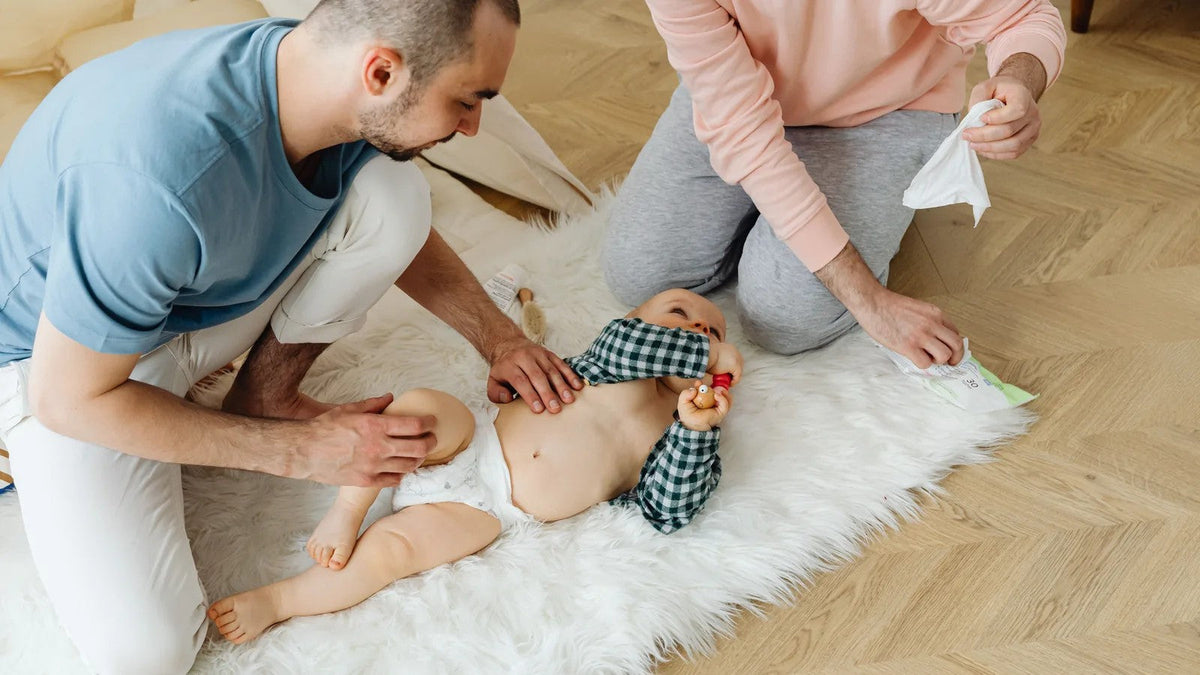
Picture this: your baby is on the changing surface, the diaper comes off, and the crying starts. Your hand stays on your baby’s tummy while you take in the room around you.
The AAP’s How to Calm a Fussy Baby page lists "Cold or hot" among the reasons a baby may cry. Its tip for that reason is to dress your baby in about the same layers of clothing that you are wearing to be comfortable.
A chilly room is one thing worth checking. The AAP does not say cold is the cause of any one baby’s crying. For more on nursery temperature and humidity, see our guide.


The Startle Reflex at Changing Time
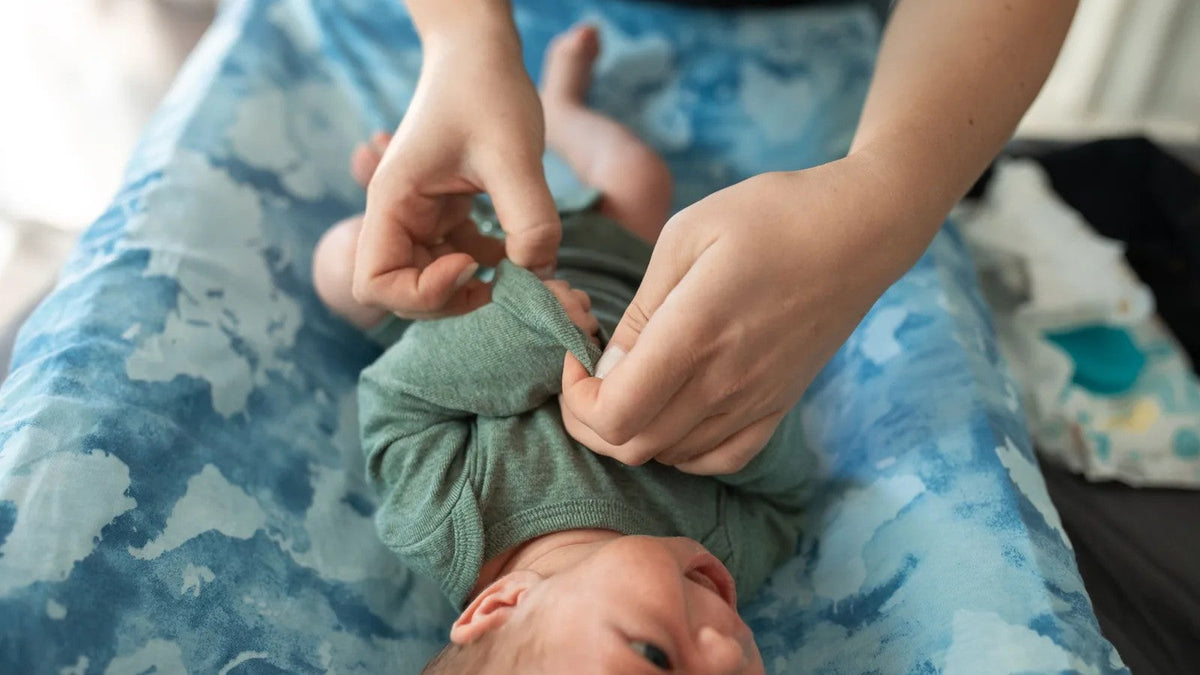
Changing a diaper involves a lot of position changes, and if your baby screams during diaper change, one of them may be the trigger. The AAP describes the Moro reflex this way: if a baby’s head shifts position abruptly or falls backward, or if the baby is startled by something loud or abrupt, "he will extend his arms and legs and neck and then rapidly bring his arms together." The baby "may even cry loudly."
The AAP says this reflex is present in varying degrees in different babies. It usually peaks during the first month and starts to disappear after about two months.
The AAP gives one more sign about the Moro reflex. It says the Moro and tonic neck reflexes "should be present equally on both sides of the body." If the reflex seems different on one side, or the baby moves one side of the body better than the other, the AAP says to tell your pediatrician.
Hunger, a Wet Diaper and Other Sensations
Some of the reasons on the AAP’s lists have nothing to do with the changing surface. The AAP says newborns generally wake up hungry and crying for food. Its How to Calm a Fussy Baby checklist names "Hungry" and "Wet or soiled" among the reasons a baby may cry. It notes that in the first few months babies wet and soil their diapers a lot.
The AAP also describes how sensitive newborns are. A shrill sound or a strong odor may be all it takes to make a newborn jump or cry, per the AAP. The same checklist also names "Overstimulated." The AAP notes you may see fussy periods even when a baby is not hungry, uncomfortable or tired.
These describe newborns in general. They do not tell you why your own baby is crying.
Diaper Rash: What the AAP Says and When to Call
The AAP’s Common Diaper Rashes page says the most common type, irritant diaper rash, comes from the diaper area spending much of the day in contact with "two very irritating substances: urine and stool." The AAP says moisture from leaving a wet or soiled diaper on too long can cause skin to chafe. If a child has diarrhea or is teething, the AAP says "the chance of developing a diaper rash is even greater."
The AAP’s Ask the Pediatrician answer on repeat diaper rashes says diaper rash "can be uncomfortable for the little ones who suffer from it." The AAP does not say whether a rash is the reason any one baby cries at changes.
On how often to change, the same AAP answer says changing diapers every three to four hours, or anytime you notice the diaper is soiled, can help prevent most diaper rashes.
The AAP’s diaper rash page lists when to call your pediatrician:
- The rash is not going away or is getting worse after two to three days of treatment.
- The rash includes pimples, peeling skin, blisters, pus-filled sores, oozing sores or crusty sores.
- The rash is especially painful.
- The rash comes with a fever.
- The rash is bright pink or red with red spots at the edges, in a baby who is taking an antibiotic.
Those are the AAP’s signs, and your pediatrician is the person to ask about any of them.
How the Picture Shifts by Age
If your newborn hates diaper changes in the first weeks, the AAP’s newborn pages describe the two things covered above: the startle reflex and cold-air sensitivity.
The AAP’s Changing Diapers page says most babies are cooperative "at least until they learn how to roll (somewhere around four months of age)." If your baby hates diaper changes all of a sudden, the AAP’s statement is about rolling, not about crying, and it does not say what any one baby will do.
Picture this: your baby flips toward the edge of the surface mid-change. Your hand is already on them, because it never left.
Teething, per the AAP’s rash page, is one of the things that raises the chance of diaper rash.
Because the changing spot shapes so much of this, plan it as part of a safe nursery setup before the rolling stage arrives.
Keep One Hand on Your Baby, Even When They Arch and Squirm
If your baby arches and squirms, your hand stays on them.
CDC’s home diaper-changing steps say: "Keep a hand on the child for safety at all times." The AAP says never to leave a child unattended on a dressing table "even for a moment, even if he is strapped." It says to buckle the safety strap but "don’t depend on it alone to keep your child secure."
So the strap is a backup. Your hand is the plan.
The AAP’s Changing Table Safety page also covers the table. It recommends choosing a changing table with a 2-inch (5 cm) guardrail around all four sides. The surface and your hand work together, and the guide to preventing changing table falls goes further on the table itself.
Where a Changing Pad Fits
A pad adds a layer to the setup and never replaces your hand. The Pod EVA Diaper Changing Pad has an EVA foam surface that is waterproof and wipes clean with no cover or liner. It has raised sidewalls, a non-slip base and an adjustable safety belt.
Its own product page warns that it is not a substitute for adult supervision. That matches what the AAP and CDC say about the hand on the baby.
If you are comparing options, a changing pad buying guide can help you weigh contoured, flat and portable designs.

When Crying Does Not Settle
The AAP’s Responding to Your Baby’s Cries page says: "If your baby is inconsolable, they may be sick."
The AAP’s How to Calm a Fussy Baby page lists these signs for contacting a doctor:
- Your baby keeps crying after you have tried to calm them. The AAP says "there may be a medical reason why your baby is crying."
- Your baby is fussy after feeding, has excessive spitting or vomiting, and is losing or not gaining weight. The AAP says to contact your child’s doctor.
- Your baby is younger than 2 months and has a fever. The AAP says to call your child’s doctor right away.
Those are the AAP’s own signs. If you see one, call your child’s doctor.
When the Crying Starts: A Quick Run-Through
When the crying starts, run through what the AAP’s pages name: cold or hot, hungry, wet or soiled, or overstimulated. Keep your hand on your baby while you do. If the crying doesn’t settle, or any of the AAP’s signs above show up, your child’s doctor is the next call.