How to Baby Proof Houseplants: Pot Covers, Plant Stands, Hanging Planters and Keeping Hands Out of the Soil
Keep plants out of reach, check every stand, and lock up plant food and sprays: a layered plan for baby proofing houseplants.

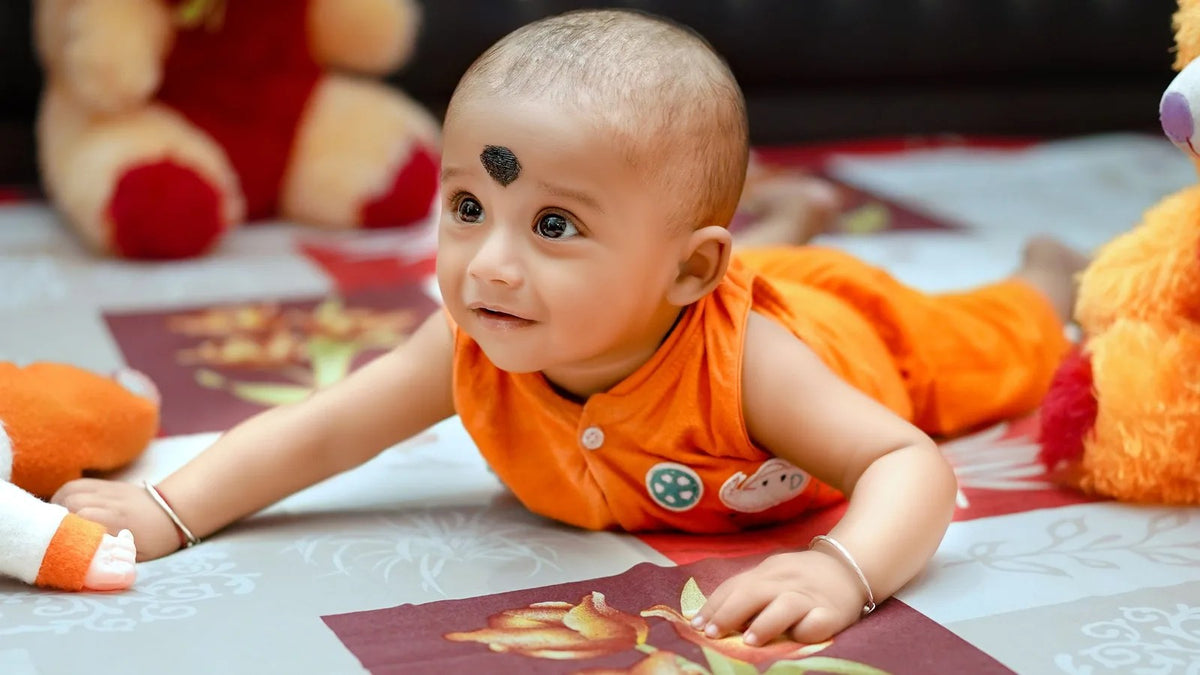
Picture this: you step away to answer the door. When you get back, your crawling baby is sitting beside the pot on the bottom shelf, one hand already in the soil.
To baby proof houseplants, work in three layers. Raise plants out of reach, check every stand and shelf for stability, and lock up the plant food, weed killer and sprays that live near them. None of it replaces watching your child. Each layer closes one gap.
When to Baby Proof Houseplants: Before Crawling Starts
The AAP says that before your child begins crawling or walking, or as soon as they do, you should take extra steps to keep harmful items out of reach and out of sight. Ideally they are stored in a cabinet with a lock or safety latch. Plants and plant-care products belong in that early sweep. They tend to get skipped because they feel like decor, not hazards.
The AAP also says certain houseplants may be harmful if children get ahold of them. It suggests you may want to do without houseplants for a while or, at the very least, keep all houseplants out of reach. That "for a while" matters. Babies grow into toddlers, and the arrangement that works at six months stops working at fourteen months.
The AAP’s poison-prevention guidance tells families to know the names of all the plants in their home and yard. If you have young children, it says to consider removing the ones that are poisonous. For a list or description of plants to avoid, the AAP says to call Poison Help at 1-800-222-1222 (America’s Poison Centers).
If you would rather sort your own collection first, the houseplant safety list is the place to start.
Where Plants Sit: Shelves, Hooks and Rooms Baby Can Reach
The AAP’s wording gives you two options for houseplants: out of reach, or not in the home for a while. The simplest answer to how to keep baby out of plants is distance. The hard part is judging what counts as out of reach, because that changes month by month.
Picture this: your baby has just learned to pull up on the sofa. The pot on the end table that was safely far away last month is now at hand height. Reach is not a fixed measurement. It grows with every new skill, including cruising along furniture and climbing onto low seats.
Walk each room at your baby’s level. Get down on the floor and look at what a crawler sees. Then look again from the height of a toddler standing on the sofa arm, the ottoman or the toy bin. A shelf that is high from the floor may be easy to reach from a piece of furniture beside it.
A few placement questions to ask for each plant:
- Can a crawling baby touch it from the floor?
- Can a cruising baby reach it by pulling up on nearby furniture?
- Can a toddler climb to it using a chair, a bench or a stack of cushions?
- Is it out of sight as well as out of reach?
Rooms are a layer too. A room that stays closed and that you control, like a home office, can be a reasonable place for plants. It works only if the door is closed every time, so be honest about whether that habit will hold. If it won’t, the AAP’s other option, doing without some plants for a while, may be the simpler call.
If you decide certain plants should leave the house, the poisonous houseplants rundown can help you choose which ones.


How to Keep Baby Out of Plant Dirt: Covers, Toppers and Hanging Planters
Soil is soft, messy and comes apart in the hand. Baby proof plant pots usually come down to two questions. Where does the pot sit, and can small hands reach the soil?
Several products target the second question. Each one is an option to weigh, not a proven fix.
- A topper or cover sits over the soil surface so hands meet a barrier instead of dirt.
- A grid or lattice lies over the soil with openings for the stem, which is meant to limit how far a hand can get in.
- A decorative cover or outer pot hides or encloses the container.
- A hanging planter raises the pot off the floor and off furniture by hanging it from a hook.
If you shop for a baby proof plant pot cover, remember that a label is not a guarantee. Judge three things for yourself. Does a cover stay in place when your child tugs at it? Can pieces come loose? Does it give a curious toddler something new to pull? Check it again after a few days of real use. Watching how your own child behaves around it tells you more than the packaging does.
A hanging planter has its own judgment calls. Look at what is beneath it and beside it. If a couch, a high chair or a climbable shelf sits under the hook, the planter may be closer to hands than it looks. And any pot that comes loose has to fall somewhere, so think about where.
If your baby keeps trying to eat soil, mention it to your pediatrician. That is a conversation for a professional, not a gadget.
Plant Stands and Pots as Furniture: A Stability Check
The AAP tells families to check furniture for stability and tip-over risk. It says children can be seriously hurt or even killed when they climb onto, fall against or pull themselves up on large pieces of furniture like bookshelves and dressers. It also says to anchor bookcases, dressers and TV stands to the wall.
Notice what the AAP names: large furniture. Plant stands are not on that list. Applying the same check to a plant stand is a judgment call on your part, and the AAP has not made a finding about plant stands. It is a sensible habit all the same.
No baby proof plant stand is one you can buy and forget. Any stand is furniture, so treat it like furniture. Some questions to ask yourself:
- Does it wobble when you nudge it with your hand?
- Is the weight of the pot high up and the base narrow?
- Does it stand on a rug edge, a threshold or an uneven floor?
- Is it near something a child could use to climb it?
- Can a child grab the pot or the stand’s legs from where they play?
If the answers worry you, move the stand, swap it for a lower and wider arrangement, or take the plant out of the room for now. The same goes for large floor pots, shelves holding several plants and any plant on a ledge. None of these gets a pass because it holds greenery.
Plant Food, Weed Killer and Pest Sprays: Original Packaging, Locked Storage
The products you keep near plants can be a bigger concern than the plants. The AAP lists insecticides and weed killer among the items that may be in a basement or garage. It says to keep products in their original packaging and store them in locked cabinets or containers, out of sight and reach of children. Its poison-prevention page gives the same rule for pesticides.
Plant food is not the same thing as a pesticide, but the AAP’s general product rule fits it. Keep it in the container it came in, with the label intact, and put it away after each use.
The CPSC’s Poison Prevention Information Center gives the same storage rule for chemicals and cleaning supplies: keep them in a locked cabinet or box, out of the reach of children.
Picture this: you have just fed the plants, and the bottle sits on the windowsill while you take a call. Or the cabinet under the sink is shut but not locked, and a toddler has learned how to open it. Both scenes come down to storage: put everything away right after you use it, in a cabinet that locks.
The AAP also says to put safety locks on all cabinets containing cleaning fluids or other dangerous items. The cabinet holding plant food and sprays needs its own lock or latch.
A Lock for the Cabinet, Not the Plants
The Baby Proof Me Magnetic Safety Lock Kit is made for the storage cabinet, not for the plants. The product page describes hidden magnetic locks for cabinets and pull-out drawers. You fit them with 3M adhesive or with screws. If you choose adhesive, allow 24 hours for it to bond for best results.
Like any lock, it adds a layer and does not replace adult supervision. The product page says plainly that it is not a substitute for it.

A Magnet in the House: Keep the Keys Out of Reach
A magnetic lock keeps magnets in your home, and the CPSC says to keep small magnets away from children. The keys are what an adult uses to open the locks, so keep them out of children’s reach. Don’t leave them on the counter, in a drawer your toddler can open or in a low bowl by the door.
The CPSC says a swallowed magnet needs immediate medical attention. Call 911 or Poison Help at 1-800-222-1222 (America’s Poison Centers).
If Your Child Swallows a Plant, Plant Food or Another Product
If a child swallows any plant, plant food or other product, call Poison Help at 1-800-222-1222 (America’s Poison Centers). Call 911 if the child is not breathing, is seizing or is unresponsive.
Your Layered Walk-Through
Run this once before crawling starts, and again whenever your child hits a new stage. Plants are one corner of a larger room-by-room check, and child-safe home basics cover the rest of the house.
- Placement: Get down at baby level and check every plant for reach and for sight. Check what a child could climb to get closer.
- Soil: Decide whether a cover, topper, grid or hanging planter makes sense for plants you keep. Treat each as one layer and recheck it after a few days.
- Stands and pots: Give each stand the same stability check the AAP recommends for large furniture. Move or remove anything that worries you.
- Chemicals: Keep plant food, weed killer and sprays in original packaging, in a locked cabinet or container, and fit the cabinet with its own lock or latch. Put them away after every use.
- Keys: Store magnetic lock keys where children cannot reach them.
- Phone: Keep Poison Help at 1-800-222-1222 (America’s Poison Centers) saved in every adult’s phone.
If a plant fails any step of the walk-through, move it up or move it out. Or move it to a room with a door that stays closed until your child is older.