How to Baby Proof Radiators and Radiator Pipes
Cover the radiator, insulate the pipes and move the crib back: what the CDC and AAP say about radiator burns and how to screen yours.

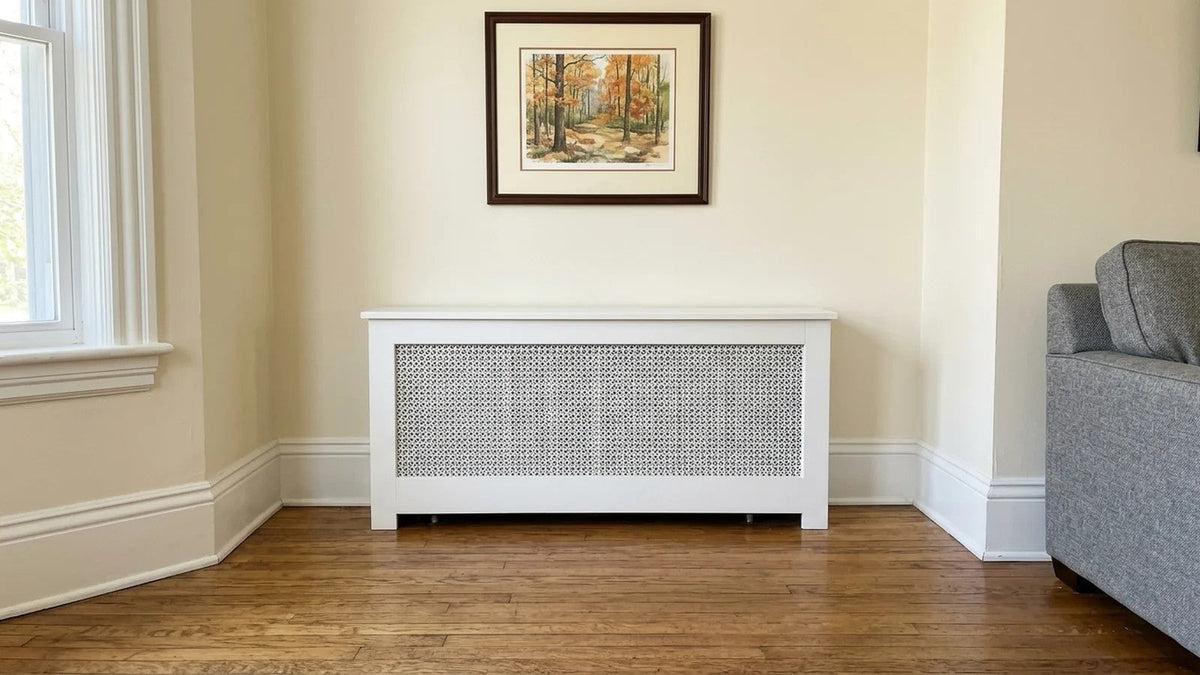
A baby proof radiator plan begins with one question: which radiators, pipes and valves in your home can your child reach once the heating is running? The CDC’s report on home radiator burns says the risk "can be reduced by keeping the unit covered and the pipes insulated." The CDC also says beds, couches and chairs should be kept at a safe distance from radiators. The AAP advises checking how hot radiators get when the heat is on, since they may need to be screened.
Why Baby Proof Radiator Steps Matter
In 1993, an estimated 1,881 children visited US emergency departments for burns related to nonvehicle radiators. Of all US emergency department visits for home-radiator burns that year, 22% resulted in hospital admission and 68% involved children aged 0–4.
The CDC says contact with temperatures in the range of steam radiators can cause an instantaneous full-thickness burn of adult human skin. The CDC also says children’s skin is probably more susceptible than adult skin to thermal injury.
That is why the plan below aims to keep contact from happening at all.
Which Radiators Are the Biggest Burn Risk
The CDC’s report on Chicago radiator burns from 1991 to 1994 describes two kinds of heating systems in one housing project there. Steam radiator systems there operated at 180–230°F (82–110°C). Hot-water radiator systems operated at 120°F (49°C). Those are that project’s systems, not a reading for the radiator in your home.
The CDC says hot-water radiators operate at a lower temperature than steam radiators. It also says steam systems are found primarily in older buildings. If you live in an older building, ask the owner or a heating professional which system you have.
Lower than steam is a comparison between systems, not a clearance for any radiator. Every radiator a child can reach belongs in the plan, whichever system heats the building. The AAP’s advice to check how hot these units get with the heat on applies to all of them.
How to Baby Proof Radiator Pipes
The CDC names pipes right alongside the unit. Its wording is that the risk "can be reduced by keeping the unit covered and the pipes insulated." A cover on the radiator body leaves the pipes that feed it in reach, so they need their own line on your list.
Look at where pipes rise from the floor, run along the wall or pass behind the unit. Note any bare section a child could touch, including runs tucked behind a door or a piece of furniture. Picture this: the radiator has a cover, and a crawling baby follows the pipe to the spot where it comes up through the floor. The cover is in place, and the exposed pipe is still within reach.
One mistake is treating a covered radiator as finished. In 1994, the CDC inspected 169 units in two Chicago buildings where more than one child was burned. The CDC reports that 133 (79%) were missing radiator covers, insulation around radiator pipes, or both. That is a finding from those two buildings, not a national figure.
If you rent, tell your landlord or property manager which covers or pipe insulation are missing. If you own your home, a heating professional can advise on insulation for your particular system.
Baby Proof Radiator Valve and Pipe Fittings
The valve end of a radiator is part of the unit a child can reach. So are the fittings where the pipes meet it. The AAP’s check, to find out how hot radiators get when the heat is on, belongs there too.
Get down to a crawler’s eye level in each room. Look at the valve, the fittings and the connection at the floor or wall. Ask whether a child could get a hand to any of them, either directly or by climbing onto a nearby chair or toy bin. You don’t need to touch anything to decide.
Anything reachable goes on your list alongside the radiator body. A cover that protects the body but leaves the valve end exposed leaves part of the unit reachable. Treat the valve end as part of the unit you are covering.


Child Proof Radiator Covers: Keeping a Child Away From the Hot Unit
A cover has one job: to keep a child from touching the hot unit. The AAP calls this screening. It says fireplaces, woodstoves and kerosene heaters should be screened so a child can’t get near them, and that radiators, baseboard heaters and hot-air vents may need to be screened too. The CDC’s version is to keep the unit covered.
Judge any cover by that standard: can a child reach the radiator through it, over it or around it? Does it stay in place when a toddler leans on it or pulls at it? Does it leave the valve end or the pipes exposed? Check it again after you clean or move furniture, since a cover nudged out of position leaves the unit open.
The AAP also warns that gas fireplaces with glass doors get extremely hot, stay hot long after the fireplace is turned off and can cause severe burns when touched. One lesson for radiators is to build the barrier once and keep it in place all season, instead of judging by whether the heat seems to be on.
NFPA’s heating safety tip sheet recommends a three-foot (about one meter) "kid-free zone" around open fires and space heaters. NFPA names open fires and space heaters, not radiators, so this is not an NFPA rule for radiators. It is a useful comparison, though: a clear space around any heat source gives a child less to reach.
If your home also has a fireplace, woodstove or kerosene heater, the same AAP screening advice applies. That wider set of fire and burn hazards at home deserves its own check.
Where the Crib, Bed and Couch Go
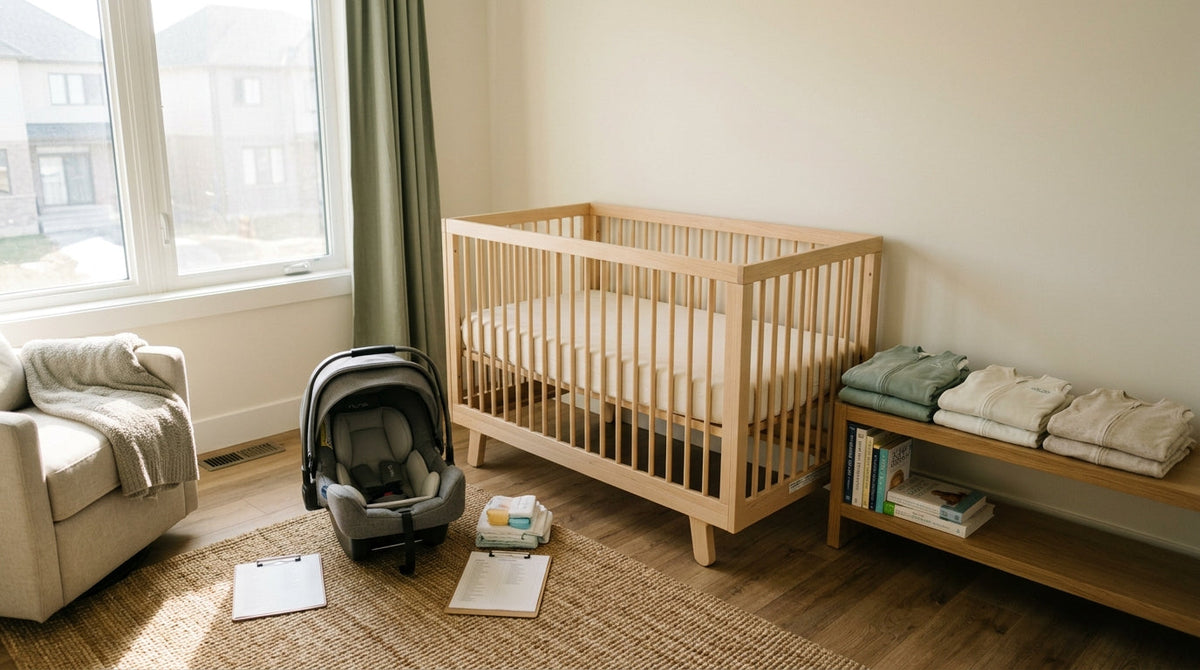
The CDC recommends keeping beds, couches and chairs at a safe distance from radiators to avoid contact burn injury. Its wording is "safe distance," so the practical test is whether a child in or on that furniture can reach the radiator, its pipes or its valve.
Picture this: you rearrange the nursery to fit a new dresser, and the crib ends up against the wall below the window, right beside the radiator. Nothing looks wrong. But a baby who rolls, pulls up and reaches has just been placed next to a hot unit.
The CDC cites US 1993 data on this point. Among children aged 0–4 who visited an emergency department for a home-radiator burn, 16% slept in a bed that was too close to a radiator.
Apply the recommendation to every piece of furniture a child uses. That means the crib, the toddler bed and the couch a child climbs to pull up and cruise along. Move it before the heating season starts, and recheck after any room rearranging.
A Room-by-Room Walk-Through Before Heating Season
Do this walk-through before the heat comes on, then again once it is running. The AAP advises checking how hot radiators, baseboard heaters and hot-air vents get with the heat on. You are looking at what a child can reach, so you can do it without touching anything. For baseboard units, see how to baby proof baseboard heaters.
- Bedrooms and nursery: Is the crib or bed at a safe distance from the radiator, per the CDC? Can a child in the bed reach the pipes or the valve end?
- Living room: Are couches and chairs at a safe distance? Could a child climb furniture and reach the unit?
- Kitchen, bathroom, hallways and entry: Which radiators, pipes and valves can a crawling or cruising child get to?
- Every room with a radiator: Is the unit covered, and are the pipes insulated, as the CDC describes?
- Baseboard heaters and hot-air vents: Per the AAP, check how hot they get with the heat on, and note any that may need a screen.
Write down every gap, then match each one to a fix: a cover, pipe insulation, a moved piece of furniture or a conversation with your landlord. Repeat the walk-through whenever your child reaches a new stage, such as pulling up or climbing, because what counts as within reach changes.
What Covers and Insulation Do Not Replace
The CDC frames covers and insulation as ways the risk "can be reduced," not removed. A cover, insulated pipes and a moved crib each reduce contact with a hot radiator. None of them replaces watching a crawling or cruising child.
Picture this: you step away to answer the door, and your child crawls toward the one pipe you hadn’t gotten to yet. Supervision covers that gap while the rest of your list gets finished.
Water heater temperature for safety is a separate burn question from the radiator. The AAP says to adjust your water heater so the hottest temperature at the faucet is no more than 120°F (49°C), to reduce scald burns.
Before the first cold week, list every radiator, pipe and valve your child can reach. Then cover the unit, keep the pipes insulated and move beds, couches and chairs back, as the CDC describes.