The CPSC reports that emergency rooms treat more than 2.2 million children under five for home injuries every year. That number isn’t a reason to panic. It’s a reason to have a plan.
Baby proofing is not a single afternoon project. It’s a layered process that evolves as your child does, starting before they can roll over and continuing well past their first birthday. The hazards aren’t always obvious until a child finds them first. In my experience, parents underestimate the scope of it. My younger daughter once emptied the entire cabinet under our bathroom sink in the time it took me to answer the front door. She was 14 months old. I had not yet installed the cabinet lock. I installed it that afternoon.
This guide walks through every major zone of your home, explains the developmental logic behind each hazard, and tells you what to do about it. Start here. Work through it systematically. Then revisit it every few months, because your child’s capabilities will outpace your expectations.
Why Developmental Stage Determines Your Priorities
Baby proofing is not one-size-fits-all, and the biggest mistake parents make is treating it as a one-time task. What’s safe for a three-month-old is a hazard landscape for a nine-month-old. The interventions you need depend entirely on what your child can do right now, and what they’ll be able to do in the next six to eight weeks.
Here’s the rough developmental map you’re working with:
- 0–4 months: Limited mobility. The main risks are suffocation (soft bedding, sleep environment), falls from elevated surfaces, and temperature hazards.
- 5–8 months: Rolling, then sitting, then beginning to crawl. Floor-level hazards become real. Small objects, cords, and furniture edges matter now.
- 9–12 months: Pulling to stand, cruising along furniture, possibly walking. Tip-over hazards, stair gates, and cabinet locks become urgent.
- 12–24 months: Walking, climbing, opening things, figuring out mechanisms. This is the window where most parents are caught off guard.
- 24–36 months: Problem-solving. My older daughter defeated an adhesive strap lock at 26 months by simply pulling the cabinet hard enough to pop the adhesive off the door. Screw-mounted hardware matters more than ever.
The AAP recommends beginning your home safety assessment before your baby is mobile, ideally before six months. That gives you a buffer. Use it.
The Sleep Environment: Your First Priority
Before your baby can move independently, the sleep environment is where the statistical risk is highest. The CDC reports that sleep-related deaths account for roughly 3,500 infant deaths per year in the United States, and the majority are preventable.
The AAP’s safe sleep guidelines are clear and have not changed in their core principles for years:
- Back to sleep, every time, for the first year.
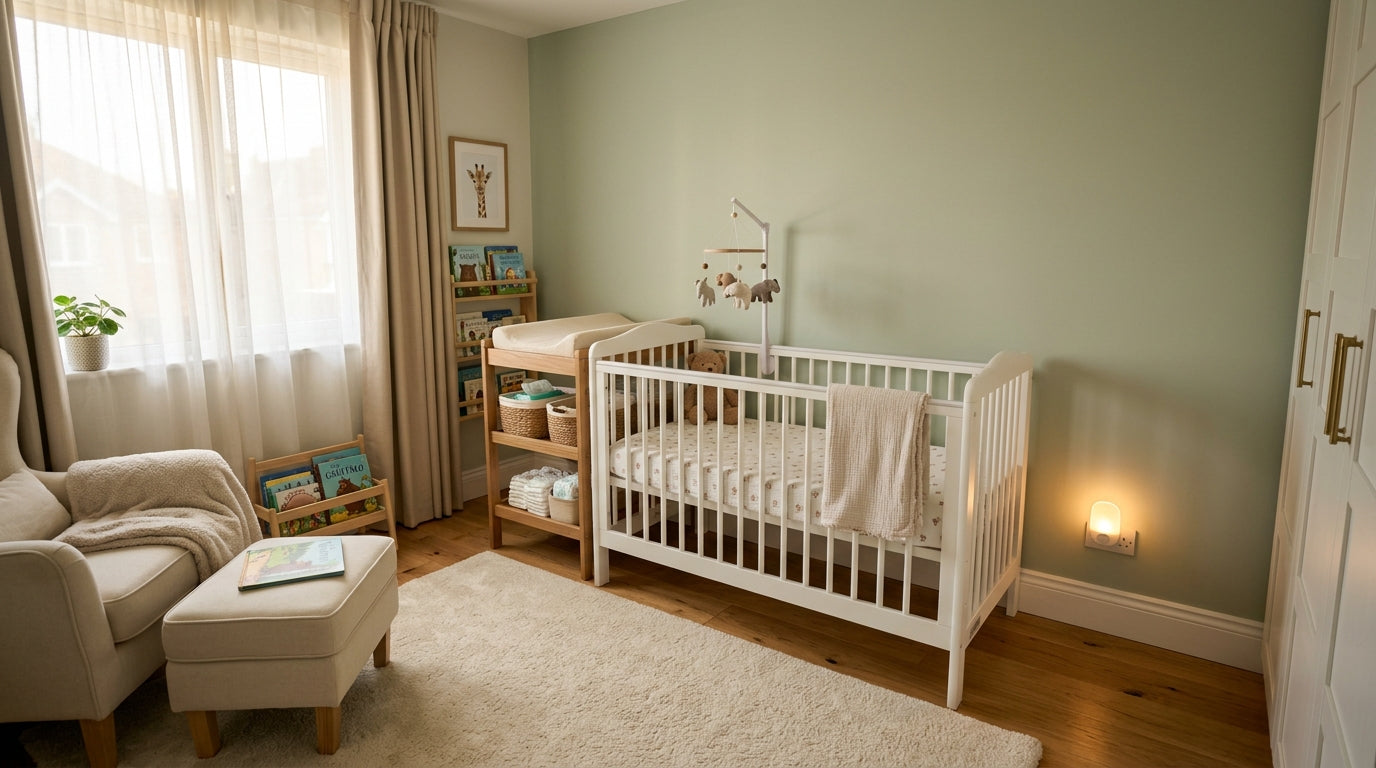
- Firm, flat sleep surface in a safety-approved crib, bassinet, or play yard.
- Nothing in the crib. No bumpers, no pillows, no blankets, no stuffed animals until at least 12 months and ideally longer.
- Room-sharing without bed-sharing for at least the first six months.
The crib itself matters. Look for CPSC compliance and confirm the slat spacing is no wider than 2⅜ inches. Older cribs, especially drop-side models, were recalled in 2011 and should not be used. If a crib was handed down from a relative or purchased secondhand, verify it against the CPSC recall database before your baby sleeps in it.
Set your water heater to 120°F (49°C) before your baby arrives. Scalds are among the most common and severe burn injuries in children under five. At 120°F, a serious scald takes about five minutes of exposure. At 140°F (60°C), it takes three seconds. That margin matters enormously.


The Living Room: More Hazards Than It Looks
Living rooms feel safe because they’re familiar. They’re not. They’re full of furniture edges, heavy objects at climbing height, cords, and tip-over risks.
Furniture anchoring is non-negotiable. The CPSC estimates that a child is killed by a tip-over every two weeks in the United States, and furniture or TVs are involved in the large majority of those incidents. Every bookshelf, dresser, wardrobe, and television stand needs to be anchored to a wall stud. Anti-tip straps are inexpensive and widely available. Use them. The strap should connect to a wall stud, not just drywall. Drywall anchors are not adequate for this application.
Flat-screen televisions present a specific problem. They’re lighter than the old CRT sets, which means they tip more easily and can be pulled off a stand by a child who grabs the edge. Mount the TV to the wall if possible. If it’s on a stand, anchor the stand and use a TV strap that connects the set to the stand or wall with a rated load capacity well above the TV’s weight.
Window blind cords are a strangulation hazard. The CPSC banned the sale of corded window coverings for residential use starting in 2024, but millions of older corded blinds are still in homes. If you have them, replace them with cordless versions or install cord wind-ups and tie-down devices immediately. Keep all cords out of reach and away from cribs, beds, and play areas.
Coffee tables and hearths are edge hazards at exactly the height a pulling-to-stand or newly walking child will fall against. Foam corner and edge guards work, though the adhesive versions vary in quality. In my experience testing six different brands over two years, the ones with thicker foam and wider adhesive pads held significantly better on painted wood than thin-profile options. For hearths, a freestanding gate that fully encloses the fireplace surround is more reliable than adhesive guards alone.
Outlet covers are worth doing, but keep perspective. The CPSC data shows that outlet-related injuries are far less common than furniture tip-overs or falls. Use sliding plate covers rather than the small plug-in caps, which are themselves a choking hazard if a child removes them.


The Kitchen: The Highest-Risk Room in the House
The kitchen concentrates the most serious hazards in your home: burns, cuts, poisoning, and falls. It deserves the most thorough treatment.
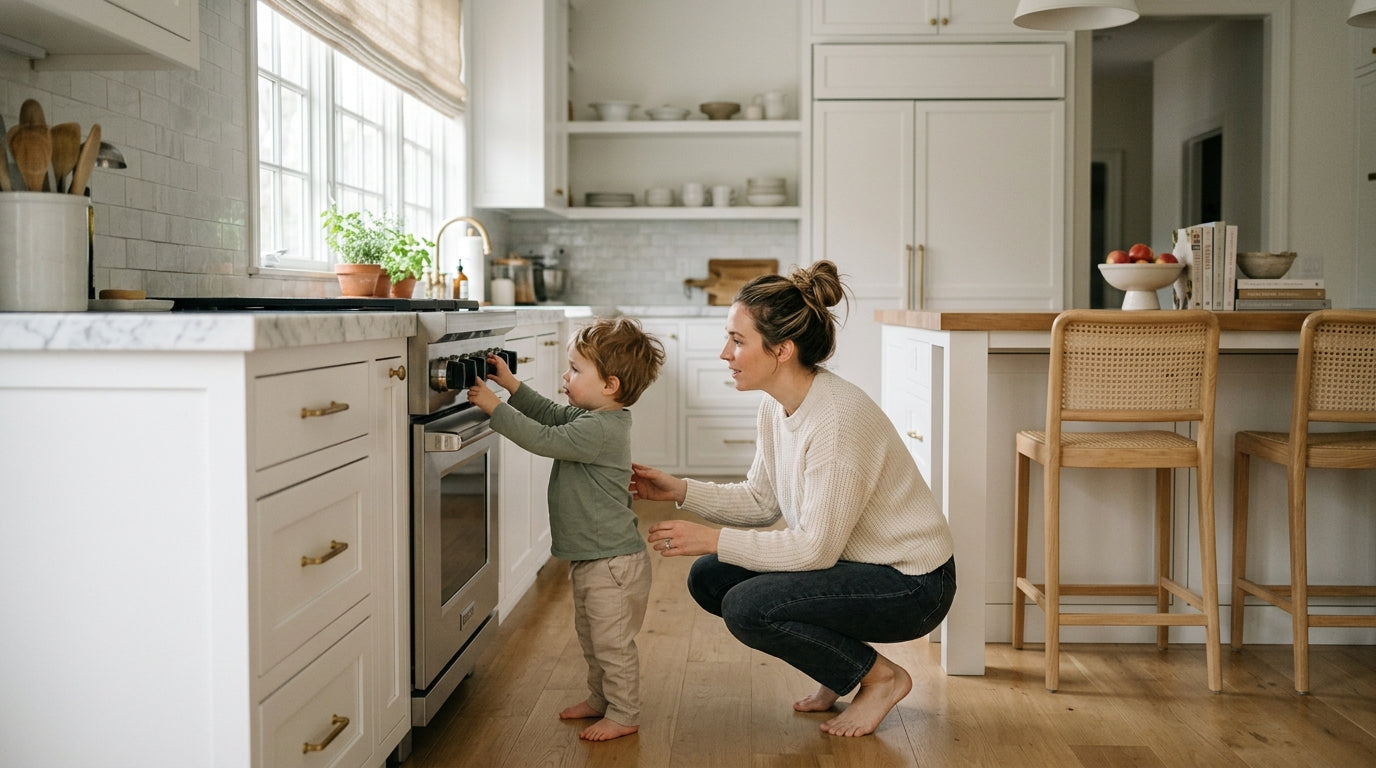
Stove knob covers prevent a child from turning on a burner. They’re one of the most underused safety products I’ve encountered, and one of the most important. A child who can reach the stove can turn on gas or electric burners. Knob covers are inexpensive and install in seconds.
Cabinet and drawer locks are essential under the sink and anywhere you store cleaning products, medications, or sharp objects. There are two main types: magnetic locks (which require a magnetic key to open and leave no visible hardware on the outside of the cabinet) and spring-latch locks (which are easier to install but can sometimes be defeated by determined toddlers). For under-sink cabinets with cleaning products, use magnetic locks with a screw-mounted strike plate, not adhesive. The adhesive versions can fail, and the contents of that cabinet are not worth the risk.
The AAP recommends storing all medications, vitamins, and supplements in locked storage, not just high storage. Children climb. High is not safe enough on its own.
Dishwasher latches keep the door closed and prevent access to knives in the lower rack. A dishwasher door that falls open is also a step a toddler will immediately try to climb.
Keep a fire extinguisher in the kitchen, mounted and accessible to adults. The NFPA recommends a 2A:10B:C rated extinguisher for kitchen use. Know how to use it before you need it.
Refrigerator locks are worth considering if your child is a climber or has shown interest in opening the fridge. The main concern is less about what’s inside and more about a child climbing the open door or getting trapped inside.

- Bookshelf: anchor to wall stud
- TV: mount or strap to stand
- Blind cords: replace or secure immediately
- Coffee table edges: foam guards required
- Hearth: freestanding gate, not adhesive guards
Bathrooms: Small Room, Serious Risks
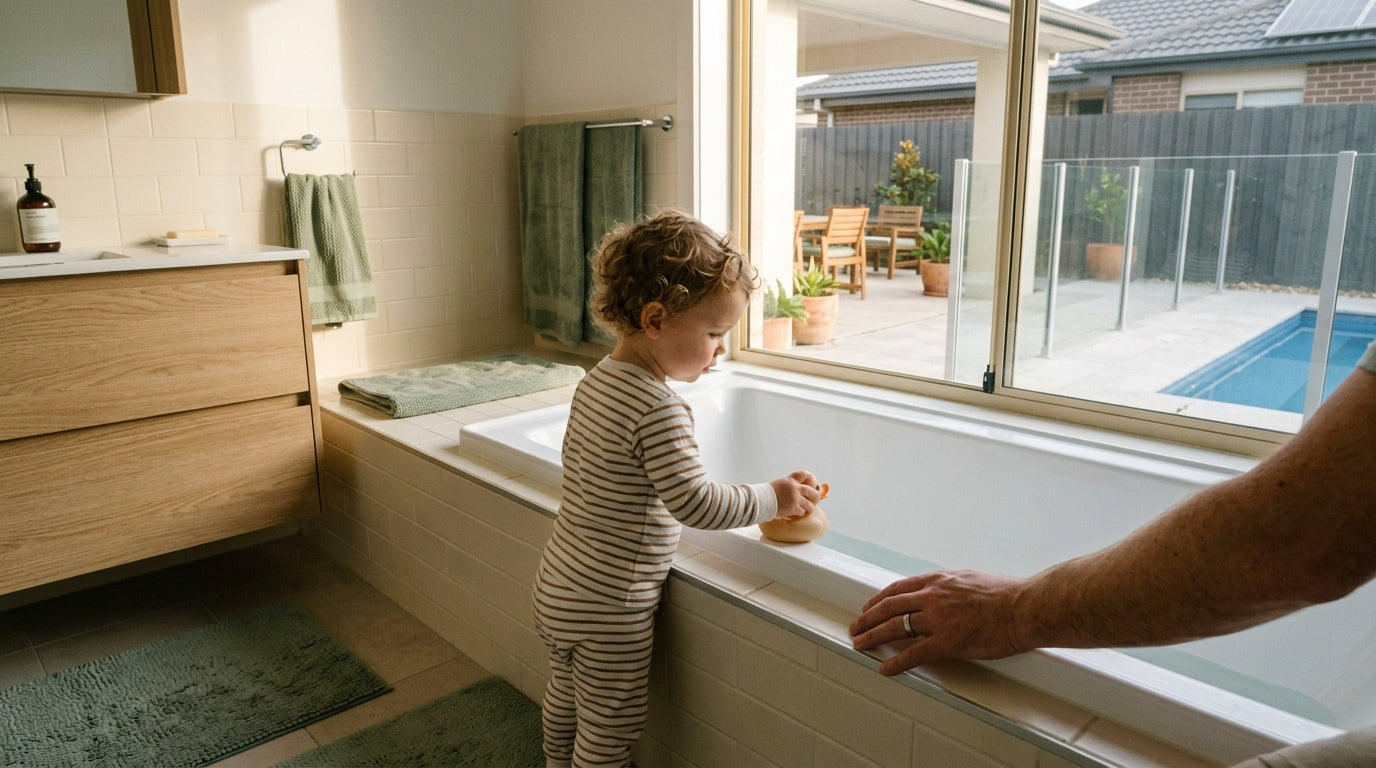
Drowning is the leading cause of accidental death in children ages 1–4, according to the CDC. Bathtubs are a primary site. A child can drown in as little as one inch of water, and it happens silently and quickly.
Never leave a child unattended in the bath. Not to answer the phone, not to grab a towel from the next room. If you need to leave, take the child with you.
Toilet locks prevent a toddler from opening the lid and leaning in. They’re inexpensive and easy to install. Use them.
Non-slip mats go both inside the tub and on the floor outside it. Bathtub surfaces are slippery when wet, and a fall against the tub edge or faucet is a serious injury risk.
Faucet covers are soft covers that fit over the bathtub spout and protect a child’s head from impact if they slip. They also reduce the risk of burns from a hot metal spout.
Confirm your water heater is set to 120°F (49°C) as noted above. Test the bath water with your wrist or elbow before placing your child in it. A bath thermometer is a useful tool, particularly for infants.
Medication storage in the bathroom deserves specific attention. Many families store medications in the medicine cabinet out of habit. If the cabinet is reachable by a climbing child, it’s not safe. Move all medications to a locked box or a cabinet with a childproof latch. The CDC reports that approximately 50,000 children visit the emergency room each year due to medication ingestion, and most of those incidents happen in the home.


Stairs and Entryways: The Fall Prevention Layer
Falls are the leading cause of non-fatal injury in children under five, per the CDC. Stairs are a primary site for serious falls.
Pressure-mounted gates are appropriate for room dividers and doorways where there’s no fall risk on the other side. They should never be used at the top of stairs. A pressure-mounted gate can be pushed out of position by a child’s weight, and at the top of a staircase, that failure is catastrophic.
Hardware-mounted gates screw into the wall or banister and are the only appropriate choice for the top of stairs. Install them at both the top and bottom of any staircase your child can access. The gate at the top is the critical one. The gate at the bottom prevents climbing practice, which is worthwhile, but a fall from the bottom of the stairs is far less dangerous than a fall from the top.
When installing a stair gate, locate the wall studs and drive the screws into them. If you’re mounting to a banister, use a banister adapter kit and verify the gate is secure before relying on it. In my experience, banister-mounted gates can wobble significantly if the adapter isn’t properly tightened. Test it by pushing firmly before you trust it.
Balcony and deck railings should have no horizontal rails that a child can use as a ladder. The spacing between vertical balusters should be less than four inches. If your railing has wider spacing or horizontal rungs, a mesh guard installed along the railing is a practical solution.
Entryway floors are often hard surfaces, tile or hardwood, where falls are more likely to cause injury. Area rugs with non-slip backing help, but watch for rug edges that curl up and become tripping hazards themselves.


Bedrooms and Nurseries: Beyond the Crib
Once you’ve addressed the sleep environment, the rest of the nursery and your own bedroom have their own hazard set.
Dresser and wardrobe anchoring is critical in any bedroom. Children climb dressers. They pull out drawers and use them as steps. A six-drawer dresser can weigh 150 pounds or more and will crush a child if it tips. Anchor every piece of freestanding furniture to a wall stud.
Closet doors can trap fingers. Pinch guards for hinged doors are inexpensive and prevent the door from closing fully on small fingers. Sliding closet doors should have a stopper or lock to prevent a child from sliding them open and accessing contents.
Cords and wires in bedrooms include lamp cords, phone charger cables, and monitor cords. The monitor cord in particular is a risk many parents don’t think about. Keep the baby monitor at least three feet from the crib and route the cord out of reach. The CPSC has documented infant deaths involving monitor cords.
Window stops or guards prevent windows from opening more than four inches. The AAP recommends these on all windows above the ground floor. Window screens are not a fall barrier. They will not hold a child’s weight.
Your own bedroom presents a specific hazard: your medications, your jewelry with small parts, your phone charger, your nightstand drawer. Treat your bedroom with the same scrutiny you’d apply to any other room.
Garage, Laundry, and Utility Areas: Lock Them Out
The simplest approach to the garage, laundry room, and any utility space is to keep children out entirely. A door with a knob cover or a deadbolt your child can’t reach is the primary intervention. Everything else is secondary.
If your child can access these spaces, the hazard list is long: power tools, sharp garden equipment, automotive fluids, laundry detergent pods, fertilizers, pesticides, and more. Laundry detergent pods are a specific concern. The CPSC and AAP have both issued warnings about them. They’re brightly colored, soft, and look like toys. They are highly concentrated and cause severe chemical burns to the mouth and esophagus if ingested. Store them in a locked cabinet, not just a high shelf.
Carbon monoxide detectors belong on every level of your home, including near sleeping areas. The CDC reports that CO poisoning kills approximately 400 people in the United States per year and sends more than 100,000 to the emergency room. Attached garages are a primary source of CO infiltration into living spaces. A detector near the door to the garage is important.
Smoke detectors should be on every level and inside every bedroom. Test them monthly. Replace batteries annually, or use 10-year sealed battery units. The NFPA reports that three out of five home fire deaths occur in homes with no smoke alarms or non-functioning ones.
Poison Prevention: A Room-by-Room Mindset
Poisoning is the leading cause of accidental death in adults in the United States, but in children under five, it’s a major cause of emergency room visits. The distinction matters because children’s exposures are usually non-fatal but still serious and preventable.
The Poison Control hotline is 1–800–222–1222. Put it in your phone now, before you need it.
Every room has potential poison sources. Cleaning products in the kitchen and bathroom are obvious. Less obvious: houseplants (many common varieties are toxic), vitamins and supplements on the counter, alcohol left out after a gathering, nicotine products including patches and gum, and button batteries.
Button batteries deserve special emphasis. They’re found in remote controls, key fobs, greeting cards, small flashlights, and dozens of other household items. If swallowed, a button battery can cause severe internal burns within two hours. The CPSC and AAP have both flagged this as a critical hazard. Keep devices with button batteries out of reach, and if a battery compartment doesn’t have a screw closure, consider whether that item belongs in a home with a young child.
Houseplants to remove or relocate include pothos, philodendron, dieffenbachia, peace lily, and oleander, among others. The ASPCA maintains a comprehensive list of toxic plants that applies equally well to children as to pets. If you’re unsure about a plant, look it up or move it out of reach.
Store all cleaning products in their original containers with original labels. Never transfer chemicals to unmarked containers or food containers. A child who ingests something unknown is harder to treat because the Poison Control team needs to know what the substance is.