Do You Need to Baby Proof If You Have a Playpen?

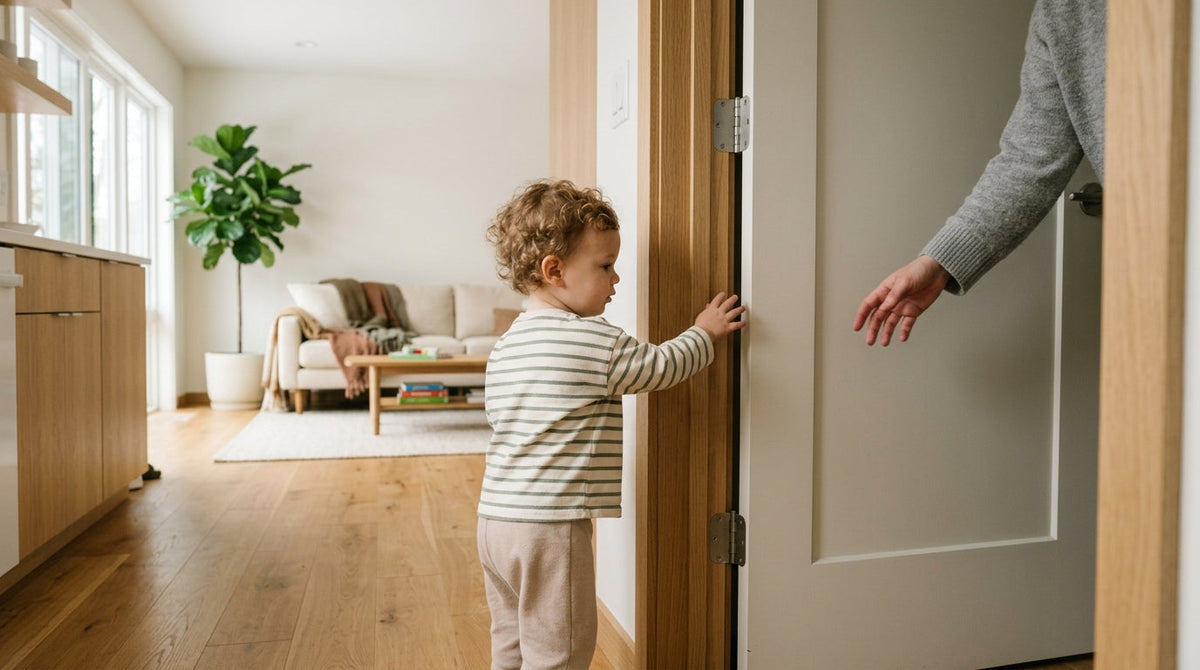
A playpen feels like a solution. You put the baby down, turn your back for three minutes, and nothing terrible happens. It works so reliably that it’s easy to start thinking of it as a substitute for baby proofing rather than a supplement to it.
The short answer to whether you still need to baby proof: yes, fully, without shortcuts. Here’s why that’s true, and what a playpen does and doesn’t protect against.
What a Playpen Does
A playpen creates a contained space for specific, time-limited activities. In my experience, when I need to answer the door, start dinner, or move laundry, having a safe spot to set my younger daughter down buys me a few minutes without a crawling baby following me into the kitchen.
But "a few minutes" is the key phrase. Your child spends the majority of their waking hours outside the playpen. Meals, diaper changes, tummy time on the floor, transitions to the crib, bath time, morning wake-ups before you’ve had coffee. Every one of those moments happens in the broader home environment, which has its own hazards entirely independent of whether you own a playpen.
A playpen is a tool for containment during specific activities. It is not a safety system for your home.
The Playpen Itself Has Safety Requirements You Need to Know
Play yards sold in the U.S. must meet ASTM F406, the safety standard for non-full-size cribs and play yards, made mandatory under 16 CFR Part 1221. That standard covers mesh opening size, structural integrity, and hardware requirements. Specifically, play yard mesh must not admit a 0.250-inch diameter rod (ASTM F406, mandatory via 16 CFR 1221), which limits the risk of limb entrapment.
That’s a meaningful baseline. But standards only apply to products that haven’t been recalled, damaged, or modified. Before you use any playpen, especially a secondhand one, check the CPSC recall database. Mesh that has torn, seams that have separated, or hinges that don’t lock properly can create entrapment or collapse hazards that no standard can protect against after the fact.
In my experience, parents sometimes set up a playpen they inherited from a cousin without checking whether the floor pad was original equipment or whether the model had been recalled. The playpen looked fine. That’s not the same as being safe.
Also check the perimeter around the playpen. Babies reach through mesh and pull. A blind cord hanging near the playpen, a cup of coffee on a low table, a small toy left on the floor within arm’s reach: all of these become hazards the moment your baby figures out she can grab through the side. Clear a 12–18 inch perimeter around the playpen of anything that can be pulled, chewed, or knocked in.


The Room Around the Playpen Still Needs to Be Proofed
This is where the false confidence tends to live. Parents set up a playpen in the living room and feel like that room is handled. But the outlet behind the couch is still live. The bookshelf is still unsecured. The window above the radiator still opens fully.
Windows in homes with young children should not open more than 4 inches (CPSC and AAP). This requirement doesn’t change because there’s a playpen in the room.
Your child transitions in and out of that playpen multiple times a day. Every transition is a moment of exposure to whatever hazards exist in the room. Outlet covers, cabinet locks, window stops, and anchored furniture are not redundant because you have a playpen. They’re necessary because your child doesn’t stay in the playpen.
High-Traffic Rooms Need Extra Attention
Kitchens and bathrooms are where playpens often end up, because that’s where parents spend time and want to keep the baby close. Both rooms have hazard profiles that require proofing measures the playpen does nothing to address.
In the kitchen: appliance locks, stove knob covers, secured lower cabinets, and anything stored under the sink moved to a locked location. In my experience, a child at around 14 months can empty the cabinet under the kitchen sink in the time it takes to answer the front door. If cleaning products are stored there, the playpen provides no protection if the child isn’t in it.
In the bathroom: water temperature matters. Set your water heater to 120°F (49°C) or lower to reduce scald risk. Lock medications and supplements out of reach entirely, not just on a high shelf. Children are faster and more creative than you expect.
Stairs and Transitions Are Where Gaps Show Up
A playpen in the living room does nothing to protect a child who has learned to crawl toward the staircase the moment you set her down on the floor.
Stair gates are a separate requirement. ASTM F1004 is the federal safety standard for expansion gates and expandable enclosures, made mandatory under 16 CFR Part 1239 (effective 2021). Hardware-mounted gates at the top of stairs, pressure-mounted at the bottom. These are not optional additions to a home that has a playpen. They’re foundational.
In my experience, children can figure out how to push past a pressure-mounted gate at the top of stairs around 22 months. A hardware-mounted gate is necessary. The playpen is not part of that calculation.
The Playpen Becomes Less Effective as Your Child Grows
A newborn stays where you put her. A 10-month-old sits and plays contentedly. A 14-month-old tests the walls. An 18-month-old climbs.
The window during which a playpen reliably contains a child is shorter than most parents expect. Once your child is pulling to stand and showing interest in climbing, the playpen’s containment value drops significantly. And that’s exactly the age when mobility-related hazards, stairs, unsecured furniture, accessible cabinets, become more dangerous, not less.
This is why comprehensive baby proofing can’t be deferred until the playpen stops working. By the time your toddler is scaling the playpen walls, you want the rest of the house already secured. Proofing done in a hurry, in response to a near-miss, is proofing done incompletely.
Does having a playpen mean I don’t need to baby proof?
Is my playpen safe to use if it came from a family member?
What should I clear away from around the playpen?
Do I still need stair gates if I have a playpen?
When does a playpen stop being effective for containment?
What water heater temperature is safe for homes with young children?
The Layered Safety Model
The AAP and CPSC both frame home safety as a layered system, not a single-product solution. A playpen is one layer. It reduces the number of hazards you’re managing simultaneously during specific activities. That’s real value.
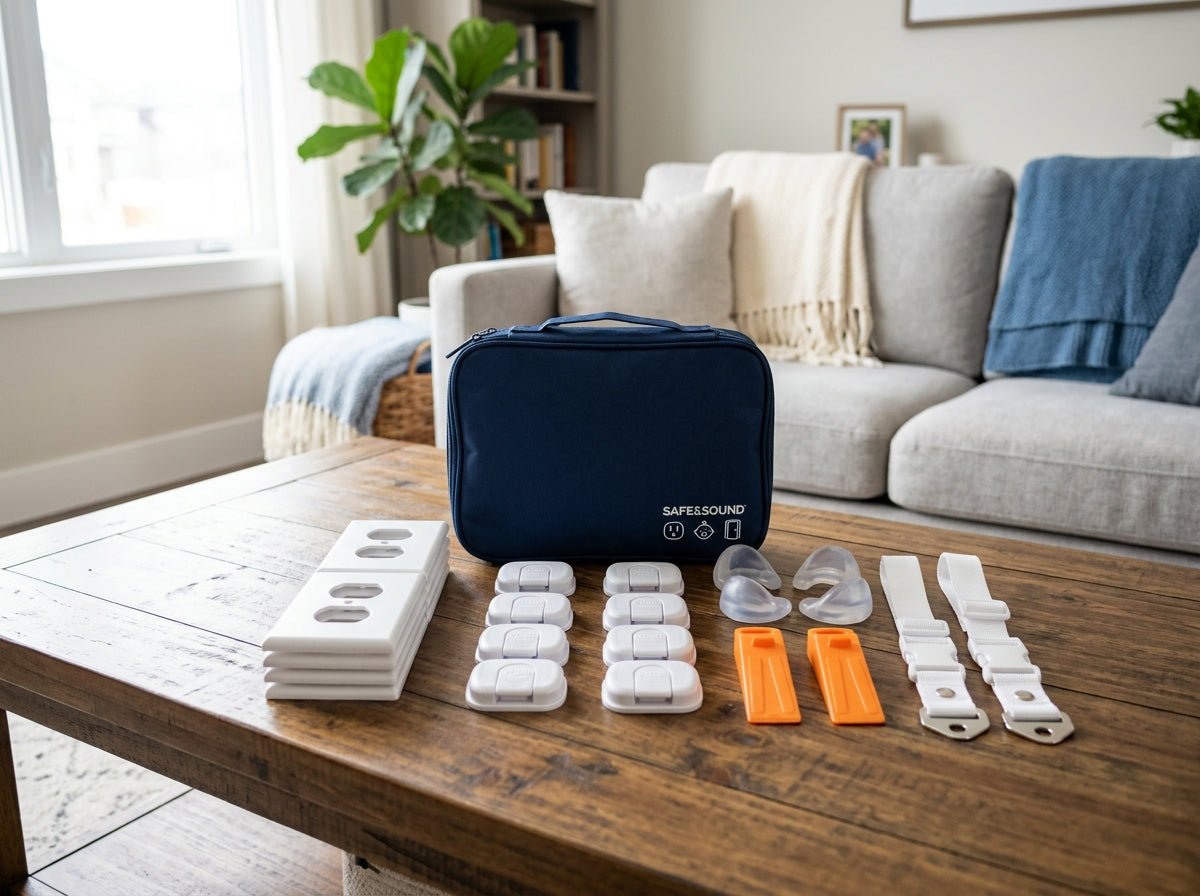
But it sits on top of, not instead of, the foundational layer: outlet covers, cabinet locks, furniture anchors, stair gates, window stops, cord management, water temperature controls, and medication storage. Those measures protect your child during every moment outside the playpen, which is most of the day.
Playpens work best when the rest of the home is already proofed. They buy you a few minutes of contained safety. Baby proofing buys you the rest of the day.
Playpen and Home Safety Checklist
What to Do Right Now
If you have a playpen and haven’t fully proofed your home, here’s where to start:
- Check the playpen itself. Verify it hasn’t been recalled, inspect the mesh and hardware, and confirm the floor pad is original.
- Clear the perimeter. Remove cords, small objects, and anything pullable from 12–18 inches around the playpen on all sides.
- Proof the room the playpen is in. Outlets, furniture anchors, window stops, and cord management apply to that room regardless of the playpen.
- Secure high-traffic rooms separately. Kitchen and bathroom hazards require their own proofing measures.
- Install stair gates now, before your child is mobile enough to need them. Hardware-mounted at the top, at minimum.
- Set your water heater to 120°F (49°C) and lock medications away completely.
The playpen is a useful part of your safety setup. It is not the whole thing, and treating it as such is how preventable accidents happen.