Sleep Sack vs Blanket: Safe Sleep Transition for Babies

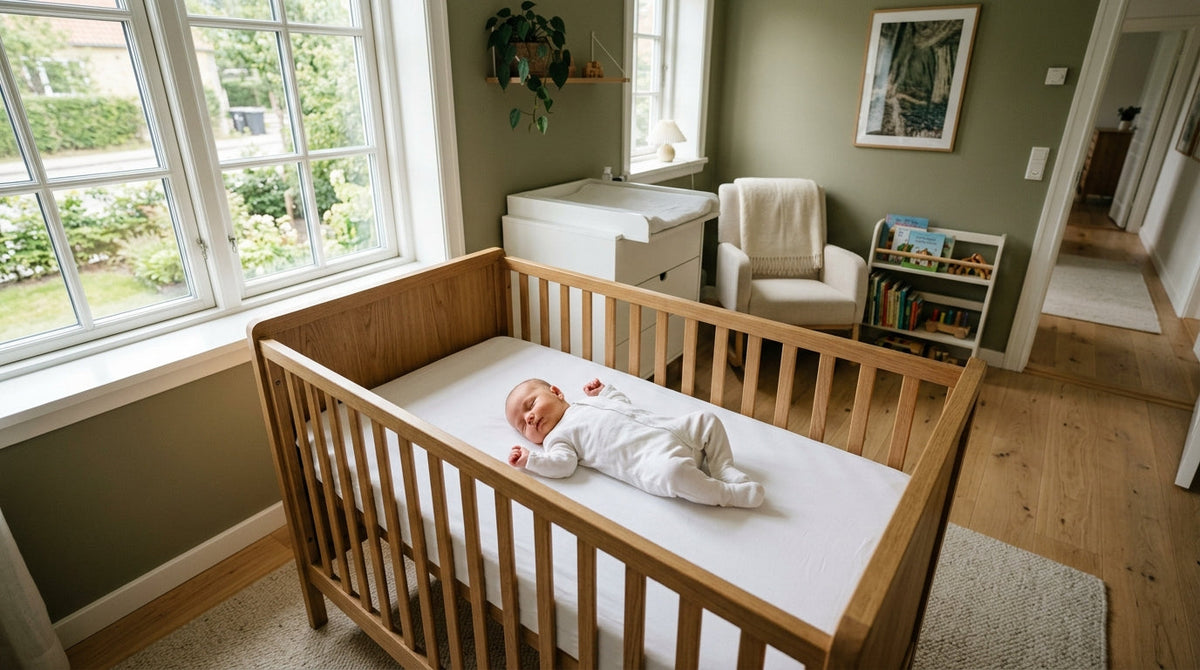
The crib looks so bare. That’s the thought that crosses almost every new parent’s mind when they follow the safe sleep guidelines and strip out the cozy bumpers, the soft quilts, the little stuffed animals. It feels counterintuitive. It feels cold. But the American Academy of Pediatrics notes that around 3,500 U.S. babies die suddenly and unexpectedly while sleeping each year, and soft bedding is a known contributing factor in a significant portion of those deaths. The bare crib is not neglect. It is the point.
The sleep sack vs. blanket question sits at the center of this, and it comes up at every stage: when you’re transitioning out of the swaddle, when your baby starts moving around the crib, when your toddler starts asking for a "big kid" blanket. Here is what the evidence says, and what I’ve learned from living with both.
Why Loose Blankets Don’t Belong in an Infant Crib
The CDC reports that roughly 3,700 U.S. infants died suddenly and unexpectedly in 2022 from SUID, a category that includes SIDS, suffocation, and unknown causes. CDC Of all sudden unexpected infant deaths in 2022, 28% were classified as accidental suffocation and strangulation in bed (ASSB). That 28% represents around 1,040 infants. Loose blankets, pillows, bumpers, and positioners are the primary contributors to ASSB.
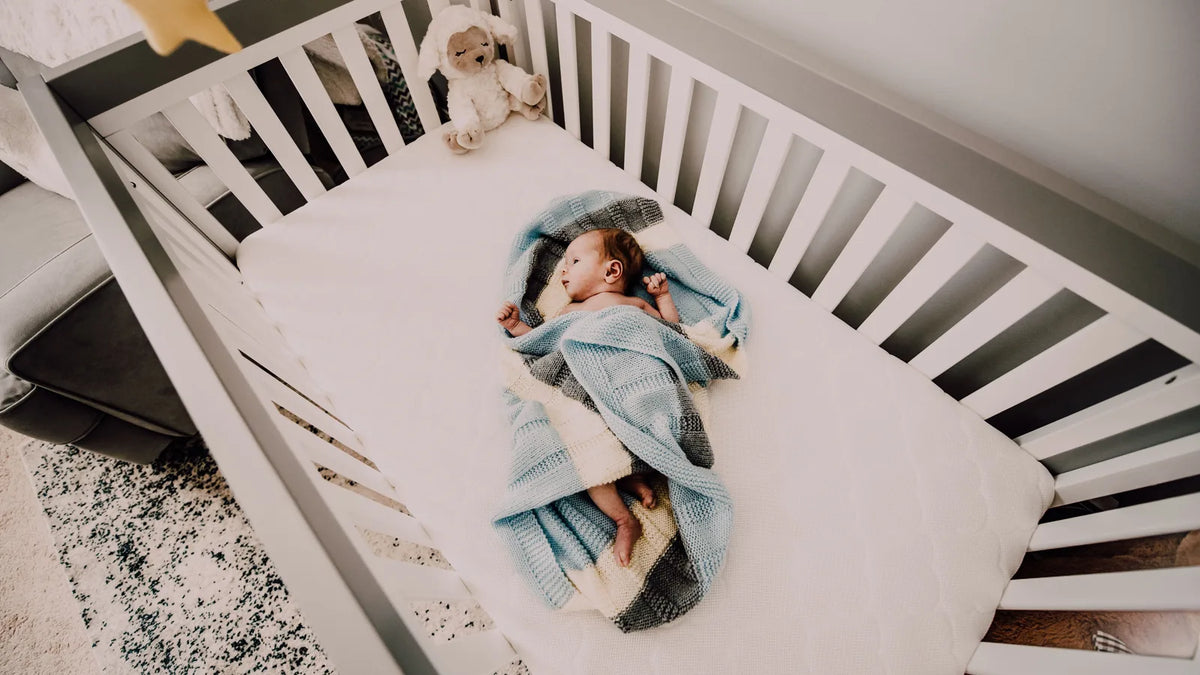
Infants under 12 months lack the motor control to reposition themselves if a blanket shifts over their face. They cannot reliably turn their heads. A blanket that starts tucked at the chest can migrate. A baby who rolls can pull fabric with them. The risk is not theoretical.
The Safe Sleep for Babies Act (2022) bans padded crib bumpers and infant inclined sleep products with a sleep surface angle greater than 10 degrees, which reflects how seriously federal regulators now treat soft object hazards in the sleep space. This is federal law, not a suggestion from a cautious pediatrician.
Many parents grew up with bumpers and quilts in their cribs. So did I. That doesn’t mean those environments were safe. It means we got lucky.
What a Sleep Sack Does
A sleep sack, or wearable blanket, is a garment. It zips or snaps onto the baby and moves with them. There is nothing loose to migrate, bunch, or cover a face. The baby stays warm throughout the night without any intervention from you, which matters at 3 a.m. when you are not at your most vigilant.
The practical benefit is real. My older daughter went through a phase around 14 months where she kicked off anything we put on her within minutes. We tried a lightweight blanket tucked on three sides. She defeated it every time. The sleep sack ended that entirely. She was warm, we stopped going in to check, and everyone slept better.
Sleep sacks also eliminate the temptation to add "just one more layer" when a baby seems cold. That temptation is where unsafe improvisation tends to happen.


The Swaddle-to-Sleep-Sack Transition
Most babies are swaddled in the newborn stage because the snug wrap mimics the womb and suppresses the Moro reflex, the startle that jolts them awake. But swaddling has a hard stop: the moment a baby shows any sign of rolling. A swaddled baby who rolls onto their stomach cannot push up or reposition themselves. The risk of suffocation increases sharply.
The transition typically happens around 2–3 months, but watch for rolling signs before that. Some babies roll early. If you see your baby pushing up on their side during tummy time, it is time to move.
Sleep sacks with arm holes are designed specifically for this transition window. The arms are free, which lets babies bring their hands to their mouths for self-soothing. The body of the sack still provides warmth and a slight sense of containment without the full restriction of a swaddle. Many families find the transition easier than expected because the sleep sack preserves enough of the "cocooned" feeling to keep sleep disruption minimal.
-
Watch for rolling signs
If your baby pushes onto their side during tummy time, stop swaddling immediately, regardless of age. -
Switch to a one-arm-out swaddle
Free one arm for a few nights to ease the adjustment before moving to a full sleep sack. -
Choose a sleep sack with open armholes
Free arms allow self-soothing and safe repositioning while the sack preserves warmth and containment. -
Match the tog to room temperature
Use the tog guide to select the right warmth level so your baby stays comfortable without overheating.
Choosing the Right Tog Rating
Tog is a measure of thermal resistance. A higher tog means a warmer sleep sack. Getting this right matters because overheating is a known SIDS risk factor, and a baby in a too-warm sleep sack in a warm room is not safer than a baby with a blanket.
The general framework:
- 0.5 tog: Summer or warm rooms above 75°F (24°C)
- 1.0 tog: Spring and fall, rooms around 68–74°F (20–23°C)
- 2.5 tog: Winter or cool rooms below 68°F (20°C)
- 3.5 tog: Very cold environments, used with lighter clothing underneath
Room temperature should be kept between 68–72°F (20–22°C). That range, combined with the appropriate tog, gives you a system. You are not guessing. You are not layering blankets and hoping.
Check your baby’s chest or back of the neck, not their hands or feet, to assess warmth. Hands and feet run cool in infants. A warm, dry chest means the temperature is right.
| Tog | Room Temp | Season | Base Layer |
|---|---|---|---|
| 0.5 tog | Above 75°F (24°C) | Summer | Onesie only |
| 1.0 tog | 68–74°F (20–23°C) | Spring, fall | Light onesie |
| 2.5 tog | Below 68°F (20°C) | Winter | Footed pajamas |
| 3.5 tog | Very cold | Deep winter | Light layer underneath |
Fit and Safety Features to Look For
Not all sleep sacks are equally safe. The neck opening and armholes are the critical dimensions. A neck opening that is too large can allow the sack to shift upward over a baby’s face during sleep. Armholes that are too loose can allow arms to retract inside the sack, which changes how the garment sits on the body.
In my experience, the critical checks are: the neck should fit snugly without being tight enough to restrict movement, the armholes should hold position when the baby moves, and the zipper should be covered or positioned so it cannot contact skin. Length matters too. A sack that is too long creates excess fabric at the feet, which can bunch.
Look for sacks that are sized by weight, not just age. A long, lean 6-month-old and a chunky 6-month-old need different fits, and age-based sizing often misses this.
When Blankets Become an Option
The AAP recommends keeping soft objects out of the sleep space for the first 12 months. At 12 months, the calculus begins to shift. Most toddlers have the motor control to reposition themselves, move objects away from their faces, and roll freely. The suffocation risk does not disappear, but it decreases meaningfully.
Even so, many pediatricians recommend continuing sleep sacks into the toddler years, particularly for children who are still in a crib. The consistency is valuable. The child knows what sleep feels like. There is no new variable to adjust to.
When you do introduce a blanket, the approach matters. One lightweight blanket, tucked firmly under the mattress on three sides, kept at chest level. Not layered. Not a heavy quilt. Not a weighted blanket. The AAP does not recommend weighted blankets or sleep positioners for infants or young toddlers, and the marketing claims around improved sleep for babies have no safety evidence behind them.
My younger daughter got her first blanket at around 18 months, after she had been in a toddler sleep sack for several months. We introduced it during nap time first, when I could observe. She ignored it for two weeks and then decided it was her favorite object in the world. The transition was entirely on her timeline.
Sleep Sack Fit Checklist
Sleep Sacks for Older Toddlers
Toddler sleep sacks, designed for children 12 months and up, are built differently than infant versions. Many have leg holes or a wider base that allows walking, which matters for children who are starting to climb out of the crib or need to use the bathroom at night. Some have a split-bottom design that allows the legs to separate.
The safety benefits carry forward. The sack still moves with the child, still eliminates loose fabric, still keeps temperature consistent. For children who are strong-willed about bedtime, there is also a behavioral component: the sleep sack signals sleep. It is a consistent cue. That is worth something.
When should I stop swaddling my baby?
Can my baby overheat in a sleep sack?
Are weighted sleep sacks safe for babies?
What age can my toddler have a blanket?
How do I know if a sleep sack fits correctly?
A Practical Decision Framework
The choice between a sleep sack and a blanket is not really a choice for the first year. The AAP guidance is clear, the SUID data supports it, and the sleep sack is the right tool for the job. The question is which sleep sack, at what tog, in what size.
After 12 months, you have more flexibility. But flexibility is not the same as urgency. There is no developmental milestone that requires a blanket. If a sleep sack is working, keep using it. If your toddler is ready for a blanket, introduce one carefully, one at a time, tucked in properly.
The bare crib felt wrong to me too, in those early weeks. But I kept coming back to the same thought: the discomfort I felt looking at it was about my expectations, not my daughter’s safety. She didn’t know what a quilt was. She just needed to be warm and to breathe. A well-fitted sleep sack at the right tog does both.