SIDS Prevention Tips: Evidence-Based Steps for Safe Infant Sleep

About 3,500 infants die each year from sleep-related causes in the United States, according to CDC SUID data. That number has not changed much in recent years, despite everything we know about how to reduce it. Most of those deaths are preventable. That tension is what makes this topic so hard to write about, and so important to get right.
I spent three years as an early childhood educator before I had kids of my own. I thought I knew the safe sleep guidelines cold. Then I brought my older daughter home from the hospital and discovered how hard it is to follow rules you believe in when you are running on four hours of sleep and a newborn is screaming at 3 a.m. This guide is written for that version of you: exhausted, committed, and trying to do the right thing.
Back to Sleep, Every Single Time
The AAP recommends placing infants on their backs for every sleep period, including naps and nighttime sleep, until age one. This is the single most effective step you can take to reduce SIDS risk. Not one of several equally weighted options. The single most effective one.
Babies placed on their stomachs or sides face a higher risk of airway obstruction and rebreathing carbon dioxide. The back position keeps the airway open and allows infants to regulate breathing more effectively. Some parents worry about choking, but healthy infants have a protective gag reflex. The back is safe.
If your baby falls asleep in a car seat, stroller, or swing, move them to a flat surface on their back as soon as it is practical. Those products are not designed for unmonitored sleep.
The Sleep Surface Matters as Much as the Position
A firm, flat surface is not optional. Soft surfaces, including couches, armchairs, adult mattresses, and pillow-top overlays, significantly increase the risk of suffocation and entrapment. The AAP is direct about this: infants should sleep in a crib, bassinet, or play yard that meets current CPSC safety standards.
What does "firm" mean in practice? Press your hand into the mattress. It should not conform to the shape of your palm. A baby’s face pressed into a soft surface can create a pocket that traps exhaled air. That is the mechanism. Understanding it makes the rule easier to follow.
The crib mattress should fit snugly against all four sides of the crib frame, with no gaps larger than two fingers. Nothing else belongs in the sleep space. No pillows, no blankets, no bumper pads, no stuffed animals. The Safe Sleep for Babies Act (2022) bans padded crib bumpers and infant inclined sleep products with a sleep surface angle greater than 10 degrees. Those products are not just discouraged. They are illegal to sell as new items.
When my younger daughter was about six weeks old, I walked into the living room to find my mother-in-law had tucked a small blanket around her in the bassinet "so she wouldn’t get cold." She meant well. We had a kind, clear conversation about it, and the blanket came out. You will probably have that conversation too. Have it.
Room-Sharing Without Bed-Sharing
The AAP recommends that infants sleep in the parents’ room, on a separate surface, for at least the first six months and ideally through the first year. Room-sharing without bed-sharing reduces SIDS risk. Bed-sharing increases it, particularly when a parent has consumed alcohol, sedating medications, or is extremely fatigued.
The distinction matters. Having your baby close is protective. Having your baby in your bed is not.
A bedside bassinet or a crib positioned near your bed gives you the proximity that supports nighttime feeding and monitoring without the hazards of a shared sleep surface. If you fall asleep while feeding in bed, place the baby back on their own surface as soon as you wake. Set a phone alarm if that helps. The intention to move them is not the same as moving them.


Temperature, Clothing, and the Overheating Risk
Overheating during sleep is an independent SIDS risk factor. The room should feel comfortable to a lightly dressed adult. If you are warm in a t-shirt, your baby does not need a fleece sleeper and a hat.
Dress your infant in one layer more than you would wear in the same environment. A sleep sack or wearable blanket is a practical way to keep a baby warm without loose bedding. Avoid hats during sleep indoors. Check the back of your baby’s neck, not their hands or feet, to assess whether they are too warm. Sweating, flushed skin, or rapid breathing are signs of overheating.
Loose blankets, pillows, and bumper pads do not belong in the sleep space at any temperature. If the room is cold, add a warmer sleep sack. That is the solution.
Pacifiers, Swaddling, and What the Evidence Shows
Pacifier use at nap time and bedtime is associated with reduced SIDS risk. The mechanism is not fully understood, but the association is consistent across studies. If you are breastfeeding, the AAP suggests waiting until breastfeeding is established, typically around one month, before introducing a pacifier. If the baby refuses it, do not force it. If it falls out after the baby is asleep, you do not need to replace it.
Swaddling can be appropriate in early infancy when done correctly. The hips and legs should be free to move, not wrapped tightly straight. A swaddle that restricts hip movement increases the risk of developmental dysplasia of the hip. More urgently, swaddling must stop once your baby shows any sign of rolling, which typically begins around two to three months. A swaddled baby who rolls to their stomach cannot push up or reposition. That is a suffocation hazard.
Watch for the signs: your baby getting one arm free, pushing up during tummy time, shifting their weight to one side during sleep. When you see them, the swaddle stops.
Smoke, Alcohol, and Drug Exposure
Prenatal and postnatal exposure to tobacco smoke substantially elevates SIDS risk. Smoking during pregnancy is a significant risk factor. Secondhand smoke in the home after birth is also a risk factor. The infant’s sleep environment should be smoke-free, which means not just the room but the home and any vehicle the baby travels in regularly.
Alcohol and sedating drugs, including prescription sleep aids and some antihistamines, impair a caregiver’s ability to respond to an infant and increase the risk of accidental overlay during sleep. If you have consumed alcohol or sedating medication, do not bring the baby into your bed. Have a plan in place before you need it.
These are not judgments about who you are as a parent. They are physiological facts about how substances affect caregiving capacity.
Breastfeeding and Immunizations as Protective Factors
Breastfeeding is associated with lower SIDS rates compared to formula feeding alone. Any amount of breastfeeding carries some protective benefit. The AAP recommends exclusive breastfeeding for the first six months, with continued breastfeeding alongside solid foods through age one and beyond, but partial breastfeeding is also associated with reduced risk. If exclusive breastfeeding is not possible for you, any breastfeeding matters.
Routine immunizations are linked to reduced SIDS risk and should be given on schedule per CDC recommendations. This includes the influenza vaccine and the pertussis vaccine, which can be given to pregnant individuals to provide some protection to the newborn before they are old enough to receive it themselves. Vaccines do not cause SIDS. The evidence on this is clear and consistent.
Safe Sleep Environment Checklist
Tummy Time Is Not Sleep Time
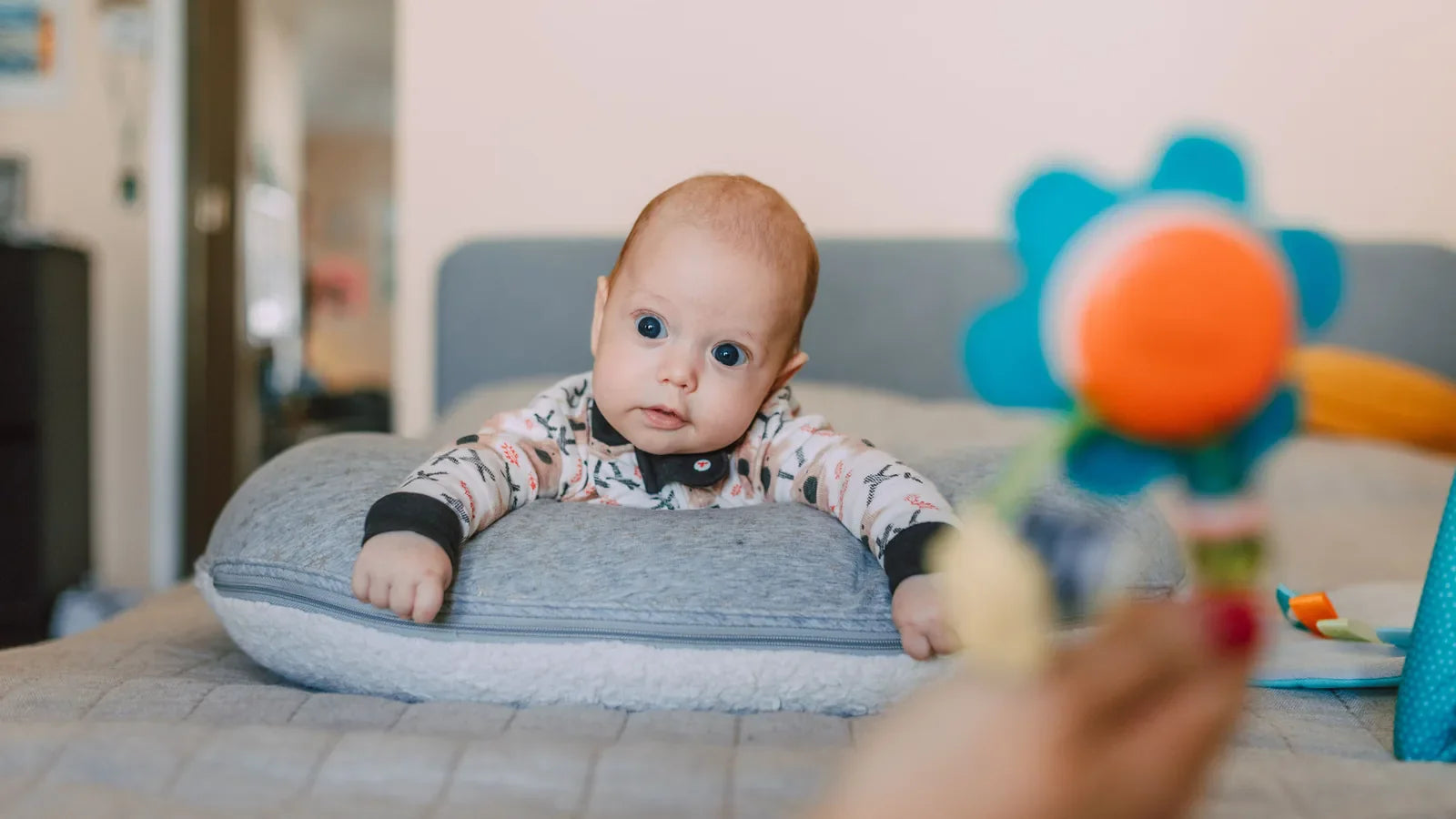
Supervised, awake tummy time is important for motor development and helps prevent positional plagiocephaly, the flattening of the skull that can occur when infants spend all their time on their backs while awake. It does not increase SIDS risk because it is not sleep. The distinction is the supervision and the wakefulness.
Start with short sessions, two to three minutes several times a day, and build from there. Place a rolled towel under the chest to make it easier in the early weeks. Get on the floor with your baby. Make it interactive. My older daughter hated tummy time until I started lying face-to-face with her and making ridiculous noises. Whatever works.
If your baby falls asleep during tummy time, roll them to their back immediately.
Products That Claim to Prevent SIDS
Skip them. Wedges, sleep positioners, specialized "anti-SIDS" mattresses, and similar products lack evidence of safety benefit and may introduce suffocation hazards. The Safe Sleep for Babies Act (2022) addressed some of these by banning inclined sleep products above 10 degrees of incline. But the market continues to produce new variations.
The rule is simple: if a product promises to reduce SIDS risk and it is not a firm, flat, bare sleep surface in a crib, bassinet, or play yard that meets CPSC standards, the claim is not supported by evidence. A product marketed as a safety solution is not the same as a product that has been demonstrated to be safe. Read those two things carefully. There is a real difference.
Unintentional suffocation kills roughly 1,000 infants under age 1 each year in the United States, according to CDC data. Many of those deaths involve products and sleep environments that parents believed were safe. The safest sleep environment is also the simplest one.
Skin-to-Skin Contact and the Transition to Independent Sleep
Skin-to-skin contact in the immediate postpartum period supports bonding, temperature regulation, and breastfeeding initiation, and may have protective effects for the newborn. Hold your baby on your chest. That contact matters.
And when you are ready to sleep, move the baby to their own surface. This is the part that is hardest at 4 a.m. in a hospital room or in the first weeks at home. Build the habit early, because the habit is what protects your baby when you are too tired to make a deliberate decision. Place the baby in the bassinet, confirm they are on their back, and then sleep yourself. That sequence, repeated consistently, is what safe sleep looks like in practice.
The evidence on SIDS prevention is unusually clear for pediatric safety research. Back sleeping, a firm flat surface, room-sharing without bed-sharing, a smoke-free environment, appropriate temperature, pacifier use, breastfeeding when possible, and staying current on immunizations: these steps, taken together, represent the strongest protection available. None of them require a product. All of them require consistency.