Baby Proofing Gift Set Ideas: The Best Safety-Themed Baby Shower Gifts

Most baby shower registries are stacked with swaddles, bouncers, and onesies in five sizes. The outlet covers and cabinet locks? Usually missing entirely. And yet those are the items that will matter most around month eight, when a baby who was immobile last Tuesday is suddenly pulling up on the bathroom vanity.
A safety-themed gift set solves a real problem. It fills the gap that most registries leave open, and it signals something important to new parents: this part of preparation is normal, expected, and worth doing before the baby arrives, not after the first close call.
Why Safety Gifts Get Skipped on Registries
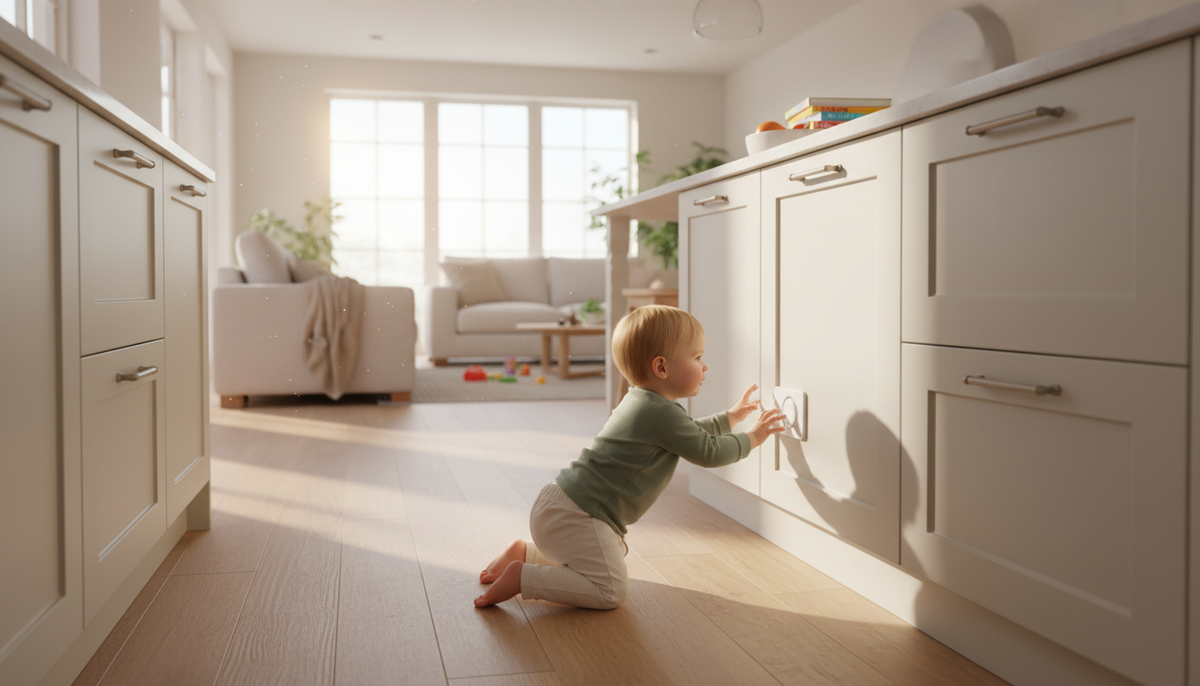
Expectant parents tend to build registries around what they can picture: feeding, sleeping, bathing, getting out of the house. Hazard mitigation is harder to visualize when you’ve never watched a ten-month-old beeline for an open cabinet under the kitchen sink.
My younger daughter did exactly that. I’d answered the doorbell, was gone maybe ninety seconds, and came back to find she’d pulled out every bottle of cleaning spray from the under-sink cabinet and was examining them with great interest. She was nine months old. The locks I’d been meaning to install had been sitting in a drawer for three weeks.
That’s the window a thoughtful gift set can close. When the items arrive pre-curated, the friction drops. Parents don’t have to research which lock works on which hinge type. They open the box and start.
The Core Three: What Every Set Should Include
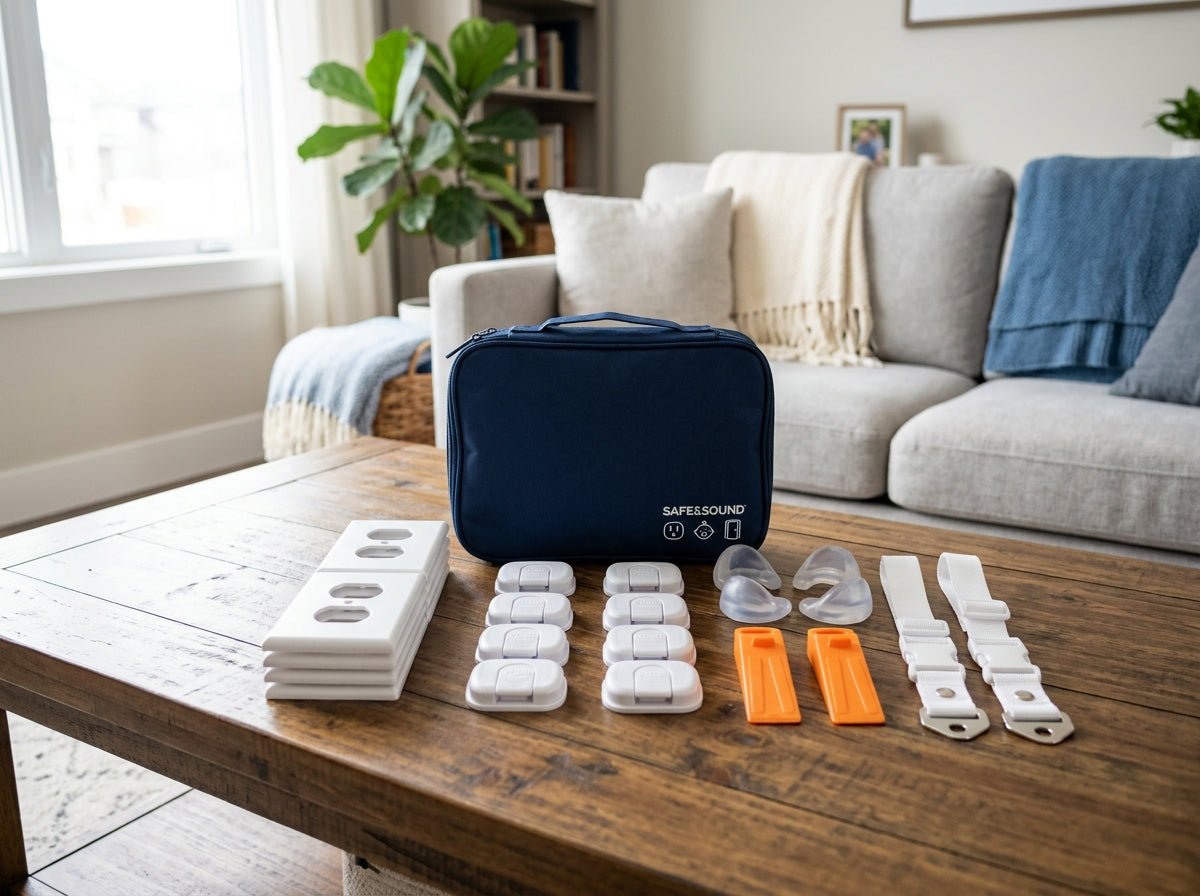
If you’re building or buying a proofing gift set, three categories should anchor it. All three are on the CPSC’s list of basic childproofing devices for homes with young children.
Outlet covers or tamper-resistant plates. Standard outlets are at exactly the height a cruising baby reaches when pulling to stand. Tamper-resistant receptacles (the kind with internal shutters that require simultaneous pressure on both slots to open) are more effective than plug-in covers, which children can remove. If the set includes plug-in covers, choose the sliding-plate style over the simple cap.
Cabinet and drawer locks. A mixed set is better than a single mechanism. Magnetic locks work on most cabinet types and leave no visible hardware, which matters for renters and for aesthetics. Adhesive-strap locks are easier to install but can fail on textured or painted surfaces. Lever-based locks work well on drawers. Giving parents options means they can match the lock to the furniture rather than forcing a single solution onto every surface in the house.
Corner and edge guards. Coffee tables, hearths, and open shelving edges are the primary culprits. Soft silicone or dense foam guards absorb impact in a way that rigid plastic alternatives don’t. When my older daughter was learning to walk, she went down hard on a coffee table corner twice in one week. After the second time, we wrapped every edge in the living room. Silicone guards stayed put and didn’t peel; the foam ones we tried on the brick hearth held better than I expected.


Window Cord Safety: A Non-Negotiable Inclusion
Blind cords are a strangulation hazard for children under five, and thousands of incidents have been documented by the CPSC. This is not a minor or theoretical risk. Any gift set that skips cord management is leaving out one of the most important categories.
The cleanest solution is cordless window coverings, but those aren’t practical as a gift item. What fits in a bundle: cord wind-up clips, cord shorteners, and tie-down anchors that secure excess cord to the wall or baseboard. They are inexpensive and take five minutes to install, but they reduce the hazard rather than remove it: the CPSC says cordless window coverings are the only option that eliminates the strangulation risk, so tuck in a note suggesting the family go cordless when they can.
Include a note explaining the why. Many parents don’t know that even a short loop of blind cord at a low height is dangerous. The educational layer matters.
Gates: What Certification Means
Safety gates are a common shower gift, and they’re also a category where the wrong product can create a false sense of security. Not all gates are equivalent.
For expansion gates and expandable enclosures, ASTM F1004 is the federal safety standard, made mandatory under 16 CFR Part 1239 (effective 2021). A gate that carries ASTM F1004 certification has been tested for structural stability, bar spacing, and resistance to the forces a toddler can generate. Uncertified gates may have gaps wide enough to trap a child’s head.
When selecting a gate for a gift set, look for the ASTM F1004 certification mark on the packaging. Hardware-mounted gates (which screw into the wall) are the correct choice for the top of stairs. Pressure-mounted gates are appropriate for doorways and room dividers where a fall risk isn’t present. Make sure the gift includes a note clarifying this distinction, because it’s a common source of misuse.
Approximately 93,000 children under five are treated in U.S. emergency rooms each year for stair-related injuries, according to Nationwide Children’s Hospital analysis of CPSC NEISS data. A properly installed, certified gate at the top of the stairs is one of the most direct interventions available.
The Underrated Additions That Make a Bundle Stand Out
The core three and a gate cover the major categories. But the sets that parents remember and use tend to include a few items that solve problems they didn’t know they had.
Soft-close cabinet hinges and drawer dampers. These prevent finger-pinching injuries and, practically speaking, they reduce the noise and frustration of a baby repeatedly slamming cabinet doors. When slamming a door stops being satisfying, the behavior fades faster. Parents who find safety hardware annoying are more likely to remove it. Soft-close mechanisms reduce that friction.
Door pinch guards and door stops. Bathroom, kitchen, and laundry room doors are where cleaning products, medications, and appliance hazards concentrate. A door pinch guard prevents a door from closing on small fingers. A door knob cover or lever lock prevents a toddler from opening the door in the first place. Position these high enough that an older toddler can’t easily reach them.
A water temperature gauge or bath thermometer. Tap water scalding is a leading cause of burn injuries in young children. Many parents don’t know that lowering the water heater to 120°F (49°C) is both safe for adults and effective at preventing scald burns in children. A bath thermometer makes the risk visible at every bath time. Pair it with a card that explains the 120°F recommendation. It’s a small item with a large impact.
Building in the Educational Layer
A gift set that includes products but no context leaves parents guessing. The best bundles include something that explains the purpose of each item and how to use it correctly.
A room-by-room checklist is the most practical format. It doesn’t need to be elaborate: a single printed card or a folded insert that walks through kitchen, bathroom, living room, bedroom, and nursery hazard categories. Each section names the relevant product in the set and gives one sentence on placement or installation.
The CPSC’s baby safety resources (cpsc.gov) and the JPMA’s certification program (jpma.org) are both worth referencing in any educational insert. Parents who understand that JPMA certification indicates third-party testing are better equipped to evaluate future purchases on their own.
This layer also reduces shame. New parents often feel overwhelmed by how much they don’t know about hazard prevention. A checklist that says "here’s what to look for, here’s what to install, here’s why" reframes the whole exercise as manageable rather than alarming.
Gift Set Room-by-Room Checklist
Gifting for Second and Third Children
A family welcoming a second or third child likely already owns outlet covers, basic cabinet locks, and a gate or two. Giving them a duplicate set isn’t useful.
For these families, focus on what’s new or specialized. Travel-sized gates and portable outlet covers for hotel rooms and grandparents’ houses are almost always missing. Cord management kits tend to get skipped even by experienced parents. Soft-close dampers are rarely something anyone buys for themselves. A water thermometer is cheap enough that most people never think to purchase it.
A brief note acknowledging that they’ve done this before and explaining what makes this bundle different goes a long way. Something like: "You’ve already got the basics covered. This one’s for the gaps." That framing respects their experience and makes the gift feel considered rather than redundant.
Putting the Set Together
Whether you’re buying a pre-assembled kit or building one yourself, the most useful sets share a few qualities. They cover multiple risk categories rather than going deep on one. They mix mechanisms so parents can match the product to the surface. They include something educational. And they’re packaged in a way that makes the items easy to find and use, not buried in a gift bag under tissue paper.
A well-chosen safety set won’t get the same reaction as a beautiful quilt or a personalized keepsake. But around month eight, when the baby is pulling up on everything and the cabinet locks are already installed, it’ll be the gift that gets used every single day.