Toilet Safety for Babies: Lid Locks Drowning Prevention and Training

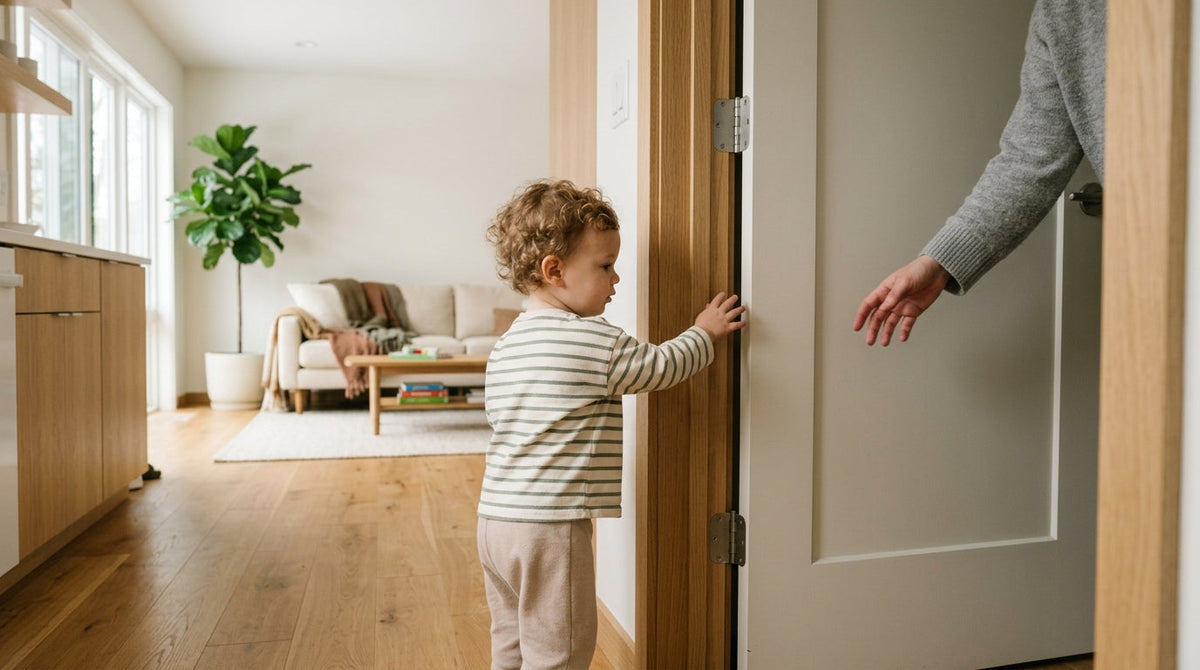
The bathroom door was open for maybe ninety seconds. That’s all it took for my younger daughter, at 18 months, to push the door wide, cross the tile, and have both hands in the toilet bowl before I got there. She wasn’t trying to drink from it. She was just curious, the way toddlers are curious about everything, without any sense of what’s dangerous. I installed a toilet lid lock that afternoon.
Most parents think about toilet safety in terms of toilet training. The drowning risk tends to register later, if at all. But drowning is the leading cause of unintentional injury death in children ages 1–4 (CDC), and the toilet is a hazard that sits in nearly every home, often in a room that gets left open during busy mornings. A child can drown in as little as one to two inches of water (AAP). A toilet holds considerably more than that.
Why Toilets Are a real Drowning Risk
Young children between 12 and 36 months have a head-to-body ratio that works against them. Their heads are proportionally large and heavy. When a child leans over the rim of a toilet, that weight pulls them forward. They cannot generate enough core strength to push back up. The position is almost mechanically inescapable for a child who has tipped in headfirst.
Drowning also happens silently. There is no splashing, no yelling. A child who goes under does not have the vocal coordination to call for help. The two-minute window that safety researchers reference is not a comfortable margin. It is the outside edge of a scenario where most outcomes are already bad.
Children ages 1–3 are at the highest risk because they are mobile and fast, but they have no working model of water as a threat. A child who has taken swimming lessons is still at risk if they fall forward unexpectedly into a confined space. Muscle memory from a pool does not transfer to a toilet bowl.
How Toilet Lid Locks Work
A toilet lid lock does one thing: it prevents a child from lifting the lid independently. The lock secures the lid and seat together so that even a child using both hands and leaning into it cannot get the lid open. For a parent or adult, opening the lock takes a second. For a toddler, it’s not possible.
The CPSC and AAP both recommend toilet lid locks as a primary engineering control, meaning they are a physical barrier rather than a behavioral one. Engineering controls are more reliable than rules because they don’t depend on a child remembering or obeying. They work even when you’re not watching.


The Three Types of Toilet Locks
Clamp-style locks wrap around the bowl rim and tighten to hold the lid and seat in place. They are generally the most durable option for high-traffic bathrooms, and they fit a wide range of bowl shapes. The clamp mechanism resists the lateral and upward force a toddler applies when trying to pry the lid open. If you have multiple children using one bathroom, this is the type to start with.
Latch-style locks hook the lid to the seat using a plastic arm or strap. They are the most common type you’ll find in baby stores. They’re inexpensive, easy to install, and work well on standard toilets. The weakness is that some latch designs can be defeated by an older or more determined child. Look for latch locks with a pinch-and-lift release that requires two simultaneous actions, not just a single push.
Magnetic locks require a magnetic key to release the lock. They are the most tamper-resistant option and are a good choice if you have a child who has already defeated simpler locks. The tradeoff is cost and the risk of losing the key. Keep a spare.
Choosing the Right Lock for Your Toilet
Before you buy anything, measure your toilet bowl rim. Locks are designed for either standard (round) or elongated bowls, and some fit both. A lock that doesn’t seat correctly against the rim won’t hold under pressure. It may also damage the porcelain over time.
Check whether the lock interferes with the seat hinge. On some toilets, the hinge hardware sits high enough to prevent a clamp from seating flush. Test the fit before you commit to installation.
If you rent your home or have an older toilet with an unusual shape, order from a retailer with a good return policy and test the fit before you trust the lock. A poor fit reduces effectiveness and can crack older porcelain if the lock shifts under pressure.
Installing a Toilet Lock
Most toilet lid locks require no tools and install in under five minutes. The general process for a clamp-style lock:
- Lift the seat and lid fully open and wipe the rim dry.
- Position the clamp body against the front of the bowl rim according to the manufacturer’s markings.
- Tighten the clamp until it is snug against the porcelain. Do not overtighten on older or thinner porcelain.
- Lower the lid and seat, then engage the lock mechanism.
- Test it. Apply upward force on the lid with both hands. The lid should not lift.
For latch-style locks, the process involves attaching an adhesive or screw-mount base to the lid and a corresponding base to the seat, then connecting them with the latch arm. If your lock uses adhesive, clean both surfaces with rubbing alcohol and allow 24 hours before testing under load.
After installation, check that the lock does not prevent the lid from closing fully. A gap at the front of the lid means the lock is misaligned and needs to be repositioned.
Locks Are One Layer, Not the Whole Plan
The AAP recommends layered protection for bathroom drowning prevention. A toilet lock is one layer. The others matter too.
Keep the bathroom door closed. A closed door buys you time. It is not foolproof, since toddlers learn to open doors, but it adds a meaningful delay. Consider a door knob cover or a hook-and-eye latch mounted high on the door frame for bathrooms that toddlers can access independently.
Store cleaning products and medications in a locked cabinet. The toilet is not the only hazard in a bathroom. Many of the products parents store under the sink are required to ship in child-resistant packaging, but child-resistant is not child-proof. A locked cabinet is the right solution. This is especially important for toilet bowl cleaners and drain chemicals, which can cause serious injury on contact.
Set your water heater to 120°F (49°C). CPSC guidance recommends this temperature to prevent scalding. A child who turns on the hot tap can be burned before you reach them.
Teach children that the toilet is not a toy. Establish a clear rule: they do not touch the toilet without a parent present until they are reliably toilet-trained and understand water safety. The lock is a backup. The rule is the first line. Both matter.
Toilet Seat Reducers During Training
Once your child starts toilet training, a toilet seat reducer or child-sized insert becomes useful alongside the lock. A reducer lowers the effective height of the opening and makes the seat more comfortable for a small child, which reduces the leaning and shifting that can lead to a fall. It also makes the opening smaller, so a child is less likely to slip through if they lose balance.
Reducers and locks can coexist on most toilets. The reducer sits on the seat; the lock secures the lid to the seat. Use both during the transition period. Once your child is consistently trained and understands water safety, you can remove the lock. But keep it in place during early training and in any home where visiting toddlers are present. The inconvenience is minimal. The protection is real.
Bathroom Safety Checklist
Inspecting and Maintaining Your Lock
Toilet locks take a lot of use. In a household with two children, a toilet lock gets opened and closed dozens of times a day. Plastic components fatigue. Adhesive weakens with repeated moisture exposure. Clamp hardware can loosen.
Check your lock monthly. Look for:
- Cracks or stress marks in the plastic body
- Loosening of any adhesive base
- Clamp hardware that has shifted or loosened
- Any play in the latch mechanism that wasn’t there before
If you find any of these, replace the lock. A compromised lock may fail under the force a determined toddler applies, and a lock that looks intact but has a cracked internal mechanism provides false confidence. Replacement locks are inexpensive. Replace without hesitation.
Coordinating Bathroom Safety as a System
No single product makes a bathroom safe. The toilet lock works alongside the closed door, the locked cabinet, the set water temperature, and the supervision habits you build. Each layer compensates for the moments when another layer fails.
The bathroom is one of the more hazardous rooms in a home for children under four, and it tends to be underestimated because it’s familiar. A toilet lid lock is a five-minute installation that addresses one of the most serious risks in that room. Install it before you need it, inspect it regularly, and treat it as one part of a bathroom that you’ve thought through carefully from floor to ceiling.